BIS Certification for Footwear – Complete Guide to Footwear BIS Standards in India
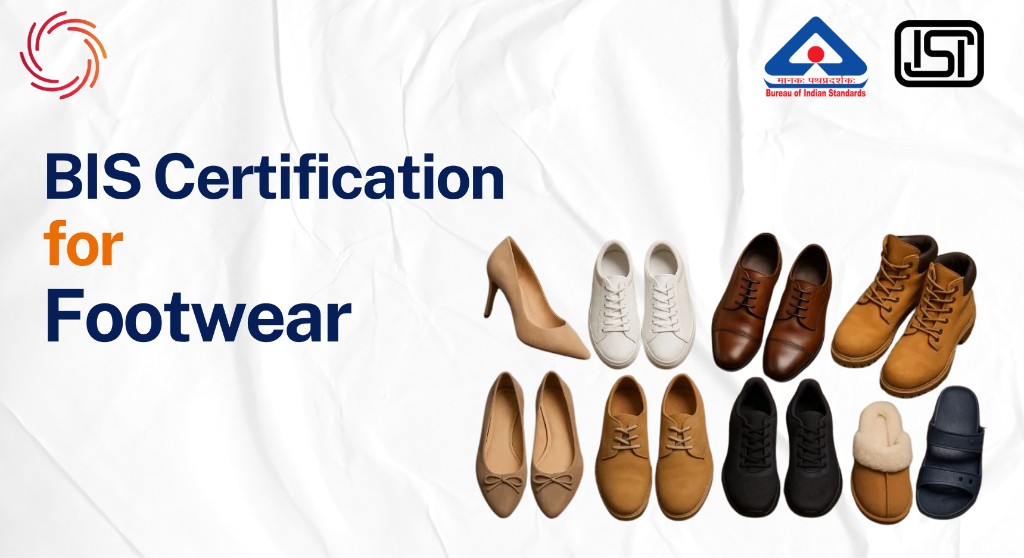
Footwear products sold in India are required to comply with applicable Indian Standards to ensure durability, user safety, material quality, slip resistance, structural reliability, and occupational protection. BIS Certification for Footwear under various IS standards applies to safety shoes, sports footwear, rubber boots, PVC footwear, industrial footwear, canvas shoes, protective footwear, and occupational shoes manufactured or imported for the Indian market.
The Indian footwear industry has transformed from a conventional manufacturing sector into a technologically advanced and highly regulated market serving industrial workers, athletes, military personnel, municipal workers, miners, institutional buyers, and everyday consumers. Footwear is no longer viewed only as a fashion or utility product. In many categories, it functions as protective equipment designed to prevent workplace injuries, chemical exposure, electrical hazards, slips, fatigue, and impact-related accidents.
Different types of footwear require different performance characteristics. Industrial safety boots must withstand abrasion, penetration, and harsh work environments. Sports footwear must provide flexibility, cushioning, and structural stability. PVC and rubber footwear must resist water, chemicals, and wear. Occupational footwear used in municipal services or mining applications must perform under highly demanding conditions.
Because footwear directly affects user safety, comfort, mobility, and occupational health, regulatory authorities in India require manufacturers to follow specific Indian Standards before products are introduced into the market. BIS Certification for Footwear helps ensure that footwear products meet technical specifications related to material composition, construction quality, durability, strength, fit, and protective performance.
The BIS Licence for Footwear is particularly important for:
- Footwear manufacturers
- Industrial safety equipment suppliers
- Importers of footwear products
- Sports footwear brands
- Government procurement vendors
- PPE manufacturers
- E-commerce sellers
- Private label footwear companies
Compliance with BIS standards improves market credibility while reducing the risk of substandard or unsafe products entering the supply chain.
Understanding BIS Certification for Footwear
Footwear products are exposed to repeated stress, body weight pressure, friction, moisture, heat, chemicals, uneven surfaces, and environmental wear. If footwear is manufactured using poor-quality materials or improper construction methods, it may result in discomfort, injuries, sole failure, slipping hazards, foot fatigue, water penetration, or inadequate occupational protection.
BIS Certification for Footwear establishes standardized manufacturing and testing requirements for different categories of footwear based on their intended usage conditions.
For example:
- Industrial boots require resistance against harsh environments.
- Safety footwear used in factories requires toe protection and sole durability.
- Sports footwear must maintain flexibility and energy absorption.
- Rubber and PVC footwear require resistance against water and wear.
- Mining footwear requires enhanced structural protection.
- Tactical and anti-riot footwear require stability and durability under extreme conditions.
The BIS Certificate for Footwear verifies that the product has been tested according to relevant Indian Standards and manufactured under controlled quality systems.
Instead of applying one universal standard to all footwear, BIS uses product-specific standards tailored to the functionality and risk profile of each category.
This framework allows regulators to ensure that footwear intended for industrial, occupational, athletic, or consumer use performs safely under real-life conditions.
Applicable BIS Standards for Footwear
The footwear sector includes multiple BIS standards covering safety footwear, industrial boots, sports shoes, PVC footwear, rubber footwear, canvas footwear, and occupational protective footwear.
Below are the major applicable BIS standards for footwear products in India.
| IS | Products |
|---|---|
| IS 5557: 2004 | Industrial and protective rubber knee and ankle boots |
| IS 5557 (Part 2): 2018 | All rubber gum boots and ankle boots |
| IS 5676: 1995 | Moulded solid rubber soles and heels |
| IS 6664: 1992 | Rubber microcellular sheets for soles and heels |
| IS 6719: 1972 | Solid PVC soles and heels |
| IS 6721: 1972 | PVC sandal |
| IS 10702: 1992 | Rubber Hawai Chappal |
| IS 12254: 1993 | Polyvinyl chloride(PVC) industrial boots |
| IS 13893: 1994 | Polyurethane sole, semirigid |
| IS 13995: 1995 | Unlined moulded rubber boots |
| IS 16645: 2018 | Moulded plastics footwear- Lined or Unlined polyurethane boots for general industrial use |
| IS 16994: 2018 | Footwear for men and women for municipal scavenging work |
| IS 1989 (Part 1): 1986 | Leather safety boots and shoes for miners |
| IS 1989 (Part.2): 1986 | Leather safety boots and shoes for heavy metal industries |
| IS 3735: 1996 | Canvas Shoes Rubber Sole |
| IS 3736: 1995 | Canvas Boots Rubber Sole |
| IS 3976: 2018 | Safety Rubber Canvas Boots for Miners |
| IS 11226: 1993 | Leather safety footwear having direct moulded rubber sole |
| IS 14544: 1998 | Leather safety footwear with direct moulded polyvinyl chloride (PVC) sole |
| IS 15844(Part-1): 2023 | Sports Footwear for General Purpose |
| IS 15844(Part-2): 2023 | Sports Footwear for Performance Sports Footwear |
| IS 15844(Part 3): 2024 | Sports Footwear for Professional Sports Footwear |
| IS 17012: 2018 | High ankle tactical boots with PU – Rubber sole |
| IS 17037: 2018 | Antiriot shoes |
| IS 17043 (Part-1): 2024 | Shoes for Services |
| IS 17043 (Part-2): 2024 | Shoes for General Purpose |
| IS 15298 (Part 2): 2016 | Personal protective equipment – Part 2 Safety Footwear |
| IS 15298 ( Part 3) : 2019 | Personal protective equipment – Part 3 Protective Footwear |
| IS 15298 (Part 4) : 2017 | Personal protective equipment – Part 4 Occupational Footwear |
Testing Requirements as per Footwear BIS Standards
Testing requirements vary depending on footwear type and intended application.
Safety Tests
- Impact resistance
- Compression resistance
- Toe protection testing
- Electrical resistance testing
Performance Tests
- Sole flexibility
- Slip resistance
- Water resistance
- Heel attachment strength
Durability Tests
- Abrasion resistance
- Sole bonding strength
- Tear resistance
- Repeated flex testing
Quality Verification Tests
- Material composition analysis
- Dimensional verification
- Weight consistency
- Structural integrity assessment
All testing must be conducted in Bureau of Indian Standards recognized laboratories.
Conclusion
The Indian footwear sector covers a wide range of products including safety footwear, sports shoes, industrial boots, PVC footwear, rubber footwear, occupational footwear, tactical boots, and protective shoes. Because these products directly affect user safety, durability, workplace protection, and performance, compliance with applicable Indian Standards has become increasingly important.
Obtaining a BIS Certificate for Footwear helps manufacturers, importers, and brands demonstrate compliance with Indian regulatory requirements while improving product credibility and market acceptance. Whether the requirement involves BIS Certification for Footwear used in industrial operations, sports activities, municipal services, mining applications, or consumer use, adherence to applicable standards supports safer and more reliable products across the Indian market.
Businesses seeking BIS Licence for Footwear should ensure proper documentation, product testing, manufacturing quality control, and regulatory compliance to achieve successful certification approval and long-term market sustainability.
FAQs – BIS License for Footwear
1. What is BIS Certification for Footwear in India?
BIS Certification for Footwear is a conformity assessment process that verifies whether footwear products comply with applicable Indian Standards related to quality, durability, safety, construction, and performance. The certification is important for industrial footwear, safety shoes, sports footwear, rubber footwear, PVC footwear, and occupational footwear sold in the Indian market.
2. Which footwear products are covered under BIS standards?
Multiple footwear categories are covered under BIS standards including safety shoes, sports footwear, rubber boots, PVC sandals, Hawai chappals, tactical boots, mining footwear, anti-riot shoes, canvas footwear, occupational footwear, and industrial protective boots. Different Indian Standards apply depending on the product's intended use and construction type.
3. Is BIS Certification mandatory for safety footwear?
Yes, BIS Certification may be mandatory for specific categories of safety footwear and protective footwear covered under relevant Indian Standards such as IS 15298 series. These standards help ensure that footwear used in industrial and hazardous environments provides adequate protection against workplace risks and operational hazards.
4. What is the BIS certification process for footwear products?
The bis certification process for footwear generally includes standard identification, application filing, submission of technical documents, sample testing in BIS recognized laboratories, factory inspection, quality verification, and grant of BIS licence. After approval, manufacturers can use the ISI mark on compliant products.
5. What is the bis certification cost for footwear?
The bis certification cost for footwear depends on factors such as product category, testing requirements, number of product variants, laboratory charges, factory audit expenses, and marking fees. Industrial safety footwear and performance sports footwear may involve higher compliance costs due to advanced testing requirements.
6. Which tests are conducted during footwear BIS certification?
Testing varies according to the applicable footwear standard. Common tests include slip resistance testing, sole adhesion testing, abrasion resistance, impact resistance, compression testing, flex endurance, water resistance, tensile strength evaluation, and material quality verification. Testing must be conducted in BIS approved laboratories.
7. Can foreign manufacturers apply for BIS Certification for Footwear?
Yes, overseas manufacturers exporting footwear products to India can apply for BIS Certification through the applicable regulatory framework. Foreign manufacturers must appoint an authorized Indian representative and comply with testing, factory inspection, and documentation requirements before supplying products in India.
8. What documents are required for BIS Certification for footwear?
The bis certification documents for footwear generally include factory registration certificates, business licenses, technical specifications, manufacturing process details, quality control documents, testing information, factory layout, machinery details, authorized signatory documents, and product-related technical files required by BIS authorities.
9. How long does it take to obtain BIS Licence for Footwear?
The timeline for obtaining BIS Licence for Footwear depends on product complexity, laboratory testing duration, documentation accuracy, and factory audit completion. Delays often occur when technical documents are incomplete or products fail initial testing requirements. Proper compliance preparation can significantly reduce approval time.
10. Why is BIS Certification important for footwear manufacturers and importers?
The BIS Certificate for Footwear helps manufacturers and importers demonstrate regulatory compliance, improve product credibility, enhance buyer confidence, and access Indian markets more smoothly. Certification also helps reduce legal risks, supports government procurement eligibility, and strengthens long-term brand reputation in the footwear industry.
Related Resources
Many of our users also read
This compliance advisory was vetted by our Senior Consultant (Enforcement & Vigilance), a former BIS Director (Enforcement). He specializes in post-certification compliance, helping companies navigate surveillance audits and legal adherence to BIS mandates.
Dhruv Aggarwal
Head of Operations at Sun Certifications India
Experience: 10+ years & Handled 1000+ projects
Awarded by many Indian and International organisations









PT Quty Karunia, BIS Licensee in Vietnam
“Sun Certifications India provided excellent BIS Certification services. Their unparalleled service and sincerity gained our trust. One of the best BIS consultants in India!”

Thantawan Industries Ltd, BIS Licensee in Thailand
“Sun Certifications India supported us throughout the BIS certification process. Their responsive customer service and punctuality are exceptional. Highly recommend for hassle-free BIS certification.”

Leaderart Industries, BIS Licensee in Malaysia
“Sun Certifications India helped us acquire BIS Certification, doubling our engagement in India. Their services are fast, genuine, and up-to-date with latest BIS norms.”

Aluminium Bahrain (ALBA), BIS Licensee in Bahrain
“Excellent BIS certification support, highly reliable consultants.”

Bahrain Aluminium Manufacturing Company, BIS Licensee in Bahrain
“Smooth BIS registration process with expert consultants.”

Daiki Aluminium Japan, BIS Licensee in Japan
“Efficient BIS license assistance, great consultants.”

Trimble Navigation, BIS Licensee in USA
“Seamless BIS certification and registration support.”

Remsa Italia, BIS Licensee in Italy
“Helpful BIS consultants, simplified license process.”

Aquazzura, BIS Licensee in Italy
“We got our BIS certificate well within the timelines and at affordable prices, great work team Sun!”

PT Quty, BIS Licensee in Indonesia
“Excellent BIS registration service, highly recommended.”

Danu Vina, BIS Licensee in Vietnam
“Reliable BIS license consultants, fast process.”

Hanh My Production Company, BIS Licensee in Vietnam
“Expert BIS consultants, certification made easy.”

Sedo Vina, BIS Licensee in Vietnam
“Smooth BIS certificate registration, great support.”

Misumi Japan, BIS Licensee in Japan
“Trusted BIS consultants, quick certification process.”

Thantawan Public Industry Company, BIS Licensee in Thailand
“Professional BIS certification service, very efficient.”

Cortizo Aluminios, BIS Licensee in Spain
“Excellent BIS registration and license guidance.”

Midal Cables, BIS Licensee in Bahrain
“Expert BIS consultants, smooth certification process.”
Years Exp.
Our Clients
Success Rate
Countries Served
Our team brings 10e4+ years of experience in CDSCO and BIS compliance.
We reduce approval time by up to 40% with streamlined processes.
100% success rate with 1500+ successful registrations.
Dedicated account manager ensuring personalized service.
Leave your details below and our experts will call you back within 24 hours to discuss your regulatory compliance needs.
By submitting this form, you agree to our Privacy Policy and consent to being contacted.