BIS Scheme X Certification
BIS Scheme X Certification covers Machinery, Electrical Equipment, and Components Assemblies, and Sub-assemblies under the Omnibus Technical Regulation (OTR).
Want to contact our team and schedule a call? Try Now
Introduction to BIS Scheme X Certification
The Bureau of Indian Standards, or BIS for short, rolled out “Scheme X” on March 16, 2022, aimed at improving compliance on product safety and quality in India. Indian and foreign manufacturers can apply for BIS certification for Machine and Electrical equipment, components Like assemblies, sub-assemblies and, and Tools specified in Schedule-II of Scheme-X and take certification prior to exporting, selling, or distributing in India.
Under Scheme X, the manufacturers can apply for a BIS License or a Certificate of Conformity (CoC) for low voltage switch gear and control gear, machinery, and electric equipment. Once the manufacturers are certified, they are allowed to use the BIS Standard mark, indicating that their products are in accordance with the standards laid down in India.
The certification, while promoting the product and compliance with the Indian Standards and Government Regulations, helps develop trust and confidence of the consumers in the certified products.
What is Scheme X Certification?
Scheme X is a product certification scheme developed under the BIS Conformity Assessment Regulations, 2018 and later on, simplified under the BIS Conformity Assessment (Amendment) Regulations, 2022.
The main goal is to bring the Indian safety and quality standards to global standards, especially with regard to the industrial machinery and electrical equipment. The products manufactured in or imported to India under this scheme are subjected to rigorous scrutiny and assessment to prove technical, safety, as well as performance standards.
Provisions under the original scope of Scheme X Certification have been revised for and expanded with the newly issued Machinery and Electrical Equipment Safety (Omnibus Technical Regulation) Order, 2024, which is under the jurisdiction of the Ministry of Heavy Industries and has been brought into force by the BIS. The order comes into effect on 1st September 2026, and covers a broad spectrum of machinery and electrical equipment such as pumps for handling liquids, compressors, cranes, rotary electrical machines, transformers, and switchgear and control gear.
Assemblies, sub-assemblies and components of such machinery or equipment are also part of the certification scope as per Section 16 of the Bureau of Indian Standards Act, 2016.
Moreover, under the 1989 CMVR Rules (Construction and Manufacture of Valve Regulation), Bowser and other types of construction equipment under the jurisdiction of Scheme X, are ensured that the market does not get exposed to the equipment which lacks the requisite of safety and technical standards.
Omnibus Technical Regulation (OTR)
The Ministry of Heavy Industries released the “Omnibus Technical Regulation on Safety Orders (Machinery and Electric equipment Safety)” via E-Gazette notification of August 28, 2024. This innovative regulation intends to improve - safety, quality and compliance of machinery, electrical equipment and their assemblies, sub assemblies and components, under Scheme X of the BIS Regulation, 2016.
Under the OTR, all categories of machinery and electrical equipment, and all their parts and components are included. However, a few categories are specifically excluded:
Any machinery and components that are a part of any other order under Section 16 which is issued under the Bureau of Indian Standards Act, 2016.
Manufactured domestic goods and articles that are only intended for export.
Construction machinery and equipment which are under the CMVR Rules, 1989, prescribed by the Ministry of Road Transport and Highways (MoRTH).
These exceptions are made to facilitate compliance and avoid unnecessary duplication of regulation in order to promote ease of doing business.
The Omnibus Technical Regulation, 2024 covers all machinery and electrical equipment, including low voltage switchgear and control gear notified by the Ministry of Heavy Industries, will be treated under the Scheme X framework of BIS Certification. The Order will come into effect on the 1st of September 2026 so that the manufacturers and importer have enough to modify their operations as per the Orders issued.
BIS Certification under the Omnibus Technical Regulation
As per the OTR 2024, manufacturers, as well as importers, of machinery and electrical equipment which include pumps, pumps, compressors, centrifuges, cranes, transformers, and switchgears must apply for BIS Certification under Scheme X.
Under Scheme X, manufacturers can opt to apply for:
A BIS Licence, or
A Certificate of Conformity (CoC)
Products bearing the BIS Standard Mark which is a Mark of Conformity which certifies and assures the users that the product is safe, reliable, and of good quality. It is also a mark of trust and really good performance.
Special Note for MSMEs
As with many other sectors, Micro, Small, and Medium Enterprises (MSMEs) must also comply with Scheme X and obtain BIS Certification for their machinery and electrical equipment. While it may appear that compliance with the regulatory requirements may be challenging, the Scheme X certificate is a value addition and advantage to MSMEs for the following reasons:
Proves adherence to legal and other requisite obligations set by the government.
Increase the product's reputation and consumer trust.
Facilitates access to a larger domestic and overseas market.
Improves the MSME's standing globally with respect to competitiveness, safety, and quality.
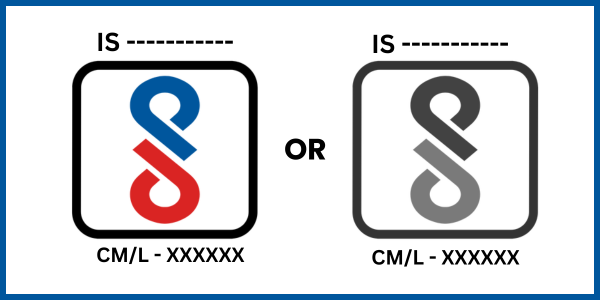
BIS Scheme X Logo
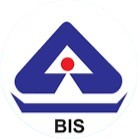
The BIS standard mark of Scheme X forms a quality mark and a principle of trust. The Logo contains:
the standard number is displayed in the top portion of the logo; and
the license number displayed in the bottom portion of the Logo in the format: CM/L-XXXXXXXXXX
This mark signifies that a BIS Licence has been successfully issued to the manufacturer. It entitles the manufacturer to place the BIS Mark and assures the consumers that the product is authentic and safe.
Legal Implications
BIS Standard Mark is a mark of trust and quality. The mark is only available after a valid contract is in place. Only a valid contract allows the owner to use the mark. Using the mark without a valid contract is an offense under the Indian constitution and is equal to having a legal mark. The owner of the mark is placed under heavy restrictions for the use of the license CM/L-XXXXXXXXXX for products that have no BIS certification.
It follows that every producer is obliged to:
Acquire a valid BIS License under Scheme X.
Satisfy the relevant requirements of Indian Standards; and
Properly affix the products with the approved BIS Logo.
This regulatory framework is extended to protect the interests of consumers and business people, fostering a market that emphasizes safety, openness, and confidence.
Key Differences Between Scheme-I and Scheme-X
Scheme-I
Includes a wider category of consumer products such as electronics, home appliances, and even industrial products.
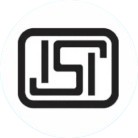
Products issued a certificate under this scheme must have the Standard ISI Mark.
Relates to both domestic and foreign manufacturers.
Involves factory audits and sample testing to determine quality and compliance with Indian Standards.
Scheme-X
Addresses high-risk industrial and safety critical engineering products, which include electrical equipment, machinery, and industrial systems of considerable duty.
The certification is of greater rigor than Scheme-I. It involves advanced technical reporting, compliance checking, and extensive certification audits.
Scheme-X tends to be more expensive than Scheme-I because of the extra compliance documentation.
Any business that deals with electrical equipment or industrial machinery is mandated to obtain certification under Scheme-X.
Products Covered by Scheme-X
Scheme-X covers products with the highest risk to safety and performance, including:
Electrical Equipment: Industrial transformers, power supply units, and the like, low-voltage switchgear and control gear, plus other high-voltage devices.
Heavy Machinery: Hydraulic presses, industrial cranes, automated machine tools, and specialized equipment for large-scale industries.
Life-Critical Equipment: Fire extinguishers, pressure vessels, emergency electrical systems, and other devices and systems for life safety.
Specialized Consumer & Industrial Electronics: Medical grade electronic appliances and equipment incorporating advanced protective measures.
Product wise Safety Standard
Description of Machinery and Electrical Equipment
Safety Standards Under BIS Scheme - X
More than simply a legal necessity, the BIS Scheme - X Certification offers a promise of safety, quality, and reliability. This Certification, which entails strict adherence to national and international norms, ensures that the machinery and electrical apparatus offered to users are safe, environmentally friendly, and technically sound.
To certify under Scheme - X, manufacturers need to comply with the following major safety components:
Electrical Safety: Compliance with the applicable IEC and Indian Standards. Certification protects against short circuits, electric shocks, insulation breakdown, loss in protective earth, ignition of surrounding combustible material, and fire.
Mechanical Safety: Assessment of the machinery's structural integrity and the integrity of moving parts and of new materials. Ensures that equipment is safely subjected to mechanical stress, wear, and operational hazards.
Fire Safety: The use of materials that are designed and constructed with fire resistant material. Compliance with standards for flame propagation performance to control the risks associated with fire.
Environmental Compliance: The use of controlled power and eco - friendly materials in the production of equipment. Encourages manufacturers to lessen the environmental impact of their equipment.
Quality Management: Dominant and autonomous control on the production processes to maintain the pre-set standards and norms. Focus on regulation of factory conditions, including process audits, and continual adherence.
Regulatory Standards Under Scheme-X
Manufacturers are required to comply with the Relevant Indian Standards which are aligned with the International Standards, including:
Type A Standards:
IS 16819:2018 / ISO 12100:2010 – Safety of Machinery: General Principles for the Design, Risk Assessment, and Risk Reduction.
Type B Standards:
Described in the Second Schedule of the Omnibus Technical Regulation (OTR) Order, 2024.
Type C Standards:
Described in the Third Schedule of the OTR Order, 2024.
IS/IEC 60947 Series:
Cover low voltage switchgear and control gear in multiple parts and sections.
Steps to Get Certified Under BIS Scheme-X
Issuing BIS Certificate under Scheme-X is a systematic activity meant to ensure the manufacturer has the applicable safety, quality, and compliance standards fulfilled. The process is as follows:
Verify Scope: Determine whether your product is in the scope of Scheme-X and if it is with BIS safety requirements. Check the relevant Indian Standards and technical schedule to determine if you will be able to comply.
Prepare The Required Documents: Manufacturers need to collect and arrange the following documents: Registered Business certificates, Basis of design documents, Factory and Process flow documents, Service Test Reports (if applicable), Quality assurance and Control Documents.
Construct the Technical File: A technical file is an indispensable part for the claim for extension of a certificate. It should contain: Technical Specifications of the Product, Methods and Techniques Information, Compliance and Test Documents, Limitation and the Intended purpose of the product, Quality assurance documentation, Raw materials traceability, subcontract traceability, and the rest of the evidence, Conformance to the standards within the scope framed.
The Application Form: The application form can be submitted electronically on the BIS Website for the designated place. Settlement of the application fee is a must. The rest of the documents verifying application should be included for proper assessment.
Factory Inspection: For domestic manufacturers: Inspection is conducted over a period of a maximum of 2 days. For foreign manufacturers: Inspection is conducted over a period of a maximum of 3 days (additional days may accrue due to additional requests).
Testing of Product Samples: Sample testing is either carried out at the manufacturers site or at outsourced BIS approved labs (outsource testing is allowed). The testing demonstrates the fulfillment of the relevant Indian standards.
Issuance of Certification: If a product meets all the conditions, BIS grants every product a License or a Certificate of Conformity (CoC). The BIS Standard Mark may be used freely by the manufacturer on all certified products.
This file serves as the technical and statistical evidence of the product claim substantiating to safety trace standards.
During the period of inspection, the BIS officials are expected to: Analyze the technical file, Evaluate the ways of manufacturing along with supporting quality assurance systems, Observe the testing of the product, Determine non-compliance (if any) and give remedial steps. A detailed report of the audit is provided to the applicant after the visit.
This strategy maintains compliance with BIS Standard and is a recognition of Indian and international compliance, cornering the industry on consumer trust towards safety and quality.
Procedure for Domestic Manufacturers
Domestic manufacturers follow a direct approach by obtaining the BIS License under Scheme-X. The direct steps to follow include:
Documentation: All documents pertaining to the scheme must be gathered and prepared.
Execution of the Application: The application is to be presented alongside the relevant fees.
Inquiry on the Application: any application submitted is subject to scrutiny and a subsequent set of questions is generated by BIS.
Appointing Auditors: Auditors are appointed by BIS but the nominated individual is subject to the payment of the audit fees.
Factory Audit: An examination and survey works audit is conducted onsite and relevant samples are collected.
Sample Evaluation: The samples are evaluated in a BIS-recognized laboratory. The applicant pays all BIS-recognized laboratory testing fees.
Payment of Licencing & Marking Fees: The requisite payments are accomplished to BIS.
Grant of Licencing: The certificate granting permission to use the BIS Mark is awarded by BIS.
Typical Timeline: Close to 90 working days (as per BIS practice) are needed. This is provided there are no key non-conformities.
Procedure for Foreign Manufacturers
Unlike domestic manufacturers, foreign manufacturers applying for a BIS certificate under Scheme-X are required to comply with a more stringent process and additional steps. The procedure is elaborated as follows.
Preparation of Documentation: Business registered, the product and factory layout, test reports, and the associated quality management documents all must be in the configured folder to comply.
Submission of The Application: The application, the requisite fee and all application materials be submitted through BIS online portal.
Recording of Application and Scrutiny: The application is recorded by BIS and a check of the documents is conducted. Any issues that BIS may have must be resolved by the applicant in a timely manner.
Auditor Assignment and Payment: BIS's auditors responsible for factory inspections are assigned to the applicant for the audit. The applicant must pay the set fees for the conducted audit, as determined by the applicable legislation.
Audit Preparation: Foreign manufacturers are responsible for logistical arrangements for the audit such as Visa issuance, air tickets, and hotel reservations for BIS officials are arranged and paid.
Factory Audit & Sample Selection: BIS officials conduct a factory audit spanning 3 days (more days can be added if more applications are needed).
Product Testing: Selected samples are forwarded to a BIS accredited laboratory for testing. In some instances, testing is contracted to other testing laboratories and so the payment is settled through the principal testing laboratory.
Payment of Marking & Licence Fees: After successful audit and test results, the manufacturer must pay the required marking fee and licence fee to BIS.
Grant of Licence: BIS issues the Licensed/Certificate of Conformity (CoC) once all conditions have been followed in total. BIS then allows the manufacturer with a used BIS Standard Mark on other certified products, once compliance is confirmed.
The audit comprises: Evaluation of the quality assurance systems and the workflows in the manufacturing processes, Assessment of the compliance and the technical documentation, Independent testing sample selection.
The entire process takes, based on the practices from BIS, roughly 6-7 months.
Key Additional Pointers for Foreign Manufacturers:
Classification FMCS: All foreign manufacturers are classified as 'Large Scale' under the Foreign Manufacturers Certification Scheme. This classification is irrespective of the scale of operations being carried out.
Authorized Indian Representative (AIR): Every foreign manufacturer is required to designate an Authorized Indian Representative (AIR). The AIR is the primary contact point for the foreign applicant and BIS, responsible for compliance, collaboration and the maintenance of the BIS licence.
Factory Audits: Factory audits for foreign manufacturers are comprehensive and tend to last 3 days. Also, more days are required in the case of multiple product applications being filed.
Key Documents Required for BIS Scheme X Certification
To streamline the BIS certification process, manufacturers are required to gather and submit the following documents during the registration phase:
Validity and Renewal Process of Scheme-X Certificate:
Licence Validity and Renewal: BIS Licences under Scheme-X are issued for a period of 3 to 6 years for continuous production. Once the period has expired, the licence can be renewed for the same duration by the submission of a renewal application, the required fee, and compliance documents.
Certificate of Conformity (CoC): A CoC is issued for One time production, and is applicable for domestic as well as overseas manufacturers. Since it applies only to a single batch, a CoC has no renewal option.
Report of Product Tests: When test reports are prepared in the laboratory of the manufacturer, the BIS officials verify them during the factory inspection by conducting witness testing. If testing is done at subcontracted facilities, those facilities are also inspected and approved by BIS.
Review of Application for Renewal: For uninterrupted validity, a manufacturer is required to continue to comply with the Scheme-X provisions. As per Regulation 8 of the BIS Conformity Assessment Regulations, the Bureau of Indian Standards processes the application for renewal in form VIII. Renewal is done only after satisfactory compliance is verified.
Conclusion
The BIS Scheme-X Certification remains vital in upholding the safety, reliability, and quality of Low-voltage switchgear and control gear, Machinery and electrical equipment. For the manufacturers of machine tools applicable to processing stone, ceramics, concrete, asphantic cement and mineral glass, BIS Scheme-X certification is compulsory.
By fulfilling these obligations, manufacturers guarantee product conformity, enhance consumer confidence, as well as improve their credibility on the market. Scheme-X makes sure the production is as smooth as possible, safety standards around the world are met, and the recognized brands gain a positive reputation.
Dhruv Aggarwal
Head of Operations at Sun Certifications India
Experience: 10+ years & Handled 1000+ projects
Awarded by many Indian and International organisations








PT Quty Karunia, BIS Licensee in Vietnam
“Sun Certifications India provided excellent BIS Certification services. Their unparalleled service and sincerity gained our trust. One of the best BIS consultants in India!”

Thantawan Industries Ltd, BIS Licensee in Thailand
“Sun Certifications India supported us throughout the BIS certification process. Their responsive customer service and punctuality are exceptional. Highly recommend for hassle-free BIS certification.”

Leaderart Industries, BIS Licensee in Malaysia
“Sun Certifications India helped us acquire BIS Certification, doubling our engagement in India. Their services are fast, genuine, and up-to-date with latest BIS norms.”

Aluminium Bahrain (ALBA), BIS Licensee in Bahrain
“Excellent BIS certification support, highly reliable consultants.”

Bahrain Aluminium Manufacturing Company, BIS Licensee in Bahrain
“Smooth BIS registration process with expert consultants.”

Daiki Aluminium Japan, BIS Licensee in Japan
“Efficient BIS license assistance, great consultants.”

Trimble Navigation, BIS Licensee in USA
“Seamless BIS certification and registration support.”

Remsa Italia, BIS Licensee in Italy
“Helpful BIS consultants, simplified license process.”

Aquazzura, BIS Licensee in Italy
“We got our BIS certificate well within the timelines and at affordable prices, great work team Sun!”

PT Quty, BIS Licensee in Indonesia
“Excellent BIS registration service, highly recommended.”

Danu Vina, BIS Licensee in Vietnam
“Reliable BIS license consultants, fast process.”

Hanh My Production Company, BIS Licensee in Vietnam
“Expert BIS consultants, certification made easy.”

Sedo Vina, BIS Licensee in Vietnam
“Smooth BIS certificate registration, great support.”

Misumi Japan, BIS Licensee in Japan
“Trusted BIS consultants, quick certification process.”

Thantawan Public Industry Company, BIS Licensee in Thailand
“Professional BIS certification service, very efficient.”

Cortizo Aluminios, BIS Licensee in Spain
“Excellent BIS registration and license guidance.”

Midal Cables, BIS Licensee in Bahrain
“Expert BIS consultants, smooth certification process.”
Years Exp.
Our Clients
Success Rate
Countries Served
Our team brings 10e4+ years of experience in CDSCO and BIS compliance.
We reduce approval time by up to 40% with streamlined processes.
100% success rate with 1500+ successful registrations.
Dedicated account manager ensuring personalized service.
Leave your details below and our experts will call you back within 24 hours to discuss your regulatory compliance needs.
By submitting this form, you agree to our Privacy Policy and consent to being contacted.
Product wise Safety Standard
Description of Machinery and Electrical Equipment
TYPE B (Generic Safety Standards dealing with one safety aspect or more than one type of safeguard that can be used across a wide range of machinery)
TYPE C (Machine Safety Standards dealing with detailed safety requirements for a particular machine or group of machines)
View This Page in Your Language