BIS Certification for Bottled Water Dispensers – Complete Guide to IS 17681:2022
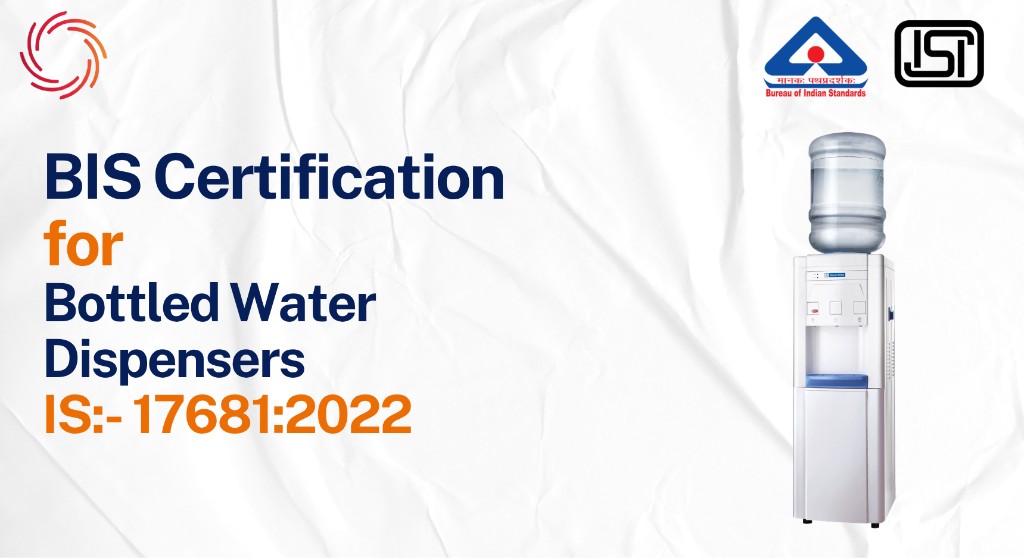
Bottled water dispensers sold in India are evaluated under IS 17681:2022 to verify electrical safety, hygienic water dispensing performance, structural reliability, and operational durability. A BIS Certification for Bottled Water Dispensers confirms that the product satisfies Indian compliance requirements for safe drinking water dispensing in homes, offices, institutions, hospitals, and commercial environments.
Bottled water dispensers have become a common appliance across residential apartments, corporate offices, schools, healthcare facilities, railway stations, retail stores, co-working spaces, and industrial premises. These machines are designed to provide convenient access to drinking water through hot, cold, or normal dispensing systems connected to bottled water containers. As consumer demand for purified packaged water continues to grow in India, the bottled water dispenser market is expanding rapidly.
Unlike ordinary kitchen appliances, bottled water dispensers operate in direct contact with drinking water while simultaneously handling electrical components such as compressors, heating systems, thermostats, cooling mechanisms, pumps, and dispensing valves. This dual interaction between water and electricity creates several safety and hygiene concerns. Poorly manufactured dispensers may lead to water contamination, electric shock hazards, overheating, leakage problems, or bacterial growth within internal components.
The importance of regulatory control in this product category is therefore much higher than many consumers realize. A dispenser installed in a hospital waiting area, school corridor, office pantry, or public reception area is expected to operate continuously for long hours while maintaining safe water dispensing conditions. Failure in temperature control systems or internal hygiene mechanisms can directly affect public health and user safety.
A BIS Certificate for Bottled Water Dispensers demonstrates that the product has been assessed according to IS 17681:2022, which establishes technical and safety requirements for these appliances. The certification framework evaluates performance parameters such as electrical safety, temperature functionality, construction quality, water contact material safety, durability, insulation performance, and operational reliability.
For manufacturers and importers, BIS Certification for Bottled Water Dispensers helps strengthen product acceptance in the Indian market. Commercial buyers increasingly prefer certified appliances because certification provides confidence regarding long-term safety and quality consistency. Corporate procurement teams, institutional buyers, retail chains, and government departments often prioritize compliant products during purchasing decisions.
The BIS License for Bottled Water Dispensers also plays a significant role in reducing compliance risks for distributors and online sellers. Selling uncertified products may create regulatory complications, reputational damage, product recall issues, or consumer complaints. Certification therefore supports both market credibility and operational compliance.
Understanding BIS Certificate for Bottled Water Dispensers - IS 17681:2022
Water dispensers may appear simple externally, but internally they combine refrigeration systems, electrical heating elements, dispensing pipelines, plastic water-contact components, insulation materials, thermostatic controls, and mechanical structures. Since these systems directly influence drinking water handling and electrical operation, quality inconsistencies can create serious safety concerns.
A BIS Certification for Bottled Water Dispensers verifies that the appliance has been manufactured using controlled engineering practices aligned with IS 17681:2022. The purpose of certification is not limited to checking external appearance or functionality. Instead, the evaluation focuses on whether the dispenser can safely operate under practical usage conditions commonly found in Indian environments.
For example, bottled water dispensers are frequently used in high-traffic commercial spaces where hundreds of people may use the appliance daily. Under such conditions, components like dispensing taps, internal piping, compressors, and heating chambers must continue functioning reliably without causing leakage, overheating, contamination, or electrical malfunction.
The BIS framework also addresses hygiene-related concerns. Since water passes through internal contact surfaces before reaching the user, the material composition and construction design become important. Substandard materials may affect water quality, develop microbial contamination, or deteriorate under repeated usage. Certification encourages manufacturers to adopt safer component selection and controlled assembly processes.
Another important objective of BIS Certification for Bottled Water Dispensers is operational consistency. Consumers expect the dispenser to provide reliable cooling and heating performance over long periods. If temperature regulation systems fail, the appliance may dispense unsafe water temperatures or consume excessive electricity. Compliance requirements therefore include evaluation of functional efficiency and electrical protection systems.
The BIS Licence for Bottled Water Dispensers additionally supports accountability in the appliance industry. Certified manufacturers must maintain traceable production systems, batch controls, internal quality testing procedures, and standardized manufacturing practices. This reduces the circulation of unreliable low-cost products that may compromise consumer safety.
From a business perspective, certification improves trust among institutional purchasers, facility management companies, and retail buyers. Water dispensers are often installed in locations where product reliability directly affects user experience and public health perception. Certification acts as evidence that the appliance has undergone structured compliance assessment before entering the market.
Applicable BIS Standard for Bottled Water Dispensers - IS 17681:2022
The applicable Indian Standard for this product category is IS 17681:2022. This standard establishes technical and safety requirements for bottled water dispensers used for dispensing potable water through heating, cooling, or normal water dispensing systems.
The standard focuses on appliances designed to work with bottled drinking water containers and evaluates their construction, operational safety, hygiene-related characteristics, and performance capability.
Scope of IS 17681:2022
IS 17681:2022 applies to bottled water dispensers intended for:
- Residential use
- Office installations
- Commercial establishments
- Educational institutions
- Healthcare facilities
- Hospitality environments
- Public access locations
The standard covers dispensers operating with:
- Hot water dispensing systems
- Cold water dispensing systems
- Room-temperature water dispensing systems
- Combination hot and cold dispensing models
Product Categories Covered
The standard generally includes:
- Floor-standing bottled water dispensers
- Tabletop water dispensers
- Compressor-based cooling dispensers
- Thermoelectric water dispensers
- Storage cabinet models
- Multi-temperature dispensing systems
Different configurations may exist, but all products falling within the defined operational scope must comply with the standard requirements.
Safety and Performance Objectives
The objectives of IS 17681:2022 include ensuring that bottled water dispensers:
- Operate safely under electrical load conditions
- Prevent electric shock hazards
- Maintain safe water dispensing temperatures
- Avoid water contamination risks
- Resist leakage during normal use
- Maintain structural durability
- Deliver stable operational performance
The standard also addresses consumer interaction safety because these appliances are frequently used in shared public environments by individuals of different age groups.
Design and Testing Principles
The testing approach under IS 17681:2022 focuses on practical appliance behavior during routine operation. Important evaluation principles include:
- Electrical insulation reliability
- Heating and cooling performance
- Temperature stability
- Structural integrity
- Water leakage prevention
- Material safety evaluation
- Durability assessment
- Operational endurance testing
These technical requirements help ensure that the dispenser remains safe and functional during prolonged daily usage.
Testing Requirements as per IS 17681:2022
Testing is one of the most important stages in the BIS Certification for Bottled Water Dispensers because these appliances combine electrical systems with drinking water dispensing functions.
All testing must be conducted in Bureau of Indian Standards recognized laboratories.
Electrical Safety Testing
This evaluates protection against electric shock, insulation failure, short-circuit risks, and unsafe wiring conditions.
Temperature Performance Testing
The dispenser's heating and cooling systems are evaluated for stable operational performance.
Leakage Testing
Leakage testing helps verify that water does not enter electrical compartments or escape from dispensing systems during operation.
Durability Testing
The appliance undergoes repeated operational cycles to evaluate long-term performance consistency.
Material Quality Verification
Water-contact materials are assessed for suitability and resistance to deterioration during repeated use.
Stability and Structural Testing
The appliance structure is evaluated to ensure operational stability and resistance against normal handling conditions.
Conclusion
Bottled water dispensers are widely used appliances that directly influence drinking water accessibility, consumer convenience, and public hygiene standards. Because these products combine electrical systems with water dispensing functionality, product reliability and operational safety are critical.
A BIS Certification for Bottled Water Dispensers demonstrates compliance with IS 17681:2022 and helps verify that the appliance meets Indian expectations for electrical protection, structural durability, hygienic dispensing performance, and long-term operational reliability. From residential usage to large-scale institutional installations, certified products inspire greater confidence among buyers and users.
Obtaining a BIS License for Bottled Water Dispensers also helps manufacturers and importers strengthen regulatory compliance, improve market access, and build long-term brand credibility. Whether supplying to commercial buyers, retail markets, government institutions, or online platforms, maintaining compliance with Indian standards is essential for sustainable business growth in the water appliance industry.
FAQs – BIS Certification for Bottled Water Dispensers - IS 17681:2022
1. Why is BIS Certification important for bottled water dispensers used in offices and public places?
Bottled water dispensers installed in offices, schools, hospitals, and public areas operate continuously and are used by large numbers of people every day. BIS Certification for Bottled Water Dispensers helps confirm that the appliance can safely handle drinking water while maintaining electrical protection, temperature stability, and hygienic operation during long-term usage.
2. What factors influence the bis certification cost for Bottled Water Dispensers?
The bis certification cost for Bottled Water Dispensers depends on product complexity, number of models, laboratory testing charges, factory audit expenses, annual licensing fees, and technical documentation requirements. Appliances with advanced cooling systems, multiple dispensing functions, or additional safety features may involve higher compliance evaluation costs.
3. Does IS 17681:2022 apply to both hot and cold water dispensers?
Yes, IS 17681:2022 generally covers bottled water dispensers designed for hot, cold, or normal water dispensing functions. Whether the appliance uses compressor cooling systems or thermoelectric technology, it must comply with the relevant safety and performance requirements applicable to its operational configuration.
4. Can imported bottled water dispensers be sold in India without BIS compliance?
Imported dispensers may face regulatory and commercial challenges if they do not comply with Indian standards. Many institutional buyers, organized retailers, and procurement departments prefer products supported by a BIS License for Bottled Water Dispensers because certification improves confidence regarding safety and quality consistency.
5. What are the common reasons for failure during laboratory testing?
Products may fail testing because of poor electrical insulation, water leakage into electrical areas, unstable temperature performance, overheating issues, weak structural design, or substandard internal components. Manufacturers should conduct internal quality verification before submitting samples for official compliance evaluation.
6. How long does the bis certification process for Bottled Water Dispensers usually take?
The bis certification process for Bottled Water Dispensers may take several weeks or months depending on product readiness, testing timelines, documentation accuracy, and factory inspection results. Delays frequently occur when manufacturers submit incomplete technical records or when product samples fail laboratory evaluation.
7. What documents are typically required for certification approval?
The bis certification documents for Bottled Water Dispensers usually include factory registration certificates, technical specifications, circuit diagrams, quality manuals, calibration records, product drawings, test reports, and labelling artwork. Accurate documentation helps reduce compliance delays and improves application processing efficiency.
8. Are manufacturers required to maintain quality checks after receiving certification?
Yes, certification is not a one-time activity. Manufacturers must continue maintaining production quality, internal testing systems, and inspection procedures after obtaining the BIS Licence for Bottled Water Dispensers. Surveillance audits and periodic product verification may also be conducted to confirm continued compliance.
9. Does BIS Certification improve business opportunities for appliance manufacturers?
Certified products generally receive stronger acceptance from institutional buyers, corporate procurement departments, organized retail chains, and online marketplaces. A BIS Certificate for Bottled Water Dispensers also improves brand trust because buyers associate certification with product reliability and regulatory compliance.
10. Why is testing in BIS recognized laboratories necessary for bottled water dispensers?
Testing in BIS recognized laboratories ensures that the appliance is evaluated using standardized procedures and calibrated testing systems. Since bottled water dispensers involve both electrical safety and drinking water handling, laboratory verification helps confirm that the product can operate safely under real-world conditions.
Quality Control Order (QCO) for Bottled Water Dispensers
Related Resources
Many of our users also read
This compliance advisory was vetted by our Senior Consultant (Enforcement & Vigilance), a former BIS Director (Enforcement). He specializes in post-certification compliance, helping companies navigate surveillance audits and legal adherence to BIS mandates.
Dhruv Aggarwal
Head of Operations at Sun Certifications India
Experience: 10+ years & Handled 1000+ projects
Awarded by many Indian and International organisations









PT Quty Karunia, BIS Licensee in Vietnam
“Sun Certifications India provided excellent BIS Certification services. Their unparalleled service and sincerity gained our trust. One of the best BIS consultants in India!”

Thantawan Industries Ltd, BIS Licensee in Thailand
“Sun Certifications India supported us throughout the BIS certification process. Their responsive customer service and punctuality are exceptional. Highly recommend for hassle-free BIS certification.”

Leaderart Industries, BIS Licensee in Malaysia
“Sun Certifications India helped us acquire BIS Certification, doubling our engagement in India. Their services are fast, genuine, and up-to-date with latest BIS norms.”

Aluminium Bahrain (ALBA), BIS Licensee in Bahrain
“Excellent BIS certification support, highly reliable consultants.”

Bahrain Aluminium Manufacturing Company, BIS Licensee in Bahrain
“Smooth BIS registration process with expert consultants.”

Daiki Aluminium Japan, BIS Licensee in Japan
“Efficient BIS license assistance, great consultants.”

Trimble Navigation, BIS Licensee in USA
“Seamless BIS certification and registration support.”

Remsa Italia, BIS Licensee in Italy
“Helpful BIS consultants, simplified license process.”

Aquazzura, BIS Licensee in Italy
“We got our BIS certificate well within the timelines and at affordable prices, great work team Sun!”

PT Quty, BIS Licensee in Indonesia
“Excellent BIS registration service, highly recommended.”

Danu Vina, BIS Licensee in Vietnam
“Reliable BIS license consultants, fast process.”

Hanh My Production Company, BIS Licensee in Vietnam
“Expert BIS consultants, certification made easy.”

Sedo Vina, BIS Licensee in Vietnam
“Smooth BIS certificate registration, great support.”

Misumi Japan, BIS Licensee in Japan
“Trusted BIS consultants, quick certification process.”

Thantawan Public Industry Company, BIS Licensee in Thailand
“Professional BIS certification service, very efficient.”

Cortizo Aluminios, BIS Licensee in Spain
“Excellent BIS registration and license guidance.”

Midal Cables, BIS Licensee in Bahrain
“Expert BIS consultants, smooth certification process.”
Years Exp.
Our Clients
Success Rate
Countries Served
Our team brings 10e4+ years of experience in CDSCO and BIS compliance.
We reduce approval time by up to 40% with streamlined processes.
100% success rate with 1500+ successful registrations.
Dedicated account manager ensuring personalized service.
Leave your details below and our experts will call you back within 24 hours to discuss your regulatory compliance needs.
By submitting this form, you agree to our Privacy Policy and consent to being contacted.