BIS Certification for Asbestos Cement Building Boards – IS 2098:1997
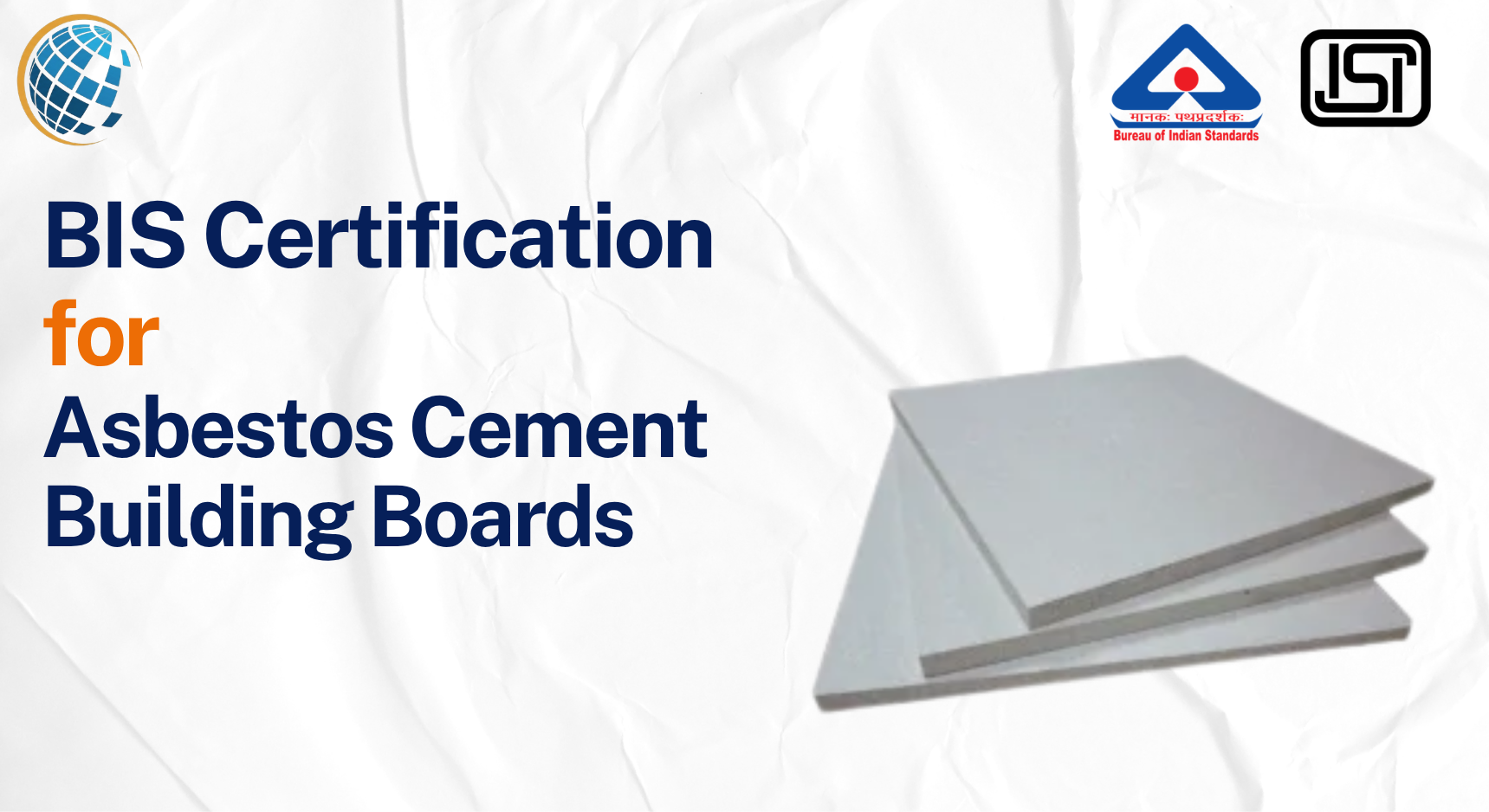
BIS Certification for Asbestos Cement Building Boards under IS 2098:1997 ensures that these boards meet strict requirements for strength, durability, and safe usage in construction applications. Certification is essential in India to regulate structural reliability, prevent material degradation, and ensure long-term performance in residential, commercial, and industrial building environments.
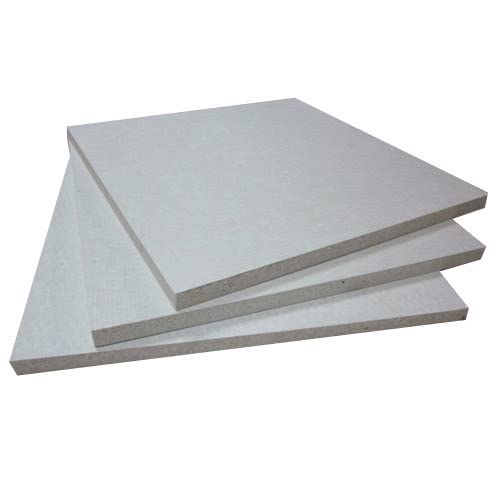
Asbestos Cement Building Boards are widely used in modern construction due to their versatility, durability, and resistance to moisture, heat, and fire. These boards are commonly installed in ceilings, partitions, wall cladding, and roofing underlays, making them a crucial component in both residential and industrial infrastructure.
Because these boards are integrated into structural and semi-structural elements, any compromise in their quality can lead to safety hazards, premature deterioration, or costly repairs. For example, a poorly manufactured board may crack under load, absorb excessive moisture, or lose strength over time, affecting the stability of installations.
In India, regulatory oversight ensures that such construction materials perform consistently across varying environmental conditions. This is where BIS Certification for Asbestos Cement Building Boards becomes important. It serves as a verification mechanism that confirms whether the product has been designed, manufactured, and tested according to IS 2098:1997.
For manufacturers, importers, and sellers, obtaining a BIS License for Asbestos Cement Building Boards is not just a compliance requirement—it is a signal to the market that the product can be relied upon in demanding construction scenarios.
Understanding BIS Certificate for Asbestos Cement Building Boards - IS 2098:1997
BIS Certification for Asbestos Cement Building Boards focuses on validating how well the product performs when used in real construction environments. Unlike decorative materials, these boards must handle structural stress, exposure to moisture, and temperature fluctuations.
During manufacturing, asbestos cement boards are created by combining cement with reinforcing fibers, which are then compressed and cured into flat sheets. Variations in raw material quality, mixing ratios, curing conditions, or pressing techniques can significantly impact the board's strength and durability.
The certification framework evaluates whether:
- The boards maintain uniform thickness and density
- They resist cracking, warping, or delamination
- They can withstand environmental exposure
- They retain mechanical strength over time
This process ensures that end-users—whether contractors, builders, or homeowners—receive products that perform reliably throughout their lifecycle. When you plan the licence route itself, it helps to align product-specific work with how Indian BIS operates overall — Check complete details about documentation, cost, and process etc.
Applicable BIS Standard for Asbestos Cement Building Boards - IS 2098:1997
IS 2098:1997
The standard IS 2098:1997 outlines the technical specifications for asbestos cement flat boards used in building applications. It defines the requirements for manufacturing, testing, and quality control to ensure that the boards meet structural and performance expectations.
Scope of the Standard
This standard applies to flat sheets used in:
- Ceiling panels
- Partition walls
- Cladding systems
- Insulation backing
Product Categories Covered
IS 2098:1997 categorizes boards based on:
- Thickness
- Density
- Intended application (load-bearing vs non-load-bearing)
Safety and Performance Objectives
The standard ensures that boards:
- Maintain structural integrity under load
- Resist moisture absorption
- Withstand environmental exposure
- Provide fire resistance
Design and Testing Principles
The standard incorporates:
- Mechanical strength testing
- Water absorption limits
- Dimensional stability checks
- Surface finish requirements
These criteria ensure that every BIS Certified product is suitable for long-term construction use.
Testing Requirements as per IS 2098:1997
Testing ensures that boards meet structural and environmental performance expectations.
Safety Tests
- Structural strength evaluation
- Crack resistance testing
Performance Tests
- Load-bearing capacity
- Flexural strength
Durability Tests
- Moisture resistance
- Weather exposure testing
Quality Verification Tests
- Thickness consistency
- Surface finish
All tests must be conducted in BIS recognized laboratories.
Conclusion
BIS Certification for Asbestos Cement Building Boards is essential for ensuring that construction materials meet the performance and durability requirements expected in real-world applications. By complying with IS 2098:1997, manufacturers demonstrate their commitment to producing reliable and safe products.
Obtaining a BIS License for Asbestos Cement Building Boards not only enables regulatory compliance but also strengthens market credibility and long-term business growth. For manufacturers, importers, and sellers, investing in certification is a strategic step toward building trust, ensuring product reliability, and expanding market opportunities in India.
FAQs – BIS Certification for Asbestos Cement Building Boards - IS 2098:1997
1. What is the typical BIS certification cost for Asbestos Cement Building Boards?
The bis certification cost for Asbestos Cement Building Boards varies depending on factors such as product variants, testing requirements, and factory inspection complexity. Costs usually include application fees, laboratory testing charges, inspection fees, and annual license fees. Manufacturers with multiple board sizes or densities may incur higher costs due to additional testing. Proper planning and documentation can help reduce unexpected expenses during the certification process.
2. What tests are conducted under IS 2098:1997?
Testing under IS 2098:1997 includes strength tests, water absorption tests, dimensional accuracy checks, and durability assessments. These tests ensure that the boards can withstand environmental conditions and structural loads. Testing must be conducted in BIS recognized laboratories to ensure reliability and compliance with regulatory requirements.
3. Is BIS certification mandatory for imported boards?
Yes, imported Asbestos Cement Building Boards must also comply with BIS Certification requirements. Importers need to obtain certification under the Foreign Manufacturers Certification Scheme (FMCS). This ensures that imported products meet the same quality standards as domestically manufactured boards.
4. Can a manufacturer apply for multiple product variants under one license?
Yes, manufacturers can include multiple variants such as different thicknesses or densities under one BIS License, provided all variants comply with IS 2098:1997. However, each variant may require separate testing to ensure compliance, which can affect the overall bis license cost for Asbestos Cement Building Boards.
5. What happens if a product fails laboratory testing?
If a product fails testing, the manufacturer must identify and correct the issues in the production process. This may involve adjusting raw material composition, curing methods, or manufacturing techniques. The product must then be retested to demonstrate compliance before certification can proceed.
6. Can BIS certification be transferred if ownership of the manufacturing unit changes?
No, a BIS License for Asbestos Cement Building Boards is not automatically transferable when ownership changes. The new owner must apply for a fresh certification or request modification of the existing license through proper legal documentation. BIS evaluates whether the manufacturing setup, quality control systems, and product specifications remain consistent. This ensures that certification is always linked to a verified manufacturing entity rather than just the product name.
7. What role does curing play in BIS compliance for asbestos cement boards?
Curing is a crucial stage in manufacturing asbestos cement boards, directly affecting their strength and durability. BIS Certification for Asbestos Cement Building Boards requires manufacturers to follow controlled curing processes to ensure proper hydration of cement and bonding with fibers. Improper curing can lead to weak boards that fail strength or durability tests. During factory audits, inspectors closely examine curing conditions, duration, and consistency to confirm compliance with IS 2098:1997.
8. Are there restrictions on raw materials used in certified boards?
Yes, BIS Certification for Asbestos Cement Building Boards requires strict control over raw materials such as cement quality, fiber content, and additives. The composition must meet defined parameters to ensure strength, durability, and safety. Using substandard or inconsistent materials can lead to failure in laboratory testing. Manufacturers must maintain traceability of raw materials and conduct regular checks to ensure that every batch meets the required specifications.
9. How does BIS certification impact large infrastructure or government projects?
In many government and infrastructure projects, only certified construction materials are approved for use. Having a BIS Certificate for Asbestos Cement Building Boards significantly improves eligibility for such projects. Contractors and project authorities rely on certification as proof of compliance with technical standards. This reduces the need for additional verification and ensures that materials used in public infrastructure meet durability and safety expectations over long service periods.
10. Is it necessary to retest products after making minor design or thickness changes?
Yes, even minor changes in design, thickness, or composition may require retesting under the BIS certification process for Asbestos Cement Building Boards. Such changes can affect strength, weight, and durability characteristics. BIS requires manufacturers to notify any modifications and may mandate fresh testing to ensure continued compliance with IS 2098:1997. This prevents variations in product quality that could impact real-world performance.
Many of our users also read
This compliance advisory was vetted by our Senior Consultant (Enforcement & Vigilance), a former BIS Director (Enforcement). He specializes in post-certification compliance, helping companies navigate surveillance audits and legal adherence to BIS mandates.
Dhruv Aggarwal
Head of Operations at Sun Certifications India
Experience: 10+ years & Handled 1000+ projects
Awarded by many Indian and International organisations








PT Quty Karunia, BIS Licensee in Vietnam
“Sun Certifications India provided excellent BIS Certification services. Their unparalleled service and sincerity gained our trust. One of the best BIS consultants in India!”

Thantawan Industries Ltd, BIS Licensee in Thailand
“Sun Certifications India supported us throughout the BIS certification process. Their responsive customer service and punctuality are exceptional. Highly recommend for hassle-free BIS certification.”

Leaderart Industries, BIS Licensee in Malaysia
“Sun Certifications India helped us acquire BIS Certification, doubling our engagement in India. Their services are fast, genuine, and up-to-date with latest BIS norms.”

Aluminium Bahrain (ALBA), BIS Licensee in Bahrain
“Excellent BIS certification support, highly reliable consultants.”

Bahrain Aluminium Manufacturing Company, BIS Licensee in Bahrain
“Smooth BIS registration process with expert consultants.”

Daiki Aluminium Japan, BIS Licensee in Japan
“Efficient BIS license assistance, great consultants.”

Trimble Navigation, BIS Licensee in USA
“Seamless BIS certification and registration support.”
Remsa Italia, BIS Licensee in Italy
“Helpful BIS consultants, simplified license process.”

Aquazzura, BIS Licensee in Italy
“We got our BIS certificate well within the timelines and at affordable prices, great work team Sun!”

PT Quty, BIS Licensee in Indonesia
“Excellent BIS registration service, highly recommended.”

Danu Vina, BIS Licensee in Vietnam
“Reliable BIS license consultants, fast process.”

Hanh My Production Company, BIS Licensee in Vietnam
“Expert BIS consultants, certification made easy.”

Sedo Vina, BIS Licensee in Vietnam
“Smooth BIS certificate registration, great support.”

Misumi Japan, BIS Licensee in Japan
“Trusted BIS consultants, quick certification process.”

Thantawan Public Industry Company, BIS Licensee in Thailand
“Professional BIS certification service, very efficient.”

Cortizo Aluminios, BIS Licensee in Spain
“Excellent BIS registration and license guidance.”

Midal Cables, BIS Licensee in Bahrain
“Expert BIS consultants, smooth certification process.”
Years Exp.
Our Clients
Success Rate
Countries Served
Our team brings 10e4+ years of experience in CDSCO and BIS compliance.
We reduce approval time by up to 40% with streamlined processes.
100% success rate with 1500+ successful registrations.
Dedicated account manager ensuring personalized service.
Leave your details below and our experts will call you back within 24 hours to discuss your regulatory compliance needs.
By submitting this form, you agree to our Privacy Policy and consent to being contacted.