BIS Certification for Commercial Electric Hoods – Complete Guide
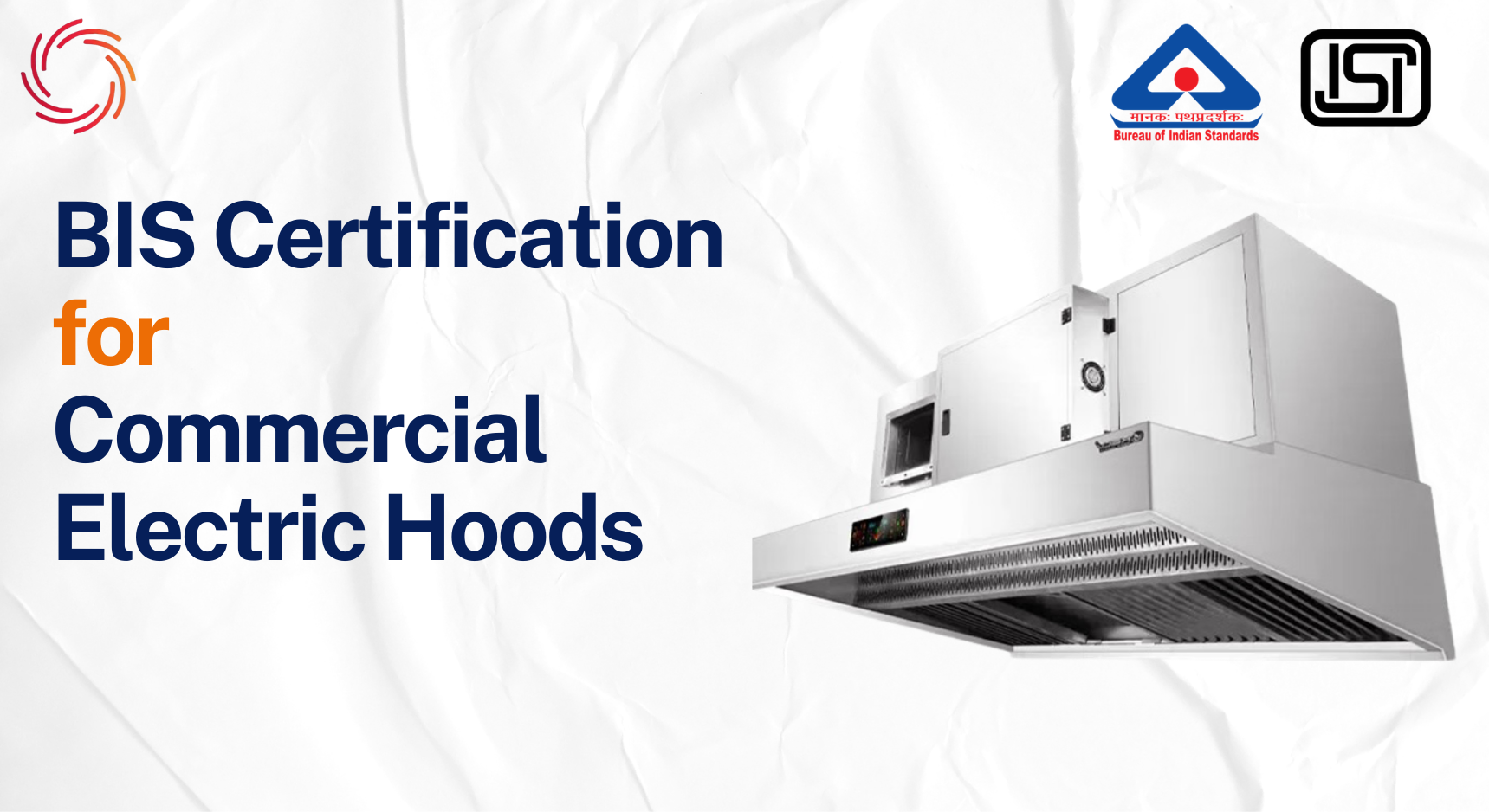
BIS Certification for Commercial Electric Hoods verifies that these electrically operated ventilation systems used in commercial kitchens comply with safety and performance requirements under IS 302 (Part 1):2024. Certification confirms that the hood's electrical components, motor systems, and heat-resistant design operate safely in demanding cooking environments across India.
Commercial kitchens operate under intense conditions. High temperatures, continuous cooking, oil vapors, smoke, and grease particles accumulate rapidly during food preparation. To maintain air quality and ensure safe working conditions, restaurants, hotels, food courts, and industrial kitchens rely on commercial electric hoods—powerful ventilation units installed above cooking equipment.
These hoods play a crucial role in extracting heat, fumes, and grease-laden vapors generated during cooking. They usually contain electric motors, fans, lighting systems, and control circuits that operate continuously in environments filled with moisture and oil particles. If poorly designed, such electrical equipment can become a serious hazard. Motor overheating, electrical leakage, insulation failure, or grease accumulation near electrical components can increase the risk of fire or electrical shock.
India's food service industry is expanding rapidly, with thousands of commercial kitchens opening each year. With this growth comes the need to regulate the safety of appliances used in these environments. Electrical equipment installed in kitchens must withstand high temperatures, grease exposure, and continuous operation without creating risks for workers or customers.
This is where BIS Certification for Commercial Electric Hoods becomes critical. The certification ensures that these ventilation systems are engineered to operate safely in demanding commercial kitchens while meeting the technical requirements defined under IS 302 (Part 1):2024.
For manufacturers and importers supplying ventilation equipment to restaurants, hotels, and institutional kitchens, obtaining a BIS Certificate for Commercial Electric Hoods demonstrates that the product meets recognized electrical safety and construction standards. Certification also assures restaurant operators and facility managers that the ventilation equipment installed above their cooking stations has been evaluated for reliability and safety.
In this comprehensive guide, we will explore the BIS Certification process for Commercial Electric Hoods, the applicable safety standard, testing requirements, documentation, certification costs, and compliance obligations for businesses involved in manufacturing or supplying these products in India.
Understanding BIS Certification for Commercial Electric Hoods
Commercial electric hoods combine electrical systems with ventilation technology to remove smoke, heat, and grease vapors produced during cooking. These appliances typically include:
- High-capacity exhaust fans
- Electric motors
- LED or halogen lighting systems
- Electrical control panels
- Grease filtration units
- Metallic hood structures
Because these systems operate continuously above cooking ranges, fryers, and grills, they are exposed to elevated temperatures and grease particles. Electrical components inside the hood must therefore be protected against heat, oil contamination, and moisture.
The BIS Certification for Commercial Electric Hoods evaluates whether these appliances are designed to operate safely under such conditions. Certification focuses on electrical insulation, wiring protection, motor reliability, heat resistance, and mechanical construction.
For example, the electrical wiring within the hood must be shielded from grease accumulation. If grease reaches exposed electrical terminals, it could increase the risk of short circuits or fire. Similarly, the electric motor that drives the exhaust fan must remain stable during prolonged operation without overheating.
A BIS License for Commercial Electric Hoods confirms that the product has undergone testing to verify that:
- Electrical insulation can withstand operating conditions
- Motors and fan assemblies operate reliably under load
- Heat from nearby cooking equipment does not compromise electrical components
- Protective earthing prevents electrical hazards
Another important aspect of certification involves verifying that manufacturers maintain consistent production quality. A single tested sample is not enough; the entire production line must be capable of producing units that match the safety performance of the approved sample. The BIS Licence for Commercial Electric Hoods therefore also assesses manufacturing controls, quality inspection systems, and production testing procedures at the factory.
For restaurant operators and facility managers, the presence of a certified product reduces uncertainty when installing ventilation systems above cooking appliances. It indicates that the hood has been evaluated according to established safety parameters relevant to high-temperature commercial kitchens.
Applicable BIS Standard for Commercial Electric Hoods
The safety framework applicable to commercial electric hoods is IS 302 (Part 1):2024, which defines safety requirements for electrically operated appliances. This standard focuses on appliances that rely on electrical energy to perform mechanical or heating functions and may expose users to electrical, thermal, or mechanical hazards during operation.
Scope of the Standard
IS 302 (Part 1):2024 applies to electrical appliances designed for domestic or similar applications where electricity powers motors, heaters, or electronic control systems. Commercial electric hoods fall within this scope because they contain electrically driven fans and lighting systems operating in demanding kitchen environments.
Product Categories Covered
The standard covers appliances that include:
- Electric motors
- Heating elements
- Electronic control circuits
- Lighting systems
- Metal enclosures and structural components
Commercial kitchen ventilation systems that rely on electrical motors and wiring for operation are therefore subject to these safety provisions.
Safety and Performance Objectives
The standard addresses multiple safety objectives relevant to commercial kitchen environments:
- Preventing electric shock caused by faulty insulation
- Ensuring stable operation of electrical motors
- Limiting excessive temperature rise in electrical components
- Protecting internal wiring from mechanical damage
- Ensuring grounding protection in metal appliances
Design and Testing Principles
The standard evaluates various aspects of product design, including:
- Insulation resistance
- Temperature rise during operation
- Mechanical strength of the appliance enclosure
- Resistance to heat and fire
- Protection against moisture or grease exposure
For commercial electric hoods installed above cooking ranges, these requirements ensure that electrical systems remain stable even when exposed to high ambient temperatures and airborne grease particles.
Why BIS Certification is Mandatory for Commercial Electric Hoods
Commercial kitchen ventilation systems operate in one of the most demanding appliance environments. Continuous cooking generates smoke, heat, and grease that accumulate inside exhaust hoods. Without appropriate electrical design and safety features, these conditions can quickly create hazardous situations.
One major risk is grease ignition near electrical components. Grease particles extracted from cooking fumes can accumulate on surfaces inside the hood. If the electrical motor or wiring generates excessive heat, grease buildup may ignite, leading to kitchen fires.
Another concern is electrical insulation degradation. High temperatures above cooking equipment can weaken insulation materials used in wiring and electrical components. Over time, this may result in electrical leakage or short circuits.
Motor failure is also a potential hazard. Exhaust fans must operate continuously during kitchen operations. If the motor overheats or fails, smoke and heat may accumulate rapidly, affecting kitchen safety and air quality.
The BIS Certificate for Commercial Electric Hoods addresses these risks by verifying that the product has been tested under defined safety conditions. Certification confirms that the electrical system can tolerate temperature exposure, mechanical stress, and long operational cycles typical of commercial kitchens.
From a regulatory perspective, the certification also helps authorities ensure that electrical appliances entering the Indian market follow recognized safety benchmarks. For manufacturers and suppliers, obtaining a BIS License for Commercial Electric Hoods provides a clear pathway to demonstrate compliance and build confidence among commercial kitchen operators.
Step-by-Step BIS Certification Process for Commercial Electric Hoods
Applicability & Standard Identification
The certification journey begins with determining whether the ventilation system falls within the scope of IS 302 (Part 1):2024. Manufacturers must review the electrical components, motor systems, and operational characteristics of the hood to confirm applicability.
BIS Online Application Submission
Manufacturers submit the certification request through the BIS digital portal. The application includes company details, product specifications, electrical diagrams, and manufacturing information.
BIS Certification Cost Structure
The bis certification cost for Commercial Electric Hoods typically includes several elements:
- Application fees
- Product testing charges
- Factory inspection expenses
- License fee
- Marking fee
The cost of BIS certification for Commercial Electric Hoods may vary depending on the number of models and testing requirements.
Product Sample Testing as per IS 302 (Part 1):2024
Product samples are sent to BIS recognized laboratories where they undergo electrical safety and performance testing. The testing verifies compliance with the technical requirements defined under the standard.
Factory Inspection & Quality Audit
BIS officers may inspect the manufacturing facility to confirm that production processes, testing procedures, and quality control systems ensure consistent product safety.
Grant of BIS License and ISI Mark
After successful testing and inspection, the manufacturer receives the BIS Licence for Commercial Electric Hoods and is authorized to mark the product with the ISI symbol.
Post-Certification Compliance
Manufacturers must maintain consistent quality standards even after obtaining the BIS License for Commercial Electric Hoods. Periodic inspections and surveillance testing may be conducted to verify ongoing compliance.
Documents Required for BIS Certification of Commercial Electric Hoods
Obtaining a BIS Certificate for Commercial Electric Hoods requires several categories of documentation.
Manufacturer Documents
These documents verify the identity and operations of the manufacturing unit. Examples include factory licenses, manufacturing unit registration certificates, and production facility details.
Legal Documents
Legal records confirm the legitimacy of the company applying for certification. These may include company incorporation certificates and authorized signatory details.
Technical Documents
Technical documentation explains how the hood is designed and manufactured. Examples include electrical wiring diagrams, component specifications, motor details, and product drawings.
BIS Application Documents
These documents support the certification request submitted through the BIS portal. They include the application form, quality control plans, and laboratory test reports. Proper preparation of bis certification documents for Commercial Electric Hoods helps avoid delays during the approval process.
Testing Requirements as per IS 302 (Part 1):2024
Testing ensures that commercial electric hoods operate safely in real kitchen environments. Testing must be conducted in BIS recognized laboratories. Important tests include:
Electrical Safety Tests
These tests examine insulation resistance, leakage current levels, and earthing protection to prevent electrical hazards.
Performance Tests
Performance testing evaluates the operational stability of the motor and fan system during continuous ventilation operation.
Temperature Rise Tests
These tests measure whether electrical components exceed safe temperature limits during operation near hot cooking appliances.
Durability Tests
Durability testing simulates prolonged usage to ensure the ventilation system continues functioning safely over time.
Common Challenges in BIS Certification and How to Avoid Them
Many manufacturers encounter challenges during the bis certification process for Commercial Electric Hoods.
Failed Lab Testing
Testing failures often occur due to insufficient insulation, improper wiring protection, or inadequate motor cooling. Conducting internal product testing before submitting samples can help avoid this issue.
Incorrect Documentation
Incomplete documentation is another common problem. All required documents should be reviewed carefully before application submission.
Factory Audit Non-Compliance
Manufacturing facilities lacking proper quality control procedures may face audit observations. Implementing structured quality checks helps improve compliance.
Labeling Mistakes
Incorrect product labeling or missing safety markings may delay certification approval.
Who Needs BIS Certification for Commercial Electric Hoods?
Certification requirements apply to several types of businesses.
- Manufacturers — Indian manufacturers producing commercial electric hoods must obtain a BIS license before selling these products.
- Importers — Importers bringing ventilation equipment into India must ensure that the product is BIS certified.
- Foreign Manufacturers — Overseas manufacturers exporting commercial kitchen ventilation systems to India must obtain certification through BIS procedures.
- Private Label Brands — Brands selling ventilation equipment under their own label must ensure that the manufacturing unit is certified.
- Online Sellers and Distributors — E-commerce platforms and distributors should verify product certification before selling commercial kitchen equipment.
Conclusion
Commercial kitchens rely heavily on efficient ventilation systems to maintain safe working environments. Because commercial electric hoods operate directly above cooking equipment and contain electrical motors, wiring, and lighting systems, they must be designed to handle high temperatures, grease exposure, and continuous operation.
The BIS Certification for Commercial Electric Hoods ensures that these appliances meet the safety requirements outlined in IS 302 (Part 1):2024. Through testing, inspection, and regulatory verification, certification confirms that the product's electrical systems, structural design, and operational performance meet defined safety parameters.
For manufacturers, importers, and commercial kitchen equipment suppliers, obtaining a BIS Certificate for Commercial Electric Hoods is an important step toward regulatory compliance and market acceptance. A valid BIS License for Commercial Electric Hoods demonstrates product reliability, strengthens brand credibility, and allows businesses to confidently supply ventilation systems to restaurants, hotels, and institutional kitchens across India.
FAQs – BIS Certification for Commercial Electric Hoods
1. What is BIS Certification for Commercial Electric Hoods?
It is a certification confirming that the hood meets electrical safety requirements under IS 302 (Part 1):2024.
2. Is BIS certification required for commercial kitchen hoods?
Electrical ventilation systems containing motors and wiring must comply with applicable BIS safety standards.
3. What is the bis certification process for Commercial Electric Hoods?
The process involves application submission, product testing, factory inspection, and license approval.
4. What is the bis certificate cost for Commercial Electric Hoods?
The cost depends on testing fees, application charges, and inspection expenses.
5. How long does certification take?
The timeline may range from several weeks to a few months depending on testing and documentation readiness.
6. What documents are required for certification?
Manufacturers must submit company documents, product specifications, electrical diagrams, and quality control plans.
7. Where are products tested?
Testing is conducted in laboratories recognized by BIS.
8. Is factory inspection mandatory?
Yes, BIS may inspect the manufacturing facility to verify production quality controls.
9. Can foreign manufacturers apply for BIS certification?
Yes, foreign manufacturers exporting products to India must obtain BIS certification.
10. What is the bis license cost for Commercial Electric Hoods?
Costs vary depending on product complexity and testing requirements.
11. What happens if the product fails testing?
The manufacturer must correct design issues and submit a new sample for testing.
12. Does each model require certification?
Different models or variants may require evaluation depending on design differences.
13. Can BIS certification be renewed?
Yes, licenses require periodic renewal and compliance maintenance.
14. Is certification required for online sales?
Yes, products sold online must also comply with BIS regulations.
15. Can consultants help with certification?
Professional consultants assist with documentation, testing coordination, and application management.
Related Resources
Many of our users also read
Our Principal Regulatory Consultant, a former BIS Deputy Director General (Standardization). With over 30 years of service, he specializes in interpreting the Bureau of Indian Standards Act and simplifying complex certification workflows for Indian manufacturers.
Dhruv Aggarwal
Head of Operations at Sun Certifications India
Experience: 10+ years & Handled 1000+ projects
Awarded by many Indian and International organisations








PT Quty Karunia, BIS Licensee in Vietnam
“Sun Certifications India provided excellent BIS Certification services. Their unparalleled service and sincerity gained our trust. One of the best BIS consultants in India!”

Thantawan Industries Ltd, BIS Licensee in Thailand
“Sun Certifications India supported us throughout the BIS certification process. Their responsive customer service and punctuality are exceptional. Highly recommend for hassle-free BIS certification.”

Leaderart Industries, BIS Licensee in Malaysia
“Sun Certifications India helped us acquire BIS Certification, doubling our engagement in India. Their services are fast, genuine, and up-to-date with latest BIS norms.”

Aluminium Bahrain (ALBA), BIS Licensee in Bahrain
“Excellent BIS certification support, highly reliable consultants.”

Bahrain Aluminium Manufacturing Company, BIS Licensee in Bahrain
“Smooth BIS registration process with expert consultants.”

Daiki Aluminium Japan, BIS Licensee in Japan
“Efficient BIS license assistance, great consultants.”

Trimble Navigation, BIS Licensee in USA
“Seamless BIS certification and registration support.”

Remsa Italia, BIS Licensee in Italy
“Helpful BIS consultants, simplified license process.”

Aquazzura, BIS Licensee in Italy
“We got our BIS certificate well within the timelines and at affordable prices, great work team Sun!”

PT Quty, BIS Licensee in Indonesia
“Excellent BIS registration service, highly recommended.”

Danu Vina, BIS Licensee in Vietnam
“Reliable BIS license consultants, fast process.”

Hanh My Production Company, BIS Licensee in Vietnam
“Expert BIS consultants, certification made easy.”

Sedo Vina, BIS Licensee in Vietnam
“Smooth BIS certificate registration, great support.”

Misumi Japan, BIS Licensee in Japan
“Trusted BIS consultants, quick certification process.”

Thantawan Public Industry Company, BIS Licensee in Thailand
“Professional BIS certification service, very efficient.”

Cortizo Aluminios, BIS Licensee in Spain
“Excellent BIS registration and license guidance.”

Midal Cables, BIS Licensee in Bahrain
“Expert BIS consultants, smooth certification process.”
Years Exp.
Our Clients
Success Rate
Countries Served
Our team brings 10e4+ years of experience in CDSCO and BIS compliance.
We reduce approval time by up to 40% with streamlined processes.
100% success rate with 1500+ successful registrations.
Dedicated account manager ensuring personalized service.
Leave your details below and our experts will call you back within 24 hours to discuss your regulatory compliance needs.
By submitting this form, you agree to our Privacy Policy and consent to being contacted.