BIS Certification for Commercial Electric Rinsing Sinks
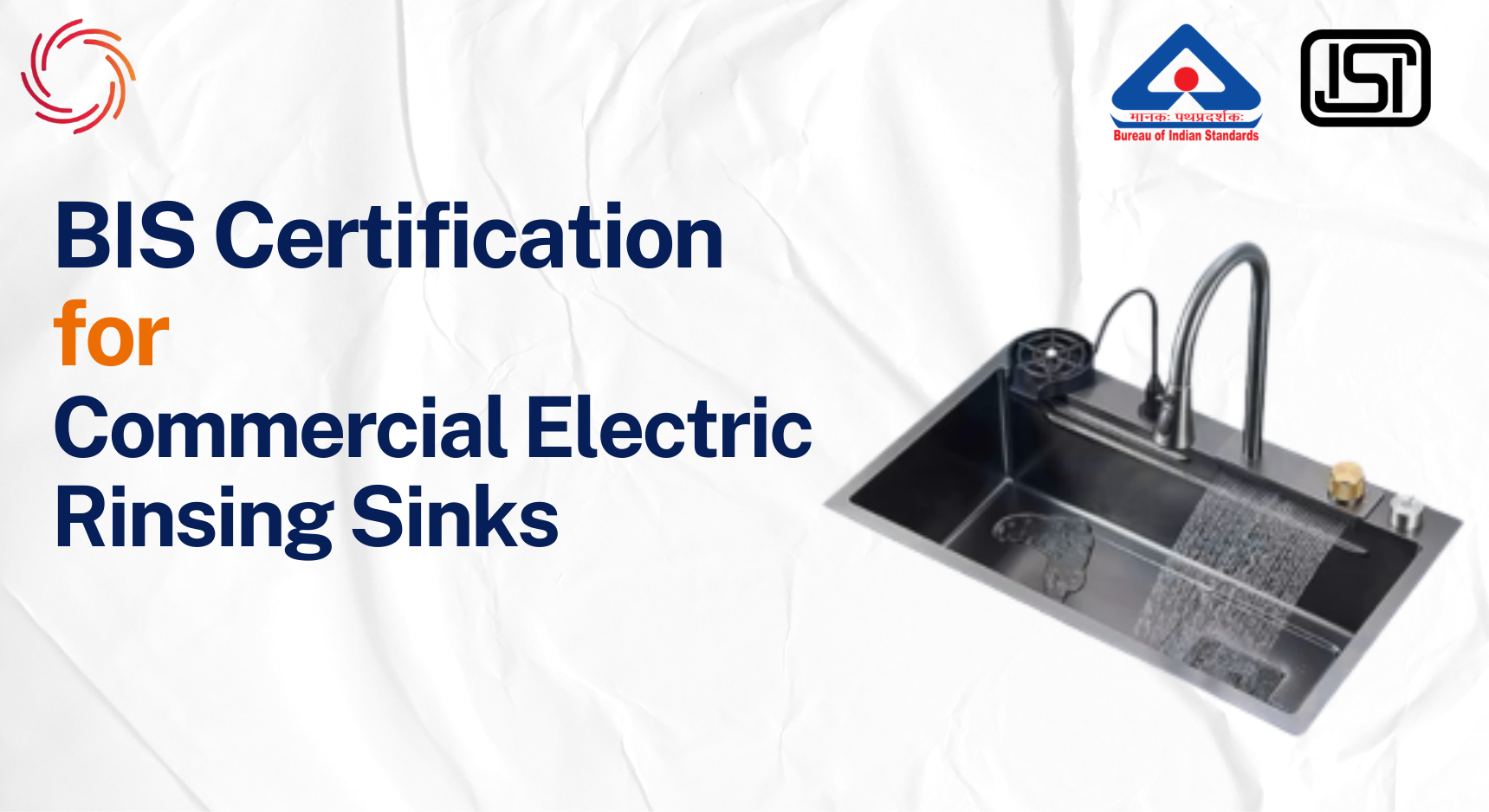
BIS Certification for Commercial Electric Rinsing Sinks confirms that electrically powered rinsing and sanitation units used in commercial kitchens comply with the electrical safety framework defined in IS 302 (Part 1):2024. Certification ensures these appliances operate safely in wet environments while preventing risks such as electric shock, overheating, or insulation failure in India.
Commercial kitchens depend on highly efficient cleaning and sanitation systems to maintain hygiene and comply with food safety regulations. One important piece of equipment used in restaurants, hotels, catering facilities, bakeries, and food processing plants is the commercial electric rinsing sink. These appliances are designed to rinse utensils, dishes, cookware, and food preparation equipment using controlled water flow, heating systems, and electrical components.
Unlike traditional sinks that rely solely on manual water supply, commercial electric rinsing sinks often incorporate electric pumps, water heaters, sensors, and control systems to improve washing efficiency and sanitation levels. Many modern systems automatically regulate water temperature, pressure, and rinsing cycles to meet strict hygiene standards required in professional kitchens.
In busy commercial kitchens, hundreds of plates, utensils, and containers must be cleaned quickly and thoroughly. Electric rinsing sinks help streamline this process by providing consistent water flow and controlled rinsing operations.
However, these appliances operate in environments where water and electricity exist together, which creates potential safety hazards. The presence of moisture, detergents, and constant use increases the risk of electrical faults if the equipment is not properly designed.
For example:
- Electrical insulation may degrade due to continuous exposure to water vapor.
- Heating elements used to warm water may overheat if not properly protected.
- Pumps and wiring systems may malfunction if moisture penetrates internal components.
Because of these risks, commercial rinsing equipment must meet strict electrical safety requirements before being sold or used.
The BIS Certification for Commercial Electric Rinsing Sinks ensures that these appliances comply with the electrical safety framework specified in IS 302 (Part 1):2024.
For manufacturers and importers, obtaining a BIS Certificate for Commercial Electric Rinsing Sinks confirms that the product has undergone testing for electrical safety, insulation reliability, and operational durability. Certification also demonstrates that the manufacturing process maintains consistent product quality.
This guide explains the BIS Certification process for Commercial Electric Rinsing Sinks, including the applicable standard, testing procedures, documentation requirements, certification costs, and compliance obligations for businesses supplying these appliances in India.
Understanding BIS Certification for Commercial Electric Rinsing Sinks
Commercial electric rinsing sinks combine plumbing systems with electrical components such as pumps, heaters, timers, and electronic controls. These appliances are designed to deliver efficient rinsing operations while maintaining hygiene in professional kitchens.
Typical components found in commercial electric rinsing sinks include:
- electric water pumps
- heating elements for temperature control
- automatic rinse sprayers
- control panels and electronic sensors
- insulated wiring systems
- stainless steel sink structures
Because the appliance uses electricity in close proximity to water, the design must ensure safe electrical isolation and durable insulation.
The BIS Certification for Commercial Electric Rinsing Sinks evaluates whether the appliance has been engineered to safely operate in these demanding conditions.
For example, electrical components inside the rinsing sink must be protected from water ingress. Similarly, heating systems used to maintain water temperature must operate without causing overheating or electrical hazards.
A BIS License for Commercial Electric Rinsing Sinks confirms that the product has undergone testing to verify important safety parameters such as:
- insulation resistance between electrical components and metal surfaces
- protection against electrical leakage in wet environments
- durability of electrical wiring under continuous operation
- resistance of structural materials to heat and corrosion
- safe operation of pumps and heaters
Another important aspect of certification involves verifying the manufacturer's quality control system. The appliance tested in a laboratory must be identical to the product produced during large-scale manufacturing.
Therefore, the BIS Licence for Commercial Electric Rinsing Sinks also includes evaluation of factory processes, inspection methods, and production quality systems.
For restaurants and commercial kitchens, certified rinsing sinks provide assurance that the equipment can safely operate in environments where water exposure is constant.
Applicable BIS Standard for Commercial Electric Rinsing Sinks
The safety requirements applicable to this product category are defined under IS 302 (Part 1):2024, which establishes general safety requirements for electrical appliances.
Commercial rinsing sinks fall within this framework because they incorporate electrical heating elements, pumps, and electronic controls.
Scope of the Standard
IS 302 (Part 1):2024 defines safety requirements for appliances that operate using electrical energy and perform heating or mechanical functions. The standard focuses on preventing hazards related to:
- electric shock
- overheating of components
- insulation breakdown
- mechanical instability
Commercial electric rinsing sinks fall within this scope because they use electrical systems in environments where water is present.
Product Categories Covered
The standard applies to appliances containing:
- electric motors and pumps
- heating elements
- electronic control circuits
- electrical wiring and insulation
- protective enclosures
Commercial rinsing sinks incorporating these components must comply with the requirements of the standard.
Safety and Performance Objectives
The standard aims to ensure that appliances:
- prevent electrical shock during operation
- maintain safe temperature limits
- ensure reliable insulation of electrical components
- protect users from accidental contact with live parts
These objectives are particularly critical for equipment used in wet environments.
Design and Testing Principles
The standard evaluates multiple aspects of appliance design, including:
- insulation strength
- resistance to moisture penetration
- durability of electrical connections
- resistance of materials to corrosion and heat
These design principles ensure that commercial rinsing sinks can operate safely in busy kitchens.
Why BIS Certification is Mandatory for Commercial Electric Rinsing Sinks
Commercial rinsing sinks operate in environments where water, detergents, and electrical systems interact continuously. This makes electrical safety a critical concern.
One major risk is electric shock. If electrical insulation fails and current reaches the metal sink body, users could be exposed to dangerous electrical contact.
Another concern is heating element malfunction. Some rinsing sinks include heating systems to maintain water temperature. If these systems overheat, they may damage internal components or create fire hazards.
Moisture infiltration is another issue. Water vapor and cleaning chemicals may penetrate electrical compartments if the appliance is not properly sealed.
The BIS Certificate for Commercial Electric Rinsing Sinks addresses these risks by ensuring that the appliance design includes protective measures against electrical leakage and overheating.
From a regulatory perspective, certification ensures that commercial kitchen appliances entering the Indian market meet recognized electrical safety requirements.
For manufacturers and importers, obtaining a BIS License for Commercial Electric Rinsing Sinks demonstrates compliance with these safety standards and strengthens trust among buyers.
Step-by-Step BIS Certification Process for Commercial Electric Rinsing Sinks
Applicability & Standard Identification
The first step is confirming that the appliance falls under IS 302 (Part 1):2024. Manufacturers review the electrical design and functionality of the rinsing sink.
BIS Online Application Submission
Manufacturers submit the certification application through the BIS online portal along with product specifications and company details.
BIS Certification Cost Structure
The bis certificate cost for Commercial Electric Rinsing Sinks typically includes:
- BIS application fee
- laboratory testing charges
- inspection costs
- license fees
- marking fees
The cost of BIS certification for Commercial Electric Rinsing Sinks may vary depending on product complexity and testing requirements.
Product Sample Testing as per IS 302 (Part 1):2024
Product samples are tested in BIS recognized laboratories to verify electrical safety and operational reliability.
Factory Inspection & Quality Audit
BIS officials may inspect the manufacturing facility to verify production processes and quality control systems.
Grant of BIS License and ISI Mark
Once the appliance meets safety requirements, BIS grants the BIS Licence for Commercial Electric Rinsing Sinks, allowing the product to carry the ISI mark.
Post-Certification Compliance
Manufacturers must maintain product quality after certification and comply with periodic inspections or product testing.
Documents Required for BIS Certification
Obtaining a BIS Certificate for Commercial Electric Rinsing Sinks requires submission of several documents.
Manufacturer Documents
These documents verify the identity and operational status of the manufacturing facility. Examples include factory registration certificates and manufacturing licenses.
Legal Documents
Legal records establish company ownership and authorization. Examples include company incorporation certificates and authorized signatory letters.
Technical Documents
Technical documentation explains the design and functionality of the appliance. Examples include electrical circuit diagrams, product drawings, and component specifications.
BIS Application Documents
These include the BIS application form, quality control plans, and laboratory test reports. Preparing accurate bis certification documents for Commercial Electric Rinsing Sinks helps prevent delays during certification.
Testing Requirements as per IS 302 (Part 1):2024
Commercial electric rinsing sinks must undergo several safety tests before certification. Testing must be conducted in BIS recognized laboratories.
Electrical Safety Tests
These tests verify insulation resistance, leakage current, and grounding protection.
Performance Tests
Performance testing evaluates the appliance's ability to operate safely while delivering consistent rinsing performance.
Durability Tests
Durability testing assesses whether the appliance can operate continuously in demanding kitchen environments.
Quality Verification Tests
Quality verification ensures that components meet manufacturing standards and design specifications.
Conclusion
Commercial electric rinsing sinks play an essential role in maintaining hygiene and efficiency in professional kitchens. Because these appliances combine electrical systems with water-based cleaning operations, they must meet strict safety requirements.
The BIS Certification for Commercial Electric Rinsing Sinks ensures that these appliances comply with the electrical safety framework defined under IS 302 (Part 1):2024. Through laboratory testing, factory inspections, and regulatory evaluation, certification confirms that the equipment operates safely in demanding kitchen environments.
For manufacturers, importers, and distributors, obtaining a BIS Certificate for Commercial Electric Rinsing Sinks is essential for regulatory compliance and market access. A valid BIS License for Commercial Electric Rinsing Sinks not only fulfills legal obligations but also strengthens product credibility and builds trust among commercial kitchen operators in India.
FAQs – BIS Certification for Commercial Electric Rinsing Sinks
1. What is BIS Certification for Commercial Electric Rinsing Sinks?
It is a certification confirming that electric rinsing sinks comply with safety requirements under IS 302 (Part 1):2024.
2. Is BIS certification mandatory for commercial rinsing sinks?
Yes, electrically powered kitchen appliances must comply with applicable safety standards before being sold in India.
3. What is the bis certification process for Commercial Electric Rinsing Sinks?
The process includes application submission, product testing, factory inspection, and license approval.
4. What is the bis certificate cost for Commercial Electric Rinsing Sinks?
The cost depends on testing charges, application fees, and inspection expenses.
5. How long does certification take?
The process typically takes several weeks to a few months depending on testing and documentation readiness.
6. What documents are required?
Manufacturers must submit company documents, technical specifications, and application forms.
7. Where are rinsing sinks tested?
Testing must be conducted in BIS recognized laboratories.
8. Is factory inspection required?
Yes, BIS may inspect the manufacturing facility before granting certification.
9. Can foreign manufacturers apply?
Yes, overseas manufacturers exporting to India must obtain BIS certification.
10. What is the bis license cost for Commercial Electric Rinsing Sinks?
Costs vary depending on product models and testing requirements.
Related Resources
Many of our users also read
This compliance advisory was vetted by our Senior Consultant (Enforcement & Vigilance), a former BIS Director (Enforcement). He specializes in post-certification compliance, helping companies navigate surveillance audits and legal adherence to BIS mandates.
Dhruv Aggarwal
Head of Operations at Sun Certifications India
Experience: 10+ years & Handled 1000+ projects
Awarded by many Indian and International organisations








PT Quty Karunia, BIS Licensee in Vietnam
“Sun Certifications India provided excellent BIS Certification services. Their unparalleled service and sincerity gained our trust. One of the best BIS consultants in India!”

Thantawan Industries Ltd, BIS Licensee in Thailand
“Sun Certifications India supported us throughout the BIS certification process. Their responsive customer service and punctuality are exceptional. Highly recommend for hassle-free BIS certification.”

Leaderart Industries, BIS Licensee in Malaysia
“Sun Certifications India helped us acquire BIS Certification, doubling our engagement in India. Their services are fast, genuine, and up-to-date with latest BIS norms.”

Aluminium Bahrain (ALBA), BIS Licensee in Bahrain
“Excellent BIS certification support, highly reliable consultants.”

Bahrain Aluminium Manufacturing Company, BIS Licensee in Bahrain
“Smooth BIS registration process with expert consultants.”

Daiki Aluminium Japan, BIS Licensee in Japan
“Efficient BIS license assistance, great consultants.”

Trimble Navigation, BIS Licensee in USA
“Seamless BIS certification and registration support.”

Remsa Italia, BIS Licensee in Italy
“Helpful BIS consultants, simplified license process.”

Aquazzura, BIS Licensee in Italy
“We got our BIS certificate well within the timelines and at affordable prices, great work team Sun!”

PT Quty, BIS Licensee in Indonesia
“Excellent BIS registration service, highly recommended.”

Danu Vina, BIS Licensee in Vietnam
“Reliable BIS license consultants, fast process.”

Hanh My Production Company, BIS Licensee in Vietnam
“Expert BIS consultants, certification made easy.”

Sedo Vina, BIS Licensee in Vietnam
“Smooth BIS certificate registration, great support.”

Misumi Japan, BIS Licensee in Japan
“Trusted BIS consultants, quick certification process.”

Thantawan Public Industry Company, BIS Licensee in Thailand
“Professional BIS certification service, very efficient.”

Cortizo Aluminios, BIS Licensee in Spain
“Excellent BIS registration and license guidance.”

Midal Cables, BIS Licensee in Bahrain
“Expert BIS consultants, smooth certification process.”
Years Exp.
Our Clients
Success Rate
Countries Served
Our team brings 10e4+ years of experience in CDSCO and BIS compliance.
We reduce approval time by up to 40% with streamlined processes.
100% success rate with 1500+ successful registrations.
Dedicated account manager ensuring personalized service.
Leave your details below and our experts will call you back within 24 hours to discuss your regulatory compliance needs.
By submitting this form, you agree to our Privacy Policy and consent to being contacted.