BIS Certification for Cycle and Rickshaw Pneumatic Tyres – IS 2414:2005
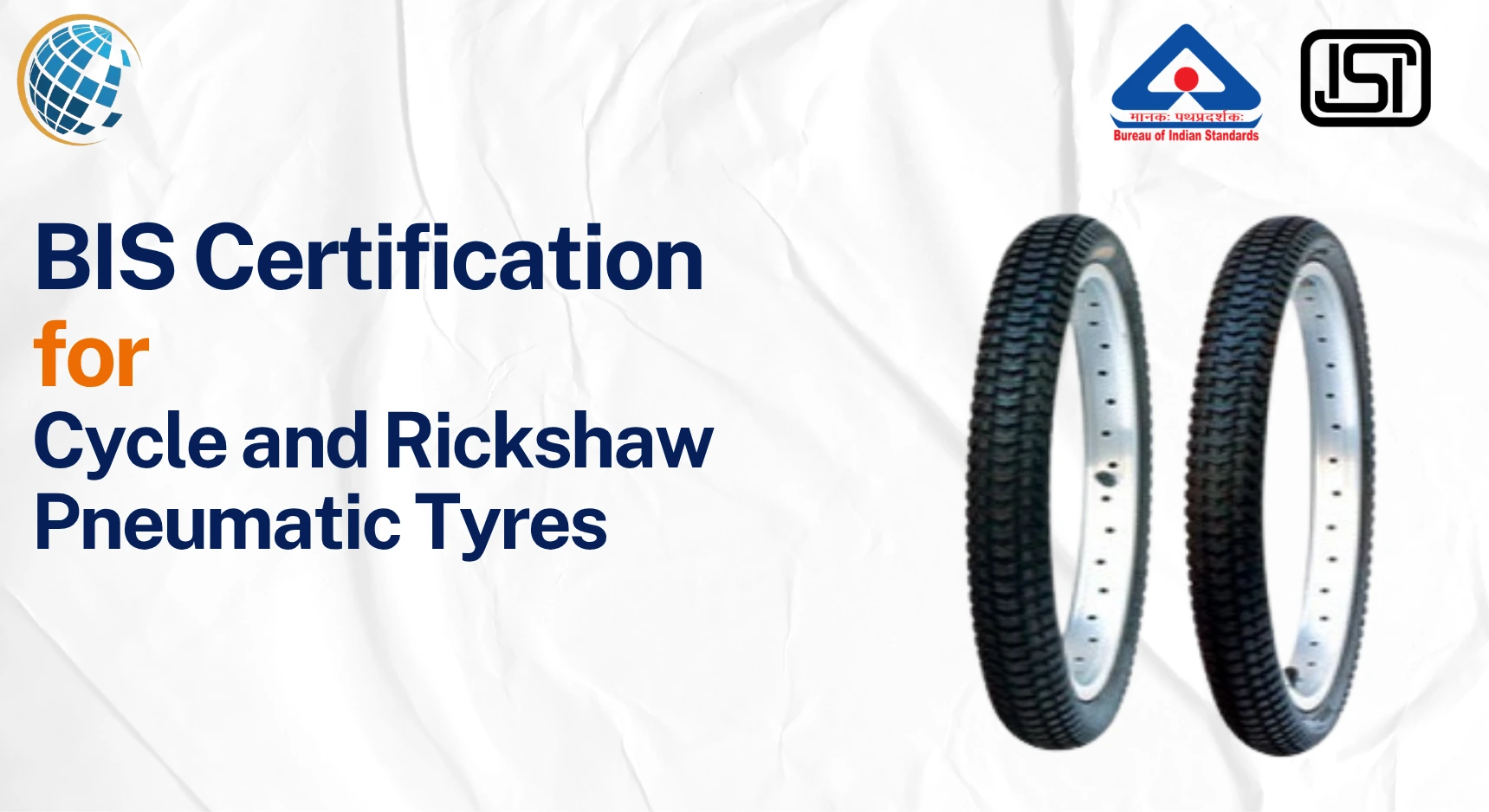
Cycle and Rickshaw Pneumatic Tyres must meet defined performance, endurance, and safety benchmarks under IS 2414:2005 to be sold in India. BIS Certification verifies that these tyres can withstand load, road stress, and inflation pressure conditions, ensuring safe mobility for daily commuters and commercial users.
Cycle and rickshaw pneumatic tyres are not just simple rubber products—they are the foundation of mobility for millions of users across India. From school-going children riding bicycles to rickshaw operators transporting passengers and goods, these tyres directly influence safety, comfort, and efficiency. Unlike high-end automotive tyres, these products are often used in demanding conditions such as uneven roads, heavy loads, and continuous usage throughout the day.
This makes quality consistency extremely important. A minor defect in tyre construction can lead to sudden deflation, poor grip, or even accidents. In densely populated urban and semi-urban areas, such failures can have serious consequences not just for the rider but also for pedestrians and passengers.
To address these risks, India has established a structured compliance framework where manufacturers must demonstrate that their tyres meet defined technical expectations. The BIS Certification for Cycle and Rickshaw Pneumatic Tyres ensures that every unit produced aligns with standardized requirements for durability, load-bearing capacity, and safety.
For manufacturers, importers, and distributors, obtaining a BIS Certificate for Cycle and Rickshaw Pneumatic Tyres is not just a legal necessity—it is a signal to the market that the product has been evaluated for real-world usage conditions. It also helps create a level playing field where only tested and verified products can compete in the market.
Understanding BIS Certificate for Cycle and Rickshaw Pneumatic Tyres - IS 2414: 2005
When it comes to pneumatic tyres for cycles and rickshaws, certification is not merely about rubber composition. It is about ensuring that the entire tyre structure—from tread pattern to sidewall strength—can handle practical usage scenarios.
A BIS Certification for Cycle and Rickshaw Pneumatic Tyres essentially validates whether the product can:
- Maintain air pressure over extended use
- Resist punctures and surface wear
- Handle repeated loading and unloading cycles
- Provide stable grip on different road surfaces
For example, a rickshaw tyre carrying passengers in a busy city must withstand constant friction, sudden braking, and uneven road patches. If the tyre fails under such stress, it can cause immediate operational and safety issues.
The BIS License for Cycle and Rickshaw Pneumatic Tyres acts as a formal confirmation that the manufacturing process, raw materials, and final product performance are aligned with standardized expectations. It ensures that tyres are not only manufactured but engineered to perform reliably in Indian conditions.
From a regulatory perspective, this certification system ensures that substandard or poorly constructed tyres do not enter the supply chain, protecting both consumers and businesses.
Applicable BIS Standard for Cycle and Rickshaw Pneumatic Tyres - IS 2414: 2005
The relevant benchmark for this product category is IS 2414: 2005, which defines the requirements for cycle and rickshaw pneumatic tyres.
This standard focuses on how tyres should be designed, manufactured, and tested to ensure consistent performance. It covers multiple aspects such as:
Scope of the Standard
IS 2414: 2005 applies to pneumatic tyres used in:
- Standard bicycles
- Load-bearing cycles
- Passenger and goods rickshaws
It includes different sizes and configurations to accommodate varied usage needs.
Product Categories Covered
The standard distinguishes tyres based on:
- Size and dimension
- Load capacity
- Intended usage (cycle vs rickshaw)
This ensures that each category meets performance expectations relevant to its application.
Safety and Performance Objectives
The standard aims to ensure that tyres:
- Do not fail under normal inflation pressure
- Maintain structural integrity under load
- Provide adequate traction and stability
- Resist premature wear and tear
Design and Testing Principles
Manufacturers must follow specific design and testing principles such as:
- Uniform rubber thickness
- Strong bonding between layers
- Proper tread pattern design
- Resistance to deformation under stress
For instance, a tyre with uneven thickness may wear out faster on one side, leading to imbalance. The standard prevents such inconsistencies by enforcing uniformity.
Testing Requirements as per IS 2414: 2005
Testing plays a central role in the BIS Certification for Cycle and Rickshaw Pneumatic Tyres. These tests simulate real-world conditions to evaluate how the tyre performs over time.
All testing must be conducted in BIS recognized laboratories, ensuring accuracy and reliability.
1. Safety Tests
Safety tests evaluate whether the tyre can operate without failure under normal conditions.
- Inflation Pressure Test: Ensures the tyre can handle specified air pressure without bursting
- Bead Strength Test: Verifies that the tyre remains securely fitted on the rim
These tests prevent sudden tyre failures during usage.
2. Performance Tests
Performance tests assess how the tyre behaves during regular use.
- Load Test: Determines whether the tyre can carry specified weight without deformation
- Rolling Resistance Test: Measures how efficiently the tyre moves on the surface
For example, a tyre with high rolling resistance may require more effort to pedal, affecting user comfort.
3. Durability Tests
Durability tests simulate long-term usage conditions.
- Endurance Test: Evaluates how the tyre performs over extended cycles
- Wear Resistance Test: Checks how quickly the tread wears out
These tests ensure that tyres do not degrade prematurely.
4. Quality Verification Tests
These tests confirm consistency in manufacturing.
- Dimensional Accuracy Check: Ensures correct size and shape
- Material Composition Test: Verifies rubber quality and composition
Consistency is critical, especially when tyres are produced in large volumes.
Conclusion
Cycle and rickshaw pneumatic tyres play a crucial role in everyday mobility, especially in regions where these vehicles are primary modes of transport. Ensuring their reliability is not optional—it is essential for safety, efficiency, and user confidence.
The BIS Certification for Cycle and Rickshaw Pneumatic Tyres under IS 2414: 2005 provides a structured framework to evaluate and maintain product quality. From testing and compliance to market acceptance, the BIS Certificate for Cycle and Rickshaw Pneumatic Tyres ensures that only well-tested products reach consumers.
For manufacturers and importers, obtaining a BIS License for Cycle and Rickshaw Pneumatic Tyres is more than a regulatory step—it is an investment in product integrity and brand reputation. By aligning with these standards, businesses can ensure long-term success while contributing to safer and more reliable transportation systems across India.
FAQs – BIS License for Cycle and Rickshaw Pneumatic Tyres - IS 2414: 2005
1. How does BIS certification ensure proper tread design in cycle and rickshaw tyres?
Tread design directly impacts grip, braking efficiency, and road stability. Under BIS Certification for Cycle and Rickshaw Pneumatic Tyres, manufacturers must ensure that the tread pattern is not only consistent but also suitable for Indian road conditions, which often include dust, water, and uneven surfaces. Testing ensures that the tread provides adequate traction without excessive wear. A poorly designed tread can lead to skidding or faster deterioration, especially in rickshaws carrying heavy loads, making compliance crucial for real-world safety.
2. Why is uniform thickness important in BIS-certified pneumatic tyres?
Uniform thickness across the tyre structure ensures balanced performance during rotation. In BIS-certified Cycle and Rickshaw Pneumatic Tyres, uneven thickness can create weak spots, leading to premature wear or sudden failure under pressure. The certification process includes dimensional checks to confirm consistency in rubber layering. This is particularly important for rickshaw tyres that carry variable loads, as uneven construction can lead to instability and reduced lifespan.
3. How does BIS certification address puncture resistance in tyres?
While no tyre is completely puncture-proof, BIS Certification for Cycle and Rickshaw Pneumatic Tyres ensures a minimum level of resistance against common road hazards such as sharp objects or debris. The rubber composition, layering, and structural integrity are evaluated to reduce the likelihood of frequent punctures. This is especially beneficial for users in urban areas where roads may contain nails, glass, or stones. Improved puncture resistance translates to fewer interruptions and lower maintenance costs.
4. What role does curing and vulcanization play in BIS compliance?
Curing and vulcanization are critical processes that determine the final strength and elasticity of the tyre. During BIS certification, manufacturers must demonstrate that these processes are controlled and consistent. Improper curing can result in brittle rubber or weak bonding between layers, leading to failure during use. BIS Certification for Cycle and Rickshaw Pneumatic Tyres ensures that the vulcanization process produces a durable and flexible product capable of withstanding repeated stress.
5. How does BIS certification impact tyre compatibility with rims?
Tyre and rim compatibility is essential for safe operation. BIS-certified tyres must match standard rim dimensions to ensure proper fitting and secure mounting. The BIS License for Cycle and Rickshaw Pneumatic Tyres verifies that the bead design and size are accurate, preventing issues such as slipping or improper sealing. This is particularly important for mechanics and users who rely on standard components for repairs and replacements.
6. Can BIS certification help reduce maintenance costs for end users?
Yes, BIS-certified tyres are designed to last longer and perform more reliably, which directly reduces maintenance frequency. By ensuring better air retention, wear resistance, and structural strength, BIS Certification for Cycle and Rickshaw Pneumatic Tyres minimizes the need for frequent repairs or replacements. For rickshaw operators who depend on their vehicles for daily income, this can result in significant cost savings over time.
7. How does BIS certification ensure consistency in mass production of tyres?
Mass production can sometimes lead to variations in quality if not properly controlled. BIS certification requires manufacturers to implement strict quality control systems, ensuring that every tyre produced meets the same standards as the tested sample. This includes monitoring raw materials, production processes, and final inspections. As a result, the BIS Licence for Cycle and Rickshaw Pneumatic Tyres ensures that consistency is maintained across large production batches.
8. What is the importance of sidewall strength in BIS-certified tyres?
The sidewall of a tyre plays a crucial role in maintaining shape and absorbing shocks. BIS Certification for Cycle and Rickshaw Pneumatic Tyres includes evaluation of sidewall strength to ensure it can handle impacts from potholes and uneven roads. Weak sidewalls may crack or bulge under pressure, leading to unsafe conditions. Strong sidewalls contribute to better load handling and overall durability.
9. How does BIS certification support rural and semi-urban transportation needs?
In many rural and semi-urban areas, cycles and rickshaws are primary modes of transport. Roads in these regions can be rough and unpredictable, placing additional stress on tyres. BIS Certification for Cycle and Rickshaw Pneumatic Tyres ensures that products are capable of performing reliably in such environments. This helps support safe and efficient transportation, which is essential for daily activities such as commuting, goods delivery, and local travel.
10. Does BIS certification influence resale value or brand perception of tyres?
Yes, certification plays a significant role in how a product is perceived in the market. Tyres with a BIS Certificate for Cycle and Rickshaw Pneumatic Tyres are often considered more reliable and trustworthy. This can influence purchasing decisions, especially for bulk buyers like fleet operators or distributors. Over time, consistent quality backed by certification can enhance brand reputation and even improve resale value in secondary markets.
Quality Control Order (QCO) for Cycle and Rickshaw Pneumatic Tyres
Related Resources
Many of our users also read
This compliance advisory was vetted by our Senior Consultant (Enforcement & Vigilance), a former BIS Director (Enforcement). He specializes in post-certification compliance, helping companies navigate surveillance audits and legal adherence to BIS mandates.
Dhruv Aggarwal
Head of Operations at Sun Certifications India
Experience: 10+ years & Handled 1000+ projects
Awarded by many Indian and International organisations









PT Quty Karunia, BIS Licensee in Vietnam
“Sun Certifications India provided excellent BIS Certification services. Their unparalleled service and sincerity gained our trust. One of the best BIS consultants in India!”

Thantawan Industries Ltd, BIS Licensee in Thailand
“Sun Certifications India supported us throughout the BIS certification process. Their responsive customer service and punctuality are exceptional. Highly recommend for hassle-free BIS certification.”

Leaderart Industries, BIS Licensee in Malaysia
“Sun Certifications India helped us acquire BIS Certification, doubling our engagement in India. Their services are fast, genuine, and up-to-date with latest BIS norms.”

Aluminium Bahrain (ALBA), BIS Licensee in Bahrain
“Excellent BIS certification support, highly reliable consultants.”

Bahrain Aluminium Manufacturing Company, BIS Licensee in Bahrain
“Smooth BIS registration process with expert consultants.”

Daiki Aluminium Japan, BIS Licensee in Japan
“Efficient BIS license assistance, great consultants.”

Trimble Navigation, BIS Licensee in USA
“Seamless BIS certification and registration support.”

Remsa Italia, BIS Licensee in Italy
“Helpful BIS consultants, simplified license process.”

Aquazzura, BIS Licensee in Italy
“We got our BIS certificate well within the timelines and at affordable prices, great work team Sun!”

PT Quty, BIS Licensee in Indonesia
“Excellent BIS registration service, highly recommended.”

Danu Vina, BIS Licensee in Vietnam
“Reliable BIS license consultants, fast process.”

Hanh My Production Company, BIS Licensee in Vietnam
“Expert BIS consultants, certification made easy.”

Sedo Vina, BIS Licensee in Vietnam
“Smooth BIS certificate registration, great support.”

Misumi Japan, BIS Licensee in Japan
“Trusted BIS consultants, quick certification process.”

Thantawan Public Industry Company, BIS Licensee in Thailand
“Professional BIS certification service, very efficient.”

Cortizo Aluminios, BIS Licensee in Spain
“Excellent BIS registration and license guidance.”

Midal Cables, BIS Licensee in Bahrain
“Expert BIS consultants, smooth certification process.”
Years Exp.
Our Clients
Success Rate
Countries Served
Our team brings 10e4+ years of experience in CDSCO and BIS compliance.
We reduce approval time by up to 40% with streamlined processes.
100% success rate with 1500+ successful registrations.
Dedicated account manager ensuring personalized service.
Leave your details below and our experts will call you back within 24 hours to discuss your regulatory compliance needs.
By submitting this form, you agree to our Privacy Policy and consent to being contacted.