BIS Certification for Cycle – Rubber Tubes (Moulded or Jointed) – IS 2415: 2015
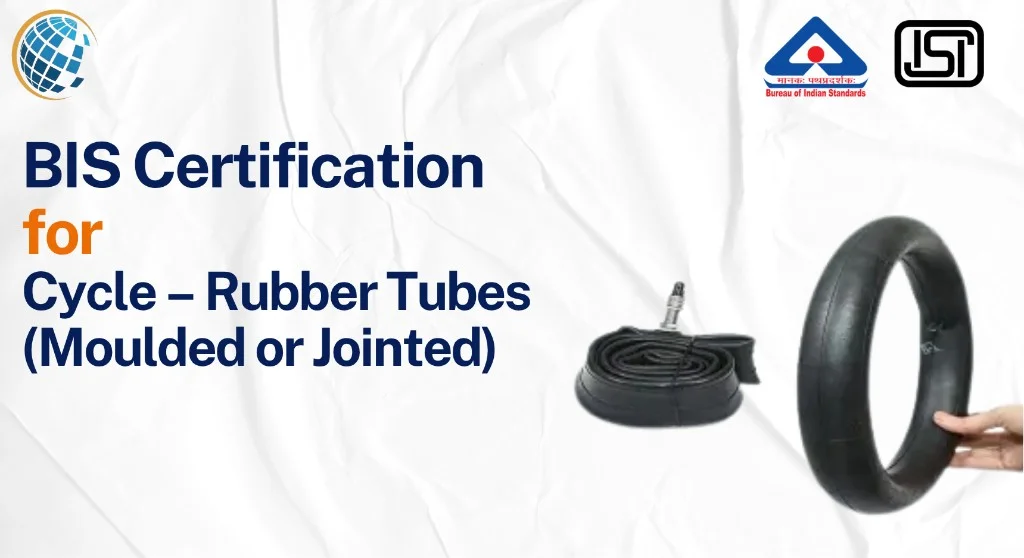
BIS Certification for Cycle – Rubber Tubes under IS 2415: 2015 ensures that inner tubes used in bicycles maintain air pressure, resist punctures, and perform reliably under varying road conditions. In India, certification is required to enhance rider safety, prevent sudden deflation, and ensure durability across urban and rural usage environments.
Cycle rubber tubes are one of the most essential yet often overlooked components of a bicycle. Positioned inside the tyre, these tubes hold compressed air that supports the rider's weight, absorbs shocks, and enables smooth motion across different terrains. Whether used for daily commuting, school transport, delivery services, or recreational cycling, the reliability of a cycle largely depends on the quality of its inner tube.
In India, bicycles remain a primary mode of transport for millions, especially in semi-urban and rural regions. This widespread usage places continuous stress on rubber tubes, exposing them to rough roads, temperature fluctuations, moisture, and mechanical wear. A low-quality or defective tube can lead to frequent punctures, air leakage, or sudden bursts, which may cause accidents or inconvenience during travel.
Given these real-world conditions, it becomes essential to ensure that cycle tubes are manufactured to consistent and reliable standards. The BIS Certification for Cycle Rubber Tubes plays a critical role in maintaining this reliability. It evaluates the tube's ability to retain air pressure, resist damage, and perform under stress.
For manufacturers and suppliers, obtaining a BIS License for Cycle – Rubber Tubes is not just about compliance—it is about delivering a product that can withstand the demands of everyday use. In a market where safety and durability directly influence consumer trust, certification provides a strong foundation for credibility and long-term growth.
Understanding BIS Certificate for Cycle – Rubber Tubes (Moulded or Jointed) - IS 2415: 2015
Unlike visible bicycle components such as frames or tyres, rubber tubes operate internally, making their performance less obvious but equally critical. A rider may not notice the tube until it fails, but its quality directly affects ride stability, tyre performance, and overall safety.
The BIS Certification for Cycle – Rubber Tubes focuses on ensuring that the tube performs consistently under real-world conditions. This includes:
- Air retention capability: The tube must hold air pressure over extended periods without leakage.
- Elasticity and flexibility: It should expand and contract without cracking or weakening.
- Resistance to punctures and abrasion: The tube must withstand contact with rough surfaces and internal tyre friction.
- Joint integrity (for jointed tubes): The bonded section should be as strong as the rest of the tube.
For instance, a poorly manufactured tube may lose air gradually, requiring frequent inflation. In more severe cases, it may burst when subjected to high pressure or external impact. Such failures can disrupt travel and pose safety risks, especially at higher speeds or on uneven roads.
The purpose of BIS License for Cycle – Rubber Tubes is to ensure that these risks are minimized by enforcing strict manufacturing and testing standards. It creates a uniform benchmark for quality, allowing consumers to rely on consistent performance regardless of the brand.
Applicable BIS Standard for Cycle – Rubber Tubes - IS 2415: 2015
The relevant Indian Standard for this product is IS 2415: 2015, which specifies the requirements for rubber tubes used in bicycle tyres.
Scope of IS 2415: 2015
This standard applies to:
- Inner tubes used in bicycle tyres
- Both moulded and jointed tube constructions
- Tubes designed for various bicycle sizes and applications
Product Categories Covered
The standard includes:
- Moulded tubes: Manufactured as a single continuous unit without joints
- Jointed tubes: Formed by joining two ends using bonding techniques
- Tubes compatible with different tyre sizes and pressure ratings
Safety and Performance Objectives
IS 2415: 2015 ensures that tubes:
- Maintain consistent air pressure without leakage
- Resist wear and tear during prolonged use
- Withstand environmental factors such as heat and humidity
- Provide reliable performance across different road conditions
Design and Testing Principles
The standard outlines:
- Material composition requirements for rubber compounds
- Dimensional accuracy for proper fit within tyres
- Strength requirements for joints and seams
- Testing methods for durability, elasticity, and air retention
By adhering to IS 2415: 2015, manufacturers ensure that their tubes are suitable for everyday cycling conditions and capable of delivering dependable performance.
Testing Requirements as per IS 2415: 2015
Testing is a crucial part of obtaining a BIS Certificate for Cycle – Rubber Tubes. Since these tubes are subjected to continuous stress during use, they must be evaluated under conditions that replicate real-world scenarios. All testing must be conducted in BIS-recognized laboratories.
1. Air Retention Test
This test evaluates how well the tube holds air over time.
- The tube is inflated to a specified pressure
- Pressure loss is measured over a defined period
A tube that loses air quickly fails this test.
2. Tensile Strength Test
The rubber material is stretched to determine its strength.
- Measures the maximum stress the tube can withstand
- Ensures durability under pressure
3. Elongation Test
This test checks how much the tube can stretch without breaking.
- Evaluates flexibility and elasticity
- Ensures the tube can adapt to tyre expansion
4. Joint Strength Test (for Jointed Tubes)
For jointed tubes, the bonded area is tested.
- The joint is subjected to stress
- Must not separate or weaken under pressure
5. Puncture Resistance Test
The tube is exposed to sharp objects or pressure points.
- Evaluates resistance to punctures
- Ensures durability on rough roads
6. Ageing Resistance Test
The tube is exposed to accelerated ageing conditions.
- Heat and environmental factors are simulated
- Changes in material properties are measured
7. Dimensional Accuracy Test
- Diameter, thickness, and valve placement are verified
- Ensures proper fit within tyres
Conclusion
Cycle rubber tubes are fundamental to the performance and safety of bicycles, especially in a country where cycling remains a widely used mode of transport. Their ability to retain air, resist damage, and perform under varying conditions directly impacts the riding experience.
Obtaining a BIS Certificate for Cycle – Rubber Tubes under IS 2415: 2015 ensures that the product meets stringent requirements for durability, elasticity, and performance. For manufacturers and suppliers, BIS Certification for Cycle – Rubber Tubes (Moulded or Jointed) is a valuable step toward building trust, ensuring compliance, and achieving long-term success in the Indian market.
Whether you are evaluating the bis certification cost for Cycle – Rubber Tubes (Moulded or Jointed) or planning to apply for a BIS License for Cycle – Rubber Tubes (Moulded or Jointed), aligning with the certification framework ensures consistent quality, improved safety, and strong market acceptance.
FAQs – BIS Certification for Cycle – Rubber Tubes (Moulded or Jointed) - IS 2415: 2015
1. Why is BIS Certification important for cycle rubber tubes when they are not directly visible to users?
Even though rubber tubes are hidden inside the tyre, they play a critical role in maintaining air pressure and ensuring a smooth ride. A defective tube can lead to sudden air loss, frequent punctures, or even accidents. BIS Certification for Cycle – Rubber Tubes (Moulded or Jointed) ensures that the tube performs reliably under daily usage conditions, providing safety and durability for riders across different environments.
2. What is the difference between moulded and jointed rubber tubes under IS 2415: 2015?
Moulded tubes are manufactured as a single continuous unit, offering uniform strength throughout the structure. Jointed tubes, on the other hand, are created by joining two ends, which introduces a potential weak point. IS 2415: 2015 includes specific requirements for both types, ensuring that even jointed tubes meet strict strength and durability criteria, especially at the bonded section.
3. How does BIS certification help ensure air retention performance in cycle rubber tubes?
Air retention is one of the most critical performance factors in cycle rubber tubes, as frequent pressure loss directly impacts riding efficiency and safety. Under BIS Certification for Cycle – Rubber Tubes (Moulded or Jointed), testing includes permeability checks to ensure the rubber compound does not allow excessive air leakage over time. Manufacturers must use controlled vulcanization processes and proper material formulations to meet these requirements. This ensures that end users experience fewer punctures, better pressure stability, and longer product life, especially in varied Indian road conditions.
4. What role does valve integration play in BIS compliance for rubber tubes?
The valve is not just an attachment but a functional component that determines inflation efficiency and air sealing capability. BIS Certification for Cycle – Rubber Tubes (Moulded or Jointed) evaluates how securely the valve is bonded to the tube and whether it can withstand repeated inflation cycles without leakage. Poor valve integration can lead to sudden air loss or difficulty in pumping. Compliance ensures that the valve stem remains intact under pressure and aligns properly with standard bicycle rims used across India.
5. Why is tensile strength testing important for BIS-certified cycle rubber tubes?
Tensile strength testing measures how much stress the rubber tube can endure before breaking. In real-world usage, tubes are constantly subjected to stretching, compression, and friction. BIS Certification for Cycle – Rubber Tubes (Moulded or Jointed) includes tensile and elongation tests to confirm that the material can withstand these forces. This prevents unexpected bursts during cycling, especially on rough roads or under heavy loads, making the product reliable for daily commuters and long-distance riders alike.
6. What are the most common reasons for failure during testing of rubber tubes?
Common failures include poor air retention, low tensile strength, weak joints in jointed tubes, and inadequate resistance to ageing or punctures. These issues usually arise from substandard raw materials or improper manufacturing processes. Maintaining strict quality control during production helps reduce the chances of failure during BIS testing.
7. Can BIS-certified cycle rubber tubes perform well in extreme weather conditions?
Yes, BIS-certified tubes are designed to perform across a wide range of environmental conditions found in India, from extreme heat to cold climates. Testing under IS 2415: 2015 includes evaluation of rubber behaviour under temperature variations. This ensures that the tube does not become too soft in heat or brittle in cold. As a result, BIS Certification for Cycle – Rubber Tubes (Moulded or Jointed) helps maintain flexibility, durability, and air retention regardless of seasonal changes.
8. What packaging and marking requirements must be followed for BIS-certified tubes?
Proper packaging and marking are essential for traceability and consumer awareness. BIS-certified cycle rubber tubes must display the ISI mark along with manufacturer details, size specifications, and batch information. The packaging should protect the tube from deformation and environmental damage during storage and transport. Incorrect or missing labelling can lead to rejection during audits. These requirements ensure that buyers can easily identify compliant products and verify authenticity.
9. Is BIS certification applicable to both standard and heavy-duty cycle tubes?
Yes, BIS certification applies to a wide range of cycle rubber tubes, including standard commuter tubes and heavy-duty variants used for load-bearing bicycles. However, the performance expectations may vary based on intended use. Heavy-duty tubes may require higher strength and durability parameters. The BIS License for Cycle – Rubber Tubes (Moulded or Jointed) ensures that each category meets its respective performance benchmarks, allowing manufacturers to cater to different market segments while maintaining compliance.
10. What happens if a batch of cycle rubber tubes fails BIS testing after certification?
If a batch fails testing during surveillance or market sampling, the manufacturer may face corrective actions. These can include suspension of the BIS License for Cycle – Rubber Tubes (Moulded or Jointed), product recall, or re-testing requirements. The manufacturer must identify the root cause, such as material defects or process deviations, and implement corrective measures. This system ensures that only compliant products remain available in the market, protecting both consumers and brand reputation.
QCO for Cycle – Rubber Tubes (Moulded or Jointed)
Related Resources
Many of our users also read
This compliance advisory was vetted by our Senior Consultant (Enforcement & Vigilance), a former BIS Director (Enforcement). He specializes in post-certification compliance, helping companies navigate surveillance audits and legal adherence to BIS mandates.
Dhruv Aggarwal
Head of Operations at Sun Certifications India
Experience: 10+ years & Handled 1000+ projects
Awarded by many Indian and International organisations








PT Quty Karunia, BIS Licensee in Vietnam
“Sun Certifications India provided excellent BIS Certification services. Their unparalleled service and sincerity gained our trust. One of the best BIS consultants in India!”

Thantawan Industries Ltd, BIS Licensee in Thailand
“Sun Certifications India supported us throughout the BIS certification process. Their responsive customer service and punctuality are exceptional. Highly recommend for hassle-free BIS certification.”

Leaderart Industries, BIS Licensee in Malaysia
“Sun Certifications India helped us acquire BIS Certification, doubling our engagement in India. Their services are fast, genuine, and up-to-date with latest BIS norms.”

Aluminium Bahrain (ALBA), BIS Licensee in Bahrain
“Excellent BIS certification support, highly reliable consultants.”

Bahrain Aluminium Manufacturing Company, BIS Licensee in Bahrain
“Smooth BIS registration process with expert consultants.”

Daiki Aluminium Japan, BIS Licensee in Japan
“Efficient BIS license assistance, great consultants.”

Trimble Navigation, BIS Licensee in USA
“Seamless BIS certification and registration support.”

Remsa Italia, BIS Licensee in Italy
“Helpful BIS consultants, simplified license process.”

Aquazzura, BIS Licensee in Italy
“We got our BIS certificate well within the timelines and at affordable prices, great work team Sun!”

PT Quty, BIS Licensee in Indonesia
“Excellent BIS registration service, highly recommended.”

Danu Vina, BIS Licensee in Vietnam
“Reliable BIS license consultants, fast process.”

Hanh My Production Company, BIS Licensee in Vietnam
“Expert BIS consultants, certification made easy.”

Sedo Vina, BIS Licensee in Vietnam
“Smooth BIS certificate registration, great support.”

Misumi Japan, BIS Licensee in Japan
“Trusted BIS consultants, quick certification process.”

Thantawan Public Industry Company, BIS Licensee in Thailand
“Professional BIS certification service, very efficient.”

Cortizo Aluminios, BIS Licensee in Spain
“Excellent BIS registration and license guidance.”

Midal Cables, BIS Licensee in Bahrain
“Expert BIS consultants, smooth certification process.”
Years Exp.
Our Clients
Success Rate
Countries Served
Our team brings 10e4+ years of experience in CDSCO and BIS compliance.
We reduce approval time by up to 40% with streamlined processes.
100% success rate with 1500+ successful registrations.
Dedicated account manager ensuring personalized service.
Leave your details below and our experts will call you back within 24 hours to discuss your regulatory compliance needs.
By submitting this form, you agree to our Privacy Policy and consent to being contacted.