BIS Certification for Electric Hot Plates – Complete Guide
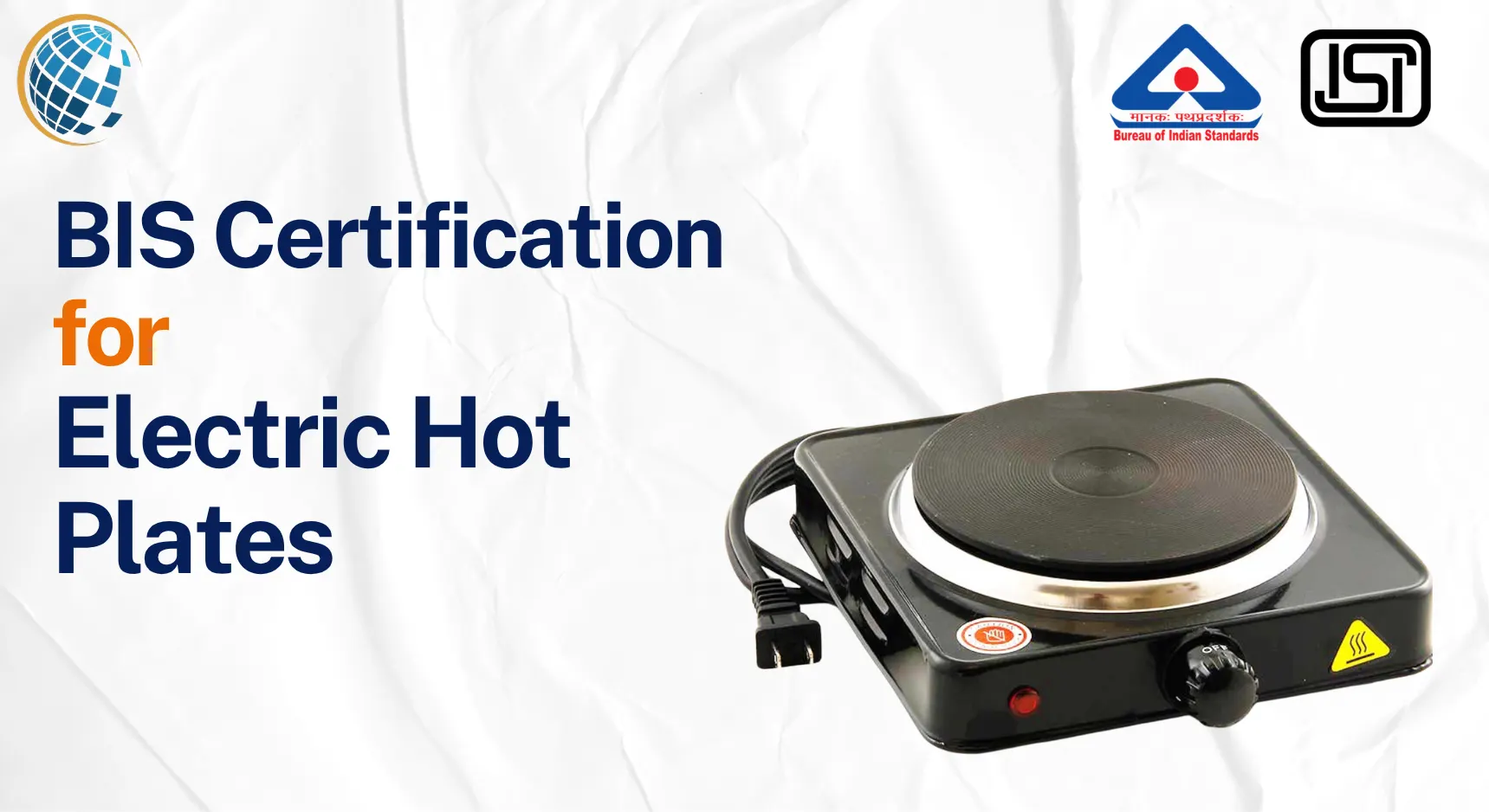
BIS Certification for Electric Hot Plates ensures that these heating appliances comply with IS 302 (Part 1):2024 safety requirements. It verifies protection against overheating, electrical leakage, and fire hazards, making hot plates safe for cooking applications in Indian households, hostels, and commercial setups where compact heating solutions are widely used.
Electric hot plates have emerged as a practical cooking solution in modern India, especially in urban households, rented accommodations, hostels, small offices, and temporary kitchen setups. Their compact design and plug-and-use functionality make them a convenient alternative to traditional gas stoves.
These appliances convert electrical energy into heat through internal heating elements, allowing users to cook or warm food using flat cooking surfaces. While they offer convenience, they also involve significant safety considerations. The heating surface can reach very high temperatures, and the appliance operates continuously on electricity during cooking cycles.
Unlike many other kitchen appliances, electric hot plates combine prolonged heat generation with electrical operation. This creates potential risks such as overheating, insulation failure, short circuits, and even fire hazards if the product is not properly designed or manufactured.
To manage these risks, India has defined specific safety requirements under IS 302 (Part 1):2024, which applies to household electrical appliances, including hot plates. Compliance with this standard ensures that the appliance can handle high temperatures, electrical load, and continuous operation safely.
Obtaining a BIS Certification for Electric Hot Plates confirms that the product has been tested for these conditions and meets the required safety benchmarks. For manufacturers and importers, securing a BIS License for Electric Hot Plates is essential to ensure legal market entry and consumer acceptance.
Understanding BIS Certification for Electric Hot Plates
Electric hot plates operate on a simple principle—electric current passes through a heating element, generating heat that is transferred to cookware. However, behind this simple function lies a complex interaction of electrical components, insulation materials, temperature control systems, and structural design.
The BIS Certification for Electric Hot Plates evaluates whether this interaction is controlled and safe under different usage scenarios.
For example, when a hot plate is used for boiling water or frying food, the heating element remains active for extended periods. If temperature regulation fails, the appliance may overheat, damaging internal components or posing a fire risk. Similarly, if insulation is inadequate, users may experience electric shock when touching the body of the appliance.
Certification ensures that:
- The heating element operates within safe temperature limits
- External surfaces do not expose users to electrical hazards
- Wiring and insulation withstand prolonged heating
- The appliance remains stable during cooking
- Controls function reliably under repeated use
A BIS Certificate for Electric Hot Plates confirms that these factors have been tested and verified in controlled conditions.
Another key aspect is real-world usability. Hot plates are often used in confined spaces such as hostels or small kitchens where ventilation may be limited. Certification ensures that the appliance can operate safely even under such conditions without excessive heat buildup.
Why BIS Certification is Mandatory for Electric Hot Plates
Safety Risks Related to the Product
Electric hot plates generate high temperatures for cooking. If temperature control fails, the appliance may overheat, leading to fire hazards. Additionally, improper insulation can expose users to electrical shock.
Certification ensures that these risks are minimized.
Consumer Protection
Hot plates are often used in environments where safety awareness may be limited, such as hostels or temporary accommodations. Certification ensures that the appliance remains safe even when used frequently or for long durations.
Regulatory Enforcement in India
Authorities regulate electrical appliances to ensure compliance with safety standards. Non-certified products may be restricted from sale.
Market Access Requirements
Retailers and online platforms prefer certified appliances to avoid liability and ensure consumer safety.
Brand Credibility
Certified products are perceived as reliable and safe, increasing consumer trust.
Step-by-Step BIS Certification Process for Electric Hot Plates
Applicability & Standard Identification
Manufacturers must determine whether their product falls under IS 302 (Part 1):2024 by analyzing its electrical and heating characteristics.
BIS Online Application Submission
Applicants submit product details, technical specifications, and manufacturing information through the BIS portal.
BIS Certification Cost Structure
The bis certification cost for Electric Hot Plates depends on:
- number of models
- testing complexity
- inspection requirements
The cost of bis certification for Electric Hot Plates varies accordingly.
Product Sample Testing as per IS 302 (Part 1):2024
Samples are tested in BIS recognized laboratories to evaluate electrical safety, heat resistance, and performance.
Factory Inspection & Quality Audit
Inspectors verify manufacturing processes and quality control systems.
Grant of BIS License and ISI Mark
After successful evaluation, the manufacturer receives the BIS License for Electric Hot Plates.
Post-Certification Compliance
Manufacturers must maintain consistent quality and undergo periodic audits.
Documents Required for BIS Certification
Manufacturer Documents
Legal Documents
Technical Documents
BIS Application Documents
These documents support the bis certificate process for Electric Hot Plates.
Testing Requirements as per IS 302 (Part 1):2024
Safety Tests
Performance Tests
Durability Tests
Quality Verification Tests
Testing must be conducted in BIS recognized laboratories.
Conclusion
Electric hot plates are widely used for cooking due to their portability and ease of use, but their operation involves high temperatures and electrical energy, making safety a critical concern.
Obtaining a BIS Certification for Electric Hot Plates under IS 302 (Part 1):2024 ensures that these appliances meet essential safety requirements. A valid BIS License for Electric Hot Plates enables manufacturers and importers to introduce their products into the Indian market with confidence.
By following the correct bis certification process for Electric Hot Plates, preparing accurate documentation, and ensuring successful testing, businesses can secure a BIS Certificate for Electric Hot Plates and build a strong, compliant presence in the industry.
FAQs – BIS Certification for Electric Hot Plates
1. Why is BIS Certification important for Electric Hot Plates compared to other kitchen appliances?
Electric hot plates directly convert electricity into heat and operate at very high temperatures for extended durations. Unlike mixers or grinders, they continuously draw power while cooking, increasing the risk of overheating and fire hazards. BIS certification ensures that heating elements, insulation, and temperature control systems are designed to handle prolonged heat generation safely. It also verifies that external surfaces remain safe to touch and that internal wiring does not degrade under heat stress. This is especially important in Indian conditions where voltage fluctuations and continuous usage are common.
2. What specific safety risks are associated with Electric Hot Plates that BIS testing evaluates?
BIS testing focuses on risks unique to hot plates, such as excessive surface temperature, electrical leakage, and fire hazards due to overheating. Since these appliances are often used for boiling, frying, or simmering, the heating element remains active for long periods. Testing ensures that the appliance does not exceed safe temperature limits and includes checks for insulation failure, short circuits, and stability during operation. It also evaluates whether the appliance can safely operate even if accidentally left on for longer durations, reducing the risk of accidents.
3. How does BIS Certification ensure temperature control in Electric Hot Plates?
Temperature control is critical in hot plates to prevent overheating. BIS certification evaluates thermostats, control knobs, and automatic cut-off systems to ensure they regulate heat effectively. For example, when a user sets a lower temperature for simmering, the appliance must maintain consistent heat without spikes. Testing also checks whether the hot plate shuts off automatically when it reaches unsafe temperatures. This prevents damage to the appliance and reduces fire risks, especially in scenarios where users may forget to turn off the device.
4. Are portable Electric Hot Plates used in hostels and rented rooms required to have BIS certification?
Yes, portable hot plates are included in the certification requirement. These appliances are widely used in hostels, PG accommodations, and temporary kitchens where safety awareness may vary. Because they are often placed on different surfaces and used in confined spaces, the risk of overheating or accidental fire increases. BIS certification ensures that such portable devices have stable designs, proper insulation, and reliable temperature control mechanisms, making them safe for everyday use in compact living environments.
5. What type of heating elements are evaluated during BIS testing of Electric Hot Plates?
BIS certification evaluates different types of heating elements such as coil-based heaters, solid plate elements, and infrared heating systems. Testing ensures that these elements can withstand continuous operation without degradation. It also checks that heat is distributed evenly and does not cause localized overheating. For example, a coil element must remain stable and not deform under high temperatures, while a solid plate must maintain consistent heat output. Proper evaluation ensures that the heating mechanism functions efficiently and safely.
6. How does BIS Certification address fire hazards in Electric Hot Plates?
Fire hazards are a major concern with hot plates due to their high operating temperatures. BIS certification ensures that materials used in the appliance are heat-resistant and do not catch fire easily. It also evaluates the effectiveness of thermal cut-off systems that shut down the appliance if it overheats. Additionally, the design must prevent heat from spreading to surrounding components such as wiring or outer casing. This reduces the likelihood of internal fires and ensures safe operation even during prolonged cooking sessions.
7. Does BIS Certification consider the stability of Electric Hot Plates during cooking?
Yes, stability is a critical factor. During cooking, hot plates may support heavy utensils filled with liquids or food. BIS testing ensures that the appliance remains stable and does not tip over easily. It evaluates the design of the base, anti-slip features, and weight distribution. For instance, a hot plate must remain steady even when a large pot is placed on it. This prevents accidents such as spillage of hot liquids, which can cause burns or damage.
8. How are electrical insulation and leakage tested in Electric Hot Plates?
Electric hot plates operate at high temperatures, which can weaken insulation over time. BIS testing evaluates insulation materials under heat stress to ensure they remain effective. Leakage current tests are conducted to verify that electricity does not flow to external surfaces. For example, even if the appliance is used for long durations, the outer body must remain electrically safe to touch. These tests ensure that users are protected from electric shock during normal operation.
9. What happens if an Electric Hot Plate fails BIS testing due to overheating?
If a hot plate fails due to overheating, the manufacturer must identify the root cause, such as inadequate thermal control or poor heat dissipation. The design may need modifications, such as adding better insulation, improving ventilation, or upgrading the thermostat. After making necessary changes, the product must be retested in a BIS-recognized laboratory. Only after passing all safety parameters can the appliance receive certification. This process ensures that unsafe products do not reach the market.
10. Can multiple models of Electric Hot Plates be covered under one BIS License?
Yes, multiple models can be covered under a single BIS License if they share similar design, components, and safety features. For example, a single and double hot plate with identical heating technology and safety mechanisms may be included under one license. However, if there are significant differences in design or power rating, separate evaluation may be required. This ensures that all variations meet the required safety standards without compromising performance.
Related Resources
Many of our users also read
This compliance advisory was vetted by our Senior Consultant (Enforcement & Vigilance), a former BIS Director (Enforcement). He specializes in post-certification compliance, helping companies navigate surveillance audits and legal adherence to BIS mandates.
Dhruv Aggarwal
Head of Operations at Sun Certifications India
Experience: 10+ years & Handled 1000+ projects
Awarded by many Indian and International organisations








PT Quty Karunia, BIS Licensee in Vietnam
“Sun Certifications India provided excellent BIS Certification services. Their unparalleled service and sincerity gained our trust. One of the best BIS consultants in India!”

Thantawan Industries Ltd, BIS Licensee in Thailand
“Sun Certifications India supported us throughout the BIS certification process. Their responsive customer service and punctuality are exceptional. Highly recommend for hassle-free BIS certification.”

Leaderart Industries, BIS Licensee in Malaysia
“Sun Certifications India helped us acquire BIS Certification, doubling our engagement in India. Their services are fast, genuine, and up-to-date with latest BIS norms.”

Aluminium Bahrain (ALBA), BIS Licensee in Bahrain
“Excellent BIS certification support, highly reliable consultants.”

Bahrain Aluminium Manufacturing Company, BIS Licensee in Bahrain
“Smooth BIS registration process with expert consultants.”

Daiki Aluminium Japan, BIS Licensee in Japan
“Efficient BIS license assistance, great consultants.”

Trimble Navigation, BIS Licensee in USA
“Seamless BIS certification and registration support.”

Remsa Italia, BIS Licensee in Italy
“Helpful BIS consultants, simplified license process.”

Aquazzura, BIS Licensee in Italy
“We got our BIS certificate well within the timelines and at affordable prices, great work team Sun!”

PT Quty, BIS Licensee in Indonesia
“Excellent BIS registration service, highly recommended.”

Danu Vina, BIS Licensee in Vietnam
“Reliable BIS license consultants, fast process.”

Hanh My Production Company, BIS Licensee in Vietnam
“Expert BIS consultants, certification made easy.”

Sedo Vina, BIS Licensee in Vietnam
“Smooth BIS certificate registration, great support.”

Misumi Japan, BIS Licensee in Japan
“Trusted BIS consultants, quick certification process.”

Thantawan Public Industry Company, BIS Licensee in Thailand
“Professional BIS certification service, very efficient.”

Cortizo Aluminios, BIS Licensee in Spain
“Excellent BIS registration and license guidance.”

Midal Cables, BIS Licensee in Bahrain
“Expert BIS consultants, smooth certification process.”
Years Exp.
Our Clients
Success Rate
Countries Served
Our team brings 10e4+ years of experience in CDSCO and BIS compliance.
We reduce approval time by up to 40% with streamlined processes.
100% success rate with 1500+ successful registrations.
Dedicated account manager ensuring personalized service.
Leave your details below and our experts will call you back within 24 hours to discuss your regulatory compliance needs.
By submitting this form, you agree to our Privacy Policy and consent to being contacted.