BIS Certification for Fabric Steamers – Complete Guide to IS 302 (Part 1):2024
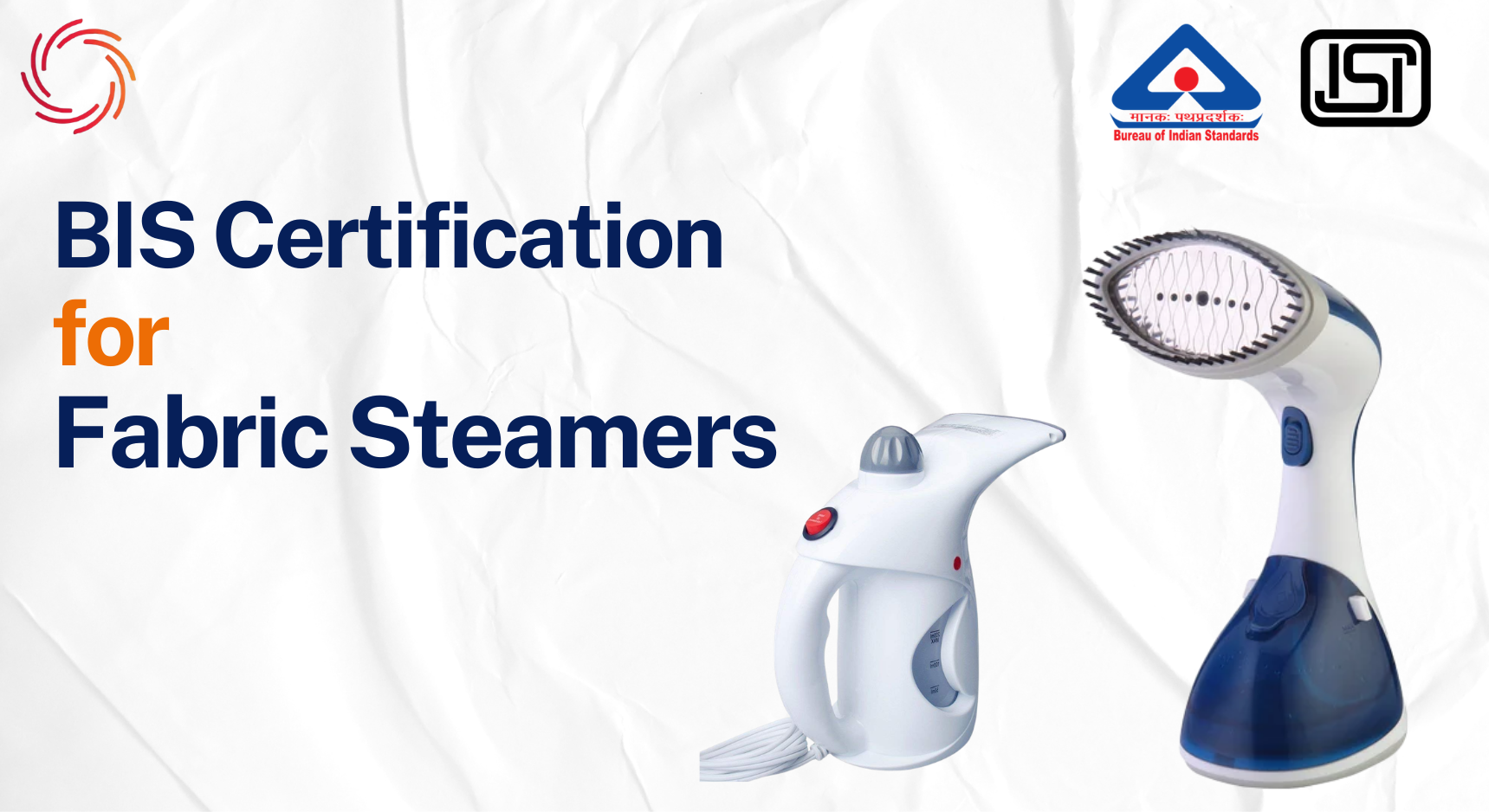
BIS Certification for Fabric Steamers confirms that these electrically powered garment-care appliances comply with the safety requirements defined under IS 302 (Part 1):2024. Certification verifies that fabric steamers operate safely while producing high-temperature steam, ensuring protection against electrical hazards, overheating, and insulation failure in the Indian market.
Fabric steamers have become an essential garment care appliance in modern households, fashion studios, hotels, and commercial laundry facilities. Unlike traditional irons that press clothing through direct contact, fabric steamers release high-temperature steam to remove wrinkles, refresh fabrics, and sanitize garments. The convenience of steaming delicate fabrics without damaging them has made these appliances extremely popular.
With the growth of e-commerce and the fashion industry, the demand for garment care equipment like fabric steamers has increased significantly in India. Portable handheld steamers are commonly used at home, while larger upright units are used in garment stores, tailoring shops, and textile showrooms.
Despite their convenience, fabric steamers operate using electrical heating elements and pressurized steam systems. Water stored inside the appliance is heated to produce steam that exits through nozzles or steam plates. This combination of electricity, water, and high temperatures introduces multiple safety concerns.
For instance, if a steamer's internal wiring is poorly insulated, moisture may cause electrical leakage. Similarly, overheating of heating elements may damage the appliance or create fire risks. Steam pressure buildup inside poorly designed appliances could also cause mechanical failures.
Because of these risks, electrical garment-care appliances must meet safety and performance requirements before being sold to consumers. In India, the BIS Certification for Fabric Steamers ensures that these appliances are tested and verified according to the technical safety framework defined under IS 302 (Part 1):2024.
For manufacturers, importers, and distributors, obtaining a BIS Certificate for Fabric Steamers demonstrates that the appliance design has been evaluated for electrical safety, temperature control, and structural reliability. Certification also indicates that the manufacturer maintains consistent quality standards in production.
This comprehensive guide explains the BIS Certification process for Fabric Steamers, including the applicable BIS standard, product testing procedures, documentation requirements, certification costs, and compliance responsibilities for businesses operating in the garment-care appliance sector.
Understanding BIS Certification for Fabric Steamers
Fabric steamers appear simple from the outside, but their internal mechanisms involve complex electrical and thermal components. Most fabric steamers include:
- electric heating elements
- water reservoirs
- steam generation chambers
- electrical wiring and insulation
- temperature control systems
- steam nozzles or plates
These components work together to convert water into steam and deliver it safely onto fabrics. However, because water is heated electrically, proper insulation and structural design are critical.
The BIS Certification for Fabric Steamers evaluates whether these appliances are designed to safely manage the interaction between water, electricity, and heat.
For example, the heating element must be properly isolated from the water tank to prevent electrical leakage. The appliance housing must also withstand high temperatures generated during steam production without deforming or exposing internal wiring.
A BIS License for Fabric Steamers confirms that the appliance has undergone technical testing to verify several safety aspects, such as:
- electrical insulation strength
- protection against water leakage
- stability of temperature control systems
- mechanical durability of the appliance body
- safe operation of steam outlets
Another important part of the certification process involves evaluating manufacturing practices. A product that passes laboratory testing must be consistently reproduced during mass production.
Therefore, the BIS Licence for Fabric Steamers also requires manufacturers to maintain quality control procedures that ensure every unit manufactured meets the same safety specifications as the tested sample.
For consumers, the presence of certified fabric steamers in the market means that the appliance has been evaluated for safe operation while generating high-temperature steam—an essential requirement for garment-care appliances.
Applicable BIS Standard for Fabric Steamers
The safety framework applicable to fabric steamers is IS 302 (Part 1):2024, which specifies safety requirements for electrically operated appliances. Fabric steamers fall within this framework because they rely on electrical heating systems to produce steam and are commonly used in residential or commercial environments.
Scope of the Standard
IS 302 (Part 1):2024 establishes safety guidelines for appliances that use electrical energy to perform heating, mechanical, or electronic functions. The standard addresses hazards that may occur during normal appliance operation as well as conditions that may arise from foreseeable misuse. Fabric steamers fall under this scope because they combine electrical heating with water handling systems.
Product Categories Covered
The standard covers appliances that include:
- electric heating components
- electronic control circuits
- temperature regulating systems
- protective insulation structures
Safety and Performance Objectives
The standard focuses on several safety objectives relevant to fabric steamers:
- preventing electric shock caused by moisture exposure
- controlling excessive temperature rise in heating elements
- ensuring stable operation of electrical circuits
- protecting users from accidental contact with live parts
Design and Testing Principles
IS 302 (Part 1):2024 evaluates multiple aspects of appliance design, including:
- insulation resistance
- protection against moisture ingress
- heat resistance of appliance materials
- structural durability of enclosures
Why BIS Certification is Mandatory for Fabric Steamers
Fabric steamers generate hot steam by heating water inside an electrically powered chamber. If the appliance design is not properly engineered, the combination of heat, electricity, and moisture can create serious hazards.
One major concern is steam pressure buildup. If the steam chamber lacks adequate pressure release mechanisms, excessive pressure could cause leaks or structural damage.
Another potential risk is water contact with electrical components. Moisture entering the internal electrical circuitry can result in short circuits or electric shock.
Overheating is also a significant issue. Heating elements inside steamers operate at high temperatures. Without proper thermal regulation, these components may exceed safe operating limits.
The BIS Certificate for Fabric Steamers helps address these risks by verifying that the appliance design includes protective features such as temperature control systems, insulation barriers, and safe electrical wiring.
From a regulatory perspective, certification allows authorities to ensure that electrical appliances entering the market meet established safety benchmarks.
For manufacturers and importers, obtaining a BIS License for Fabric Steamers demonstrates compliance with Indian safety regulations and strengthens consumer trust in the product.
Step-by-Step BIS Certification Process for Fabric Steamers
Applicability & Standard Identification
The certification process begins with confirming that the appliance qualifies under IS 302 (Part 1):2024. Manufacturers review the electrical design and operational characteristics of the fabric steamer to determine compliance requirements.
BIS Online Application Submission
Manufacturers submit the certification application through the BIS digital portal. The application includes product details, manufacturing information, and supporting documentation.
BIS Certification Cost Structure
The bis certificate cost for Fabric Steamers generally includes:
- BIS application fee
- product testing charges
- inspection costs
- license fees
- marking fees
The cost of BIS certification for Fabric Steamers may vary depending on product variants and testing complexity.
Product Sample Testing as per IS 302 (Part 1):2024
Samples of the fabric steamer are tested in BIS recognized laboratories. Testing verifies electrical safety, temperature stability, and mechanical durability.
Factory Inspection & Quality Audit
BIS officials may conduct a factory inspection to evaluate production facilities, quality control systems, and testing equipment.
Grant of BIS License and ISI Mark
After successful completion of testing and inspection, BIS grants the BIS Licence for Fabric Steamers, allowing the manufacturer to use the ISI mark.
Post-Certification Compliance
Manufacturers must maintain compliance even after receiving the BIS License for Fabric Steamers. Periodic audits and sample testing may be conducted to ensure ongoing product quality.
Documents Required for BIS Certification
Obtaining a BIS Certificate for Fabric Steamers requires several categories of documents.
Manufacturer Documents
These documents confirm the identity and operational status of the manufacturing unit. Examples include factory licenses and manufacturing registration certificates.
Legal Documents
Legal records verify company ownership and authorization. Examples include incorporation certificates and authorized signatory documents.
Technical Documents
Technical documentation explains the design and operation of the appliance. Examples include electrical diagrams, component lists, and product specifications.
BIS Application Documents
These include the BIS application form, quality control plans, and test reports. Preparing accurate bis certification documents for Fabric Steamers helps streamline the approval process.
Testing Requirements as per IS 302 (Part 1):2024
Fabric steamers must undergo several tests to ensure safe operation. Testing must be conducted in BIS recognized laboratories.
Electrical Safety Tests
These tests evaluate insulation resistance, leakage current, and grounding protection.
Performance Tests
Performance tests verify that the steamer produces steam effectively while maintaining electrical stability.
Durability Tests
Durability testing assesses whether the appliance can withstand repeated heating cycles.
Quality Verification Tests
Quality verification ensures that components used in the appliance meet required manufacturing standards.
Who Needs BIS Certification for Fabric Steamers?
The requirement for BIS Certification for Fabric Steamers applies to multiple stakeholders.
- Manufacturers — Domestic manufacturers producing fabric steamers must obtain certification.
- Importers — Importers bringing garment steamers into India must ensure the product is certified.
- Foreign Manufacturers — Overseas manufacturers exporting fabric steamers to India must obtain certification through BIS procedures.
- Private Label Brands — Companies selling steamers under their own brand must ensure the manufacturing unit is certified.
- Online Sellers and Distributors — E-commerce platforms must verify certification before selling fabric steamers.
Conclusion
Fabric steamers are widely used for garment care in homes, fashion stores, and commercial laundry facilities. Because these appliances generate high-temperature steam using electrically powered heating systems, their design must carefully manage the interaction between water, heat, and electricity.
The BIS Certification for Fabric Steamers ensures that these appliances meet safety requirements defined under IS 302 (Part 1):2024. Through laboratory testing, factory inspections, and regulatory evaluation, certification confirms that the product can operate safely while producing steam for garment care.
For manufacturers, importers, and brand owners, obtaining a BIS Certificate for Fabric Steamers is an essential step for regulatory compliance and market access. A valid BIS License for Fabric Steamers not only fulfills legal obligations but also strengthens consumer trust and brand credibility in the competitive garment-care appliance industry.
FAQs – BIS Certification for Fabric Steamers
1. What is BIS Certification for Fabric Steamers?
It is a certification confirming that fabric steamers meet safety requirements defined under IS 302 (Part 1):2024.
2. Is BIS certification mandatory for fabric steamers?
Yes, electrically operated garment-care appliances must comply with applicable safety standards.
3. What is the bis certification process for Fabric Steamers?
The process includes application submission, product testing, factory inspection, and license approval.
4. What is the bis certificate cost for Fabric Steamers?
Costs depend on testing charges, application fees, and inspection expenses.
5. How long does certification take?
The process may take several weeks to a few months depending on testing and documentation.
6. What documents are required?
Manufacturers must submit company documents, product specifications, and technical details.
7. Where are fabric steamers tested?
Testing is conducted in BIS recognized laboratories.
8. Is factory inspection required?
Yes, BIS may inspect the manufacturing facility.
9. Can foreign manufacturers apply?
Yes, overseas manufacturers exporting to India must obtain certification.
10. What is the bis license cost for Fabric Steamers?
Costs vary depending on the product model and testing requirements.
11. What happens if the product fails testing?
Manufacturers must correct design issues and resubmit the product.
12. Does each model require certification?
Different models may require separate evaluation depending on design variations.
13. Can BIS certification be renewed?
Yes, licenses require periodic renewal.
14. Is certification required for online sales?
Yes, products sold through online platforms must comply with BIS regulations.
15. Can consultants assist with certification?
Yes, professional consultants can help manage documentation, testing coordination, and application procedures.
Related Resources
Many of our users also read
Our Principal Regulatory Consultant, a former BIS Deputy Director General (Standardization). With over 30 years of service, he specializes in interpreting the Bureau of Indian Standards Act and simplifying complex certification workflows for Indian manufacturers.
Dhruv Aggarwal
Head of Operations at Sun Certifications India
Experience: 10+ years & Handled 1000+ projects
Awarded by many Indian and International organisations








PT Quty Karunia, BIS Licensee in Vietnam
“Sun Certifications India provided excellent BIS Certification services. Their unparalleled service and sincerity gained our trust. One of the best BIS consultants in India!”

Thantawan Industries Ltd, BIS Licensee in Thailand
“Sun Certifications India supported us throughout the BIS certification process. Their responsive customer service and punctuality are exceptional. Highly recommend for hassle-free BIS certification.”

Leaderart Industries, BIS Licensee in Malaysia
“Sun Certifications India helped us acquire BIS Certification, doubling our engagement in India. Their services are fast, genuine, and up-to-date with latest BIS norms.”

Aluminium Bahrain (ALBA), BIS Licensee in Bahrain
“Excellent BIS certification support, highly reliable consultants.”

Bahrain Aluminium Manufacturing Company, BIS Licensee in Bahrain
“Smooth BIS registration process with expert consultants.”

Daiki Aluminium Japan, BIS Licensee in Japan
“Efficient BIS license assistance, great consultants.”

Trimble Navigation, BIS Licensee in USA
“Seamless BIS certification and registration support.”

Remsa Italia, BIS Licensee in Italy
“Helpful BIS consultants, simplified license process.”

Aquazzura, BIS Licensee in Italy
“We got our BIS certificate well within the timelines and at affordable prices, great work team Sun!”

PT Quty, BIS Licensee in Indonesia
“Excellent BIS registration service, highly recommended.”

Danu Vina, BIS Licensee in Vietnam
“Reliable BIS license consultants, fast process.”

Hanh My Production Company, BIS Licensee in Vietnam
“Expert BIS consultants, certification made easy.”

Sedo Vina, BIS Licensee in Vietnam
“Smooth BIS certificate registration, great support.”

Misumi Japan, BIS Licensee in Japan
“Trusted BIS consultants, quick certification process.”

Thantawan Public Industry Company, BIS Licensee in Thailand
“Professional BIS certification service, very efficient.”

Cortizo Aluminios, BIS Licensee in Spain
“Excellent BIS registration and license guidance.”

Midal Cables, BIS Licensee in Bahrain
“Expert BIS consultants, smooth certification process.”
Years Exp.
Our Clients
Success Rate
Countries Served
Our team brings 10e4+ years of experience in CDSCO and BIS compliance.
We reduce approval time by up to 40% with streamlined processes.
100% success rate with 1500+ successful registrations.
Dedicated account manager ensuring personalized service.
Leave your details below and our experts will call you back within 24 hours to discuss your regulatory compliance needs.
By submitting this form, you agree to our Privacy Policy and consent to being contacted.