BIS Certification for Fibre Cement Flat Sheets – IS 14862:2000
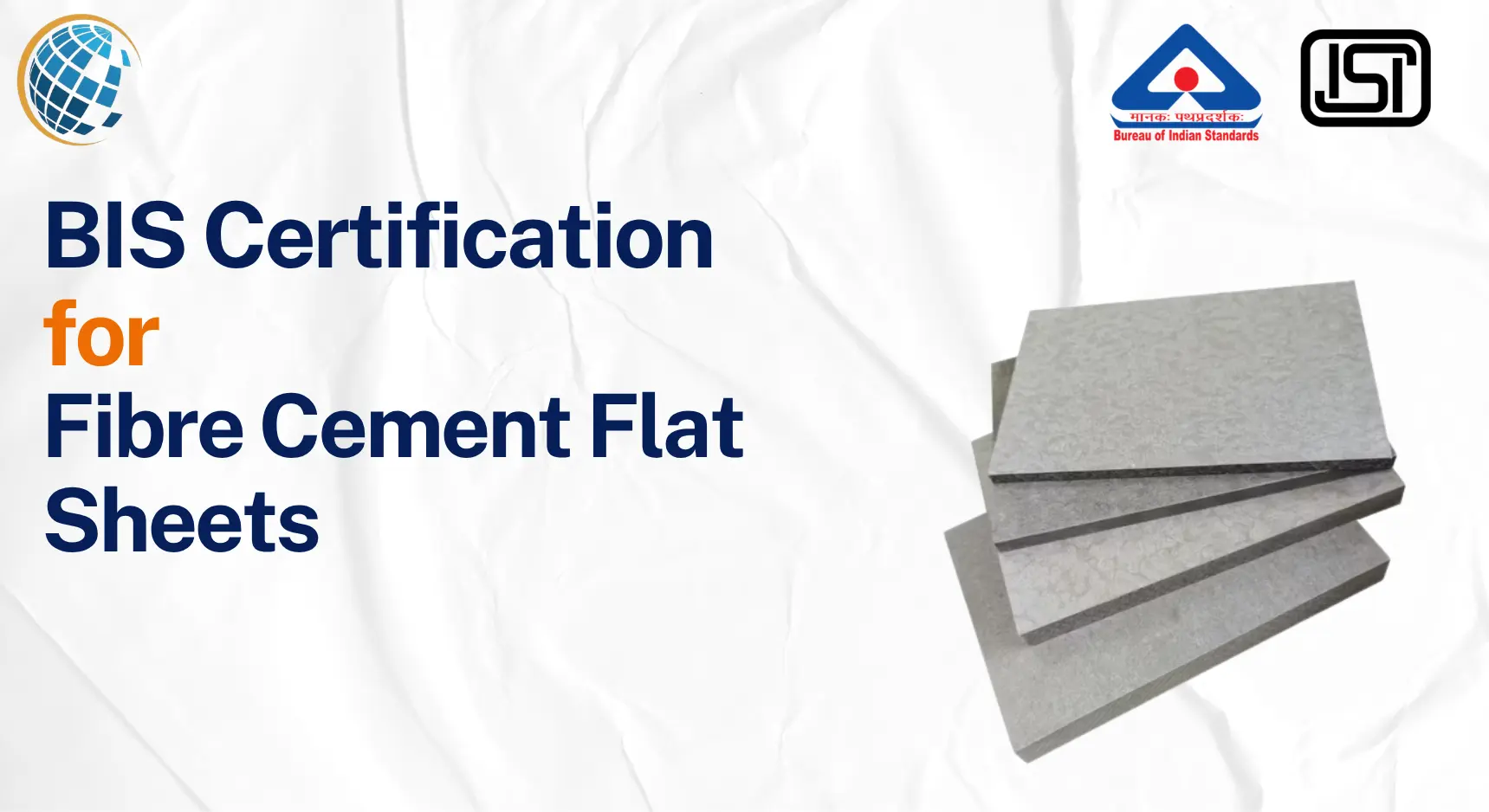
BIS Certification for Fibre Cement Flat Sheets confirms that sheets used in construction meet the technical requirements of IS 14862:2000, including strength, dimensional stability, and weather resistance. Certification is required in India to ensure these sheets perform reliably in roofing, cladding, and partition applications without structural or safety risks.
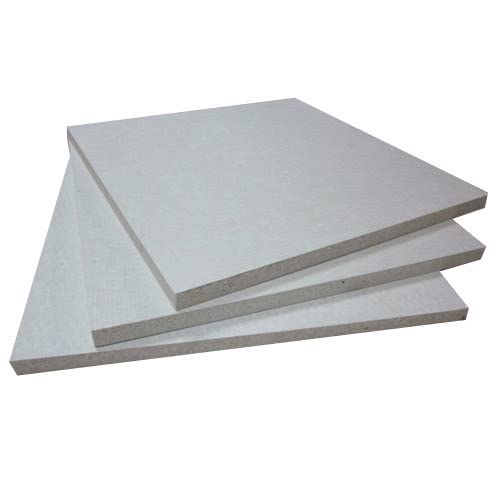
Fibre cement flat sheets have become a core material in modern construction, especially in applications such as wall panels, ceilings, partitions, and exterior cladding. Their popularity comes from a combination of properties—lightweight structure, resistance to moisture, fire-retardant characteristics, and ease of installation. From residential homes to industrial sheds and commercial buildings, these sheets are widely used across India.
However, the performance of fibre cement sheets is directly influenced by their composition and manufacturing process. Variations in cement quality, fibre reinforcement, curing methods, or thickness uniformity can significantly impact durability and load-bearing capacity. A poorly manufactured sheet may crack under stress, absorb excess moisture, or degrade when exposed to environmental conditions.
To address these concerns, the Bureau of Indian Standards has established a regulatory framework that evaluates fibre cement sheets based on defined technical benchmarks. For manufacturers, obtaining a BIS Certificate for Fibre Cement Flat Sheets is not just about fulfilling regulatory requirements—it is about ensuring that their product can withstand real construction environments, from heavy rainfall to temperature fluctuations. When you plan the licence route itself, it helps to align product-specific work with how Indian BIS operates overall — Check complete details about documentation, cost, and process etc.
With infrastructure development accelerating across India, certified building materials are increasingly preferred in government and private projects. For importers, contractors, and distributors, choosing BIS-certified fibre cement sheets ensures reliability, reduces maintenance costs, and aligns with compliance expectations.
Understanding BIS Certification for Fibre Cement Flat Sheets
When evaluating BIS Certification for Fibre Cement Flat Sheets, it is essential to consider how certification directly relates to real-world construction usage rather than viewing it as a generic approval.
These sheets are subjected to multiple stress factors once installed. They must handle mechanical loads, resist cracking, and maintain stability under environmental exposure. Unlike decorative materials, fibre cement sheets often serve as functional structural elements—meaning any failure can impact safety and building integrity.
The certification process assesses:
- Load-bearing strength for structural applications
- Resistance to moisture absorption and swelling
- Stability under temperature changes
- Surface integrity and resistance to cracking
For example, in roofing or external cladding, sheets are exposed to rain, UV radiation, and wind pressure. If the sheet absorbs water excessively or lacks proper curing, it may warp or weaken over time. Certification ensures such risks are minimized through strict testing and quality control measures.
Additionally, certification requires manufacturers to maintain consistent production standards. This is critical because even minor variations in raw material ratios or curing conditions can lead to performance inconsistencies. By enforcing uniformity, the certification system ensures that every sheet produced meets the same level of quality.
For builders and contractors, this translates into predictable performance, reducing the chances of structural issues or premature replacement.
Applicable BIS Standard for Fibre Cement Flat Sheets
The relevant standard for this product category is IS 14862:2000, which provides detailed technical specifications for fibre cement flat sheets used in building applications.
Scope of IS 14862:2000
This standard applies to non-asbestos fibre cement flat sheets manufactured using a combination of cement and reinforcing fibres. It defines requirements related to:
- Physical and mechanical properties
- Dimensional accuracy
- Surface finish
- Water absorption limits
Product Categories Covered
The standard includes sheets used for:
- Interior wall partitions
- External cladding systems
- False ceilings
- Industrial and commercial building panels
Safety and Performance Objectives
IS 14862:2000 is designed to ensure that fibre cement sheets:
- Maintain structural integrity under load
- Resist moisture penetration
- Provide long-term durability
- Perform consistently across different environmental conditions
Design and Testing Principles
The standard incorporates engineering considerations such as:
- Uniform thickness distribution
- Proper fibre-cement bonding
- Controlled curing processes
These principles ensure that sheets remain stable and reliable throughout their service life.
Conclusion
In construction, the reliability of materials directly impacts structural safety and longevity. A BIS Certification for Fibre Cement Flat Sheets ensures that these widely used building components meet the rigorous requirements of IS 14862:2000.
For manufacturers and importers, obtaining a BIS Certificate for Fibre Cement Flat Sheets is essential for compliance, market access, and brand trust. It demonstrates that the product can withstand real-world conditions without compromising performance.
By securing a BIS License for Fibre Cement Flat Sheets, businesses position themselves as reliable suppliers in a competitive market while contributing to safer and more durable construction practices across India.
FAQs – BIS Certification for Fibre Cement Flat Sheets
1. Why is BIS certification important for fibre cement flat sheets used in construction?
Fibre cement sheets are widely used in walls, ceilings, and cladding, where structural stability matters. BIS certification ensures these sheets can withstand load, moisture, and environmental exposure without cracking, bending, or deteriorating prematurely in real construction conditions.
2. What types of fibre cement flat sheets are covered under IS 14862:2000?
The standard covers non-asbestos fibre cement flat sheets used for partitions, ceilings, cladding, and similar applications. It includes sheets of varying thicknesses designed to meet specific structural and non-structural building requirements.
3. How does BIS certification ensure strength in fibre cement flat sheets?
Certification requires testing of flexural strength and load-bearing capacity. These tests ensure the sheet can resist bending and mechanical stress during installation and long-term use without structural failure or surface cracking.
4. What role does water absorption testing play in certification?
Water absorption tests evaluate how much moisture a sheet can retain. Lower absorption ensures the sheet maintains its shape and strength, preventing swelling, warping, or weakening when exposed to rain or humidity.
5. Why is thickness uniformity critical in fibre cement flat sheets?
Uneven thickness can lead to weak points, increasing the risk of breakage during installation or use. BIS certification ensures consistent thickness across the sheet for uniform strength and reliable performance.
6. Can fibre cement sheets without certification be used in building projects?
Using non-certified sheets increases the risk of premature failure, especially in load-bearing or exposed applications. Certified sheets provide assurance of durability, making them more suitable for both residential and commercial construction.
7. How does BIS certification improve durability in outdoor applications?
Certified sheets are tested for weather resistance, ensuring they can handle temperature changes, rain, and sunlight without degrading. This makes them suitable for external cladding and exposed construction areas.
8. What manufacturing issues can cause failure in BIS testing?
Improper cement-to-fibre ratio, inadequate curing, and poor compaction can lead to weak sheets. These defects may result in low strength, higher water absorption, or surface cracks, leading to rejection during certification testing.
9. How are fibre cement sheets tested for bending strength?
Samples are subjected to flexural load tests where force is applied until bending occurs. This determines the sheet's ability to withstand structural stress during installation and use without cracking.
10. Why is curing process important for BIS-certified sheets?
Proper curing allows the cement matrix to gain strength and stability. Insufficient curing can result in brittle sheets, reduced durability, and failure under load or environmental stress conditions.
Many of our users also read
This compliance advisory was vetted by our Senior Consultant (Enforcement & Vigilance), a former BIS Director (Enforcement). He specializes in post-certification compliance, helping companies navigate surveillance audits and legal adherence to BIS mandates.
Dhruv Aggarwal
Head of Operations at Sun Certifications India
Experience: 10+ years & Handled 1000+ projects
Awarded by many Indian and International organisations








PT Quty Karunia, BIS Licensee in Vietnam
“Sun Certifications India provided excellent BIS Certification services. Their unparalleled service and sincerity gained our trust. One of the best BIS consultants in India!”

Thantawan Industries Ltd, BIS Licensee in Thailand
“Sun Certifications India supported us throughout the BIS certification process. Their responsive customer service and punctuality are exceptional. Highly recommend for hassle-free BIS certification.”

Leaderart Industries, BIS Licensee in Malaysia
“Sun Certifications India helped us acquire BIS Certification, doubling our engagement in India. Their services are fast, genuine, and up-to-date with latest BIS norms.”

Aluminium Bahrain (ALBA), BIS Licensee in Bahrain
“Excellent BIS certification support, highly reliable consultants.”

Bahrain Aluminium Manufacturing Company, BIS Licensee in Bahrain
“Smooth BIS registration process with expert consultants.”

Daiki Aluminium Japan, BIS Licensee in Japan
“Efficient BIS license assistance, great consultants.”

Trimble Navigation, BIS Licensee in USA
“Seamless BIS certification and registration support.”

Remsa Italia, BIS Licensee in Italy
“Helpful BIS consultants, simplified license process.”

Aquazzura, BIS Licensee in Italy
“We got our BIS certificate well within the timelines and at affordable prices, great work team Sun!”

PT Quty, BIS Licensee in Indonesia
“Excellent BIS registration service, highly recommended.”

Danu Vina, BIS Licensee in Vietnam
“Reliable BIS license consultants, fast process.”

Hanh My Production Company, BIS Licensee in Vietnam
“Expert BIS consultants, certification made easy.”

Sedo Vina, BIS Licensee in Vietnam
“Smooth BIS certificate registration, great support.”

Misumi Japan, BIS Licensee in Japan
“Trusted BIS consultants, quick certification process.”

Thantawan Public Industry Company, BIS Licensee in Thailand
“Professional BIS certification service, very efficient.”

Cortizo Aluminios, BIS Licensee in Spain
“Excellent BIS registration and license guidance.”

Midal Cables, BIS Licensee in Bahrain
“Expert BIS consultants, smooth certification process.”
Years Exp.
Our Clients
Success Rate
Countries Served
Our team brings 10e4+ years of experience in CDSCO and BIS compliance.
We reduce approval time by up to 40% with streamlined processes.
100% success rate with 1500+ successful registrations.
Dedicated account manager ensuring personalized service.
Leave your details below and our experts will call you back within 24 hours to discuss your regulatory compliance needs.
By submitting this form, you agree to our Privacy Policy and consent to being contacted.