BIS Certification for Glass Fibre Reinforced Gypsum Panels – IS 17400:2021
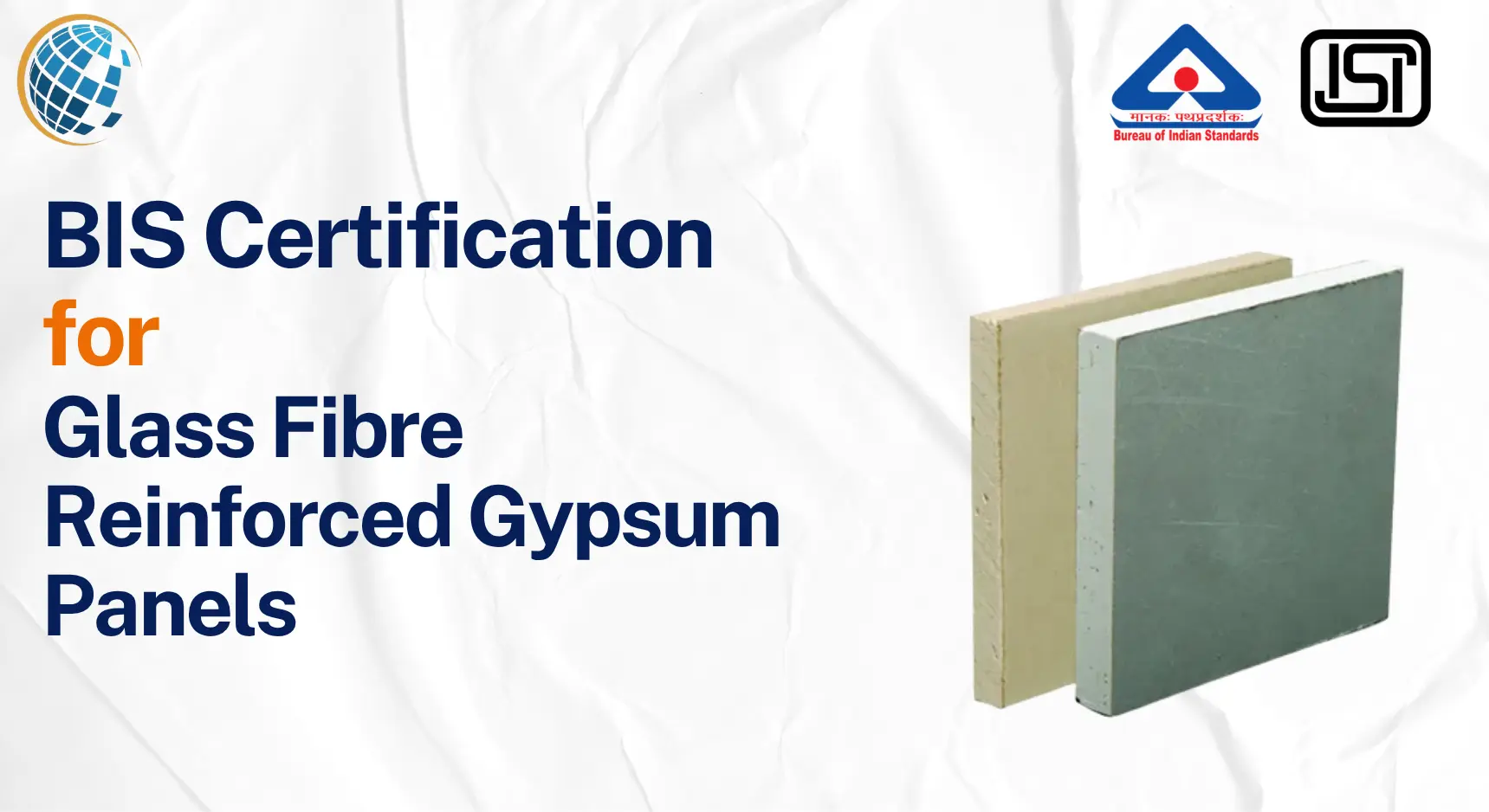
BIS Certification for Glass Fibre Reinforced Gypsum Panels under IS 17400:2021 confirms that these panels meet defined structural strength, fire resistance, and durability benchmarks required for safe building applications in India. Certification is essential to ensure that panels used in walls, partitions, and ceilings perform reliably under load, moisture, and fire exposure conditions.
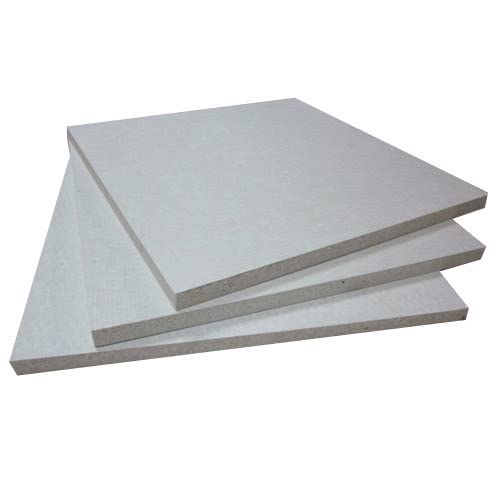
Glass Fibre Reinforced Gypsum (GFRG) panels have emerged as a transformative material in modern construction, especially in prefabricated housing, modular structures, and rapid infrastructure development. These panels are valued for their lightweight nature, structural strength, thermal insulation properties, and ease of installation. From residential buildings to commercial spaces, GFRG panels are increasingly replacing conventional brick and concrete systems.
However, the very characteristics that make these panels efficient also demand strict quality control. Since GFRG panels are often used as load-bearing or partition elements, any compromise in material strength, dimensional accuracy, or fire resistance can directly impact building safety. For example, poorly manufactured panels may crack under stress, absorb moisture, or fail during fire exposure, leading to severe structural risks.
In India's construction ecosystem, regulatory oversight ensures that such materials meet defined performance expectations before being deployed in buildings. This is where BIS Certification for Glass Fibre Reinforced Gypsum Panels becomes critical. It provides a structured validation process that evaluates manufacturing practices, material composition, and product performance.
For manufacturers, importers, and suppliers, obtaining a BIS License for Glass Fibre Reinforced Gypsum Panels is not just about compliance—it is a gateway to participating in government projects, large-scale infrastructure developments, and quality-conscious private construction markets. When you plan the licence route itself, it helps to align product-specific work with how Indian BIS operates overall — Check complete details about documentation, cost, and process etc.
Understanding BIS Certification for Glass Fibre Reinforced Gypsum Panels – IS 17400:2021
When it comes to construction materials like GFRG panels, certification is not merely a formality—it is a technical validation of how the product behaves under real-world conditions. These panels are expected to withstand mechanical loads, environmental exposure, and fire hazards while maintaining structural integrity.
The BIS Certification for Glass Fibre Reinforced Gypsum Panels focuses on evaluating multiple dimensions of product performance:
- Structural reliability: Panels must support loads without cracking or deforming.
- Fire resistance: Gypsum-based materials naturally resist fire, but reinforcement and manufacturing quality influence performance.
- Moisture behavior: Since gypsum is sensitive to water, panels must be engineered to resist excessive absorption.
- Dimensional stability: Panels should maintain uniform thickness and shape to ensure proper installation.
Certification ensures that every panel leaving the factory is consistent in quality and capable of performing its intended function in construction. For example, in prefabricated housing projects, where panels are assembled rapidly on-site, uniformity and reliability are critical. A single defective panel can disrupt the entire structural alignment.
The BIS Licence for Glass Fibre Reinforced Gypsum Panels acts as a formal assurance that the product has undergone rigorous evaluation and meets predefined benchmarks tailored specifically for this category.
Applicable BIS Standard for Glass Fibre Reinforced Gypsum Panels – IS 17400:2021
The standard governing this product category is IS 17400:2021, which provides detailed specifications for manufacturing, testing, and performance evaluation of GFRG panels.
Scope of IS 17400:2021
This standard applies to:
- Load-bearing and non-load-bearing GFRG panels
- Panels used in walls, partitions, and slabs
- Prefabricated construction systems using gypsum-based reinforced panels
Key Objectives of the Standard
IS 17400:2021 is designed to ensure that panels:
- Maintain structural strength under static and dynamic loads
- Exhibit resistance to fire and heat exposure
- Retain dimensional accuracy for seamless assembly
- Perform consistently under varying environmental conditions
Design and Testing Principles
The standard outlines specific requirements related to:
- Core material composition (gypsum quality and additives)
- Glass fibre reinforcement distribution
- Panel thickness, density, and weight
- Load-bearing capacity and flexural strength
- Fire resistance duration
- Water absorption limits
For instance, panels used in multi-story prefabricated buildings must demonstrate higher load-bearing capacity compared to those used for interior partitions. IS 17400:2021 ensures that such distinctions are addressed through precise testing protocols.
Testing Requirements as per IS 17400:2021
Testing is conducted in BIS-recognized laboratories and includes:
Safety Tests
- Fire resistance evaluation
- Structural load testing
Performance Tests
- Flexural strength
- Impact resistance
Durability Tests
- Water absorption
- Environmental exposure
Quality Verification Tests
- Dimensional accuracy
- Density and composition checks
Conclusion
The BIS Certification for Glass Fibre Reinforced Gypsum Panels under IS 17400:2021 plays a vital role in ensuring that construction materials meet the performance demands of modern infrastructure. From structural strength to fire resistance, certification validates every critical aspect of panel performance.
For manufacturers and suppliers, obtaining a BIS License for Glass Fibre Reinforced Gypsum Panels is not just about meeting regulatory requirements—it is about building trust, ensuring safety, and unlocking market opportunities. By following the defined bis certification process for Glass Fibre Reinforced Gypsum Panels, businesses can confidently deliver reliable products that meet the evolving needs of the construction industry in India.
FAQs – BIS Certification for Glass Fibre Reinforced Gypsum Panels
1. What factors influence the BIS certification cost for Glass Fibre Reinforced Gypsum Panels?
The bis certification cost for Glass Fibre Reinforced Gypsum Panels depends on testing complexity, panel size variations, and the number of product variants submitted. Since these panels require structural, fire, and moisture testing, laboratory charges can vary significantly. Additionally, inspection fees and documentation preparation also contribute to the overall cost of bis certification for Glass Fibre Reinforced Gypsum Panels.
2. Why is fire resistance testing important in BIS certification for these panels?
Fire resistance testing ensures that GFRG panels can withstand high temperatures without losing structural integrity. Since these panels are used in building walls and ceilings, their ability to resist fire spread is critical. BIS certification evaluates this aspect to ensure occupant safety and compliance with construction safety requirements.
3. Can imported GFRG panels obtain BIS certification?
Yes, imported panels can obtain a BIS Certificate for Glass Fibre Reinforced Gypsum Panels. However, importers must ensure that the foreign manufacturing unit complies with IS 17400:2021. Additional documentation, including authorization from the manufacturer and detailed technical specifications, is required during the certification process.
4. Is BIS certification required for all types of GFRG panels?
Certification is required for panels that fall within the scope of IS 17400:2021. This includes panels used in structural and non-structural applications in buildings. Manufacturers must verify whether their product specifications align with the standard before applying for a BIS License for Glass Fibre Reinforced Gypsum Panels.
5. How does BIS certification improve market acceptance of GFRG panels?
Certified panels are more likely to be accepted by builders, architects, and government agencies. The BIS Licence for Glass Fibre Reinforced Gypsum Panels acts as proof of compliance with performance standards, making it easier for manufacturers to enter large-scale construction projects and infrastructure developments.
6. Can multiple panel sizes be covered under one BIS license?
Yes, multiple sizes can be included under a single license if they fall within the defined scope and meet testing requirements. However, each variation must be evaluated to ensure compliance with IS 17400:2021. This allows manufacturers to offer a range of products under one certification framework.
7. How does BIS certification evaluate the bonding strength between gypsum and glass fibres?
BIS Certification for Glass Fibre Reinforced Gypsum Panels places strong emphasis on the bonding integrity between gypsum and embedded glass fibres. During testing under IS 17400:2021, panels are subjected to flexural and load-bearing tests to ensure that fibres do not delaminate under stress. Weak bonding can lead to cracks or structural failure, especially in load-bearing applications, making this evaluation critical for long-term durability.
8. Are there specific density requirements for GFRG panels under BIS certification?
Yes, IS 17400:2021 defines density parameters to ensure that panels achieve the right balance between strength and weight. BIS certification verifies that panels are neither too porous nor excessively dense. Low-density panels may compromise strength, while overly dense panels can increase load on structures. Maintaining optimal density ensures consistent structural performance and ease of installation in prefabricated construction.
9. Does BIS certification cover thermal insulation properties of GFRG panels?
Yes, thermal performance is an important aspect of GFRG panels. BIS certification under IS 17400:2021 evaluates how effectively panels resist heat transfer. This is especially relevant in regions with extreme temperatures, where panels contribute to indoor comfort and energy efficiency. Proper insulation properties reduce reliance on heating and cooling systems, making buildings more sustainable.
10. What are the marking and labeling requirements for certified GFRG panels?
Certified panels must display specific markings, including the ISI mark, manufacturer details, and standard reference. BIS certification ensures that labeling is clear and traceable, allowing buyers to verify compliance. Incorrect or missing labeling can lead to rejection in construction projects, making it essential for manufacturers to follow prescribed marking guidelines under IS 17400:2021.
Many of our users also read
This compliance advisory was vetted by our Senior Consultant (Enforcement & Vigilance), a former BIS Director (Enforcement). He specializes in post-certification compliance, helping companies navigate surveillance audits and legal adherence to BIS mandates.
Dhruv Aggarwal
Head of Operations at Sun Certifications India
Experience: 10+ years & Handled 1000+ projects
Awarded by many Indian and International organisations








PT Quty Karunia, BIS Licensee in Vietnam
“Sun Certifications India provided excellent BIS Certification services. Their unparalleled service and sincerity gained our trust. One of the best BIS consultants in India!”

Thantawan Industries Ltd, BIS Licensee in Thailand
“Sun Certifications India supported us throughout the BIS certification process. Their responsive customer service and punctuality are exceptional. Highly recommend for hassle-free BIS certification.”

Leaderart Industries, BIS Licensee in Malaysia
“Sun Certifications India helped us acquire BIS Certification, doubling our engagement in India. Their services are fast, genuine, and up-to-date with latest BIS norms.”

Aluminium Bahrain (ALBA), BIS Licensee in Bahrain
“Excellent BIS certification support, highly reliable consultants.”

Bahrain Aluminium Manufacturing Company, BIS Licensee in Bahrain
“Smooth BIS registration process with expert consultants.”

Daiki Aluminium Japan, BIS Licensee in Japan
“Efficient BIS license assistance, great consultants.”

Trimble Navigation, BIS Licensee in USA
“Seamless BIS certification and registration support.”

Remsa Italia, BIS Licensee in Italy
“Helpful BIS consultants, simplified license process.”

Aquazzura, BIS Licensee in Italy
“We got our BIS certificate well within the timelines and at affordable prices, great work team Sun!”

PT Quty, BIS Licensee in Indonesia
“Excellent BIS registration service, highly recommended.”

Danu Vina, BIS Licensee in Vietnam
“Reliable BIS license consultants, fast process.”

Hanh My Production Company, BIS Licensee in Vietnam
“Expert BIS consultants, certification made easy.”

Sedo Vina, BIS Licensee in Vietnam
“Smooth BIS certificate registration, great support.”

Misumi Japan, BIS Licensee in Japan
“Trusted BIS consultants, quick certification process.”

Thantawan Public Industry Company, BIS Licensee in Thailand
“Professional BIS certification service, very efficient.”

Cortizo Aluminios, BIS Licensee in Spain
“Excellent BIS registration and license guidance.”

Midal Cables, BIS Licensee in Bahrain
“Expert BIS consultants, smooth certification process.”
Years Exp.
Our Clients
Success Rate
Countries Served
Our team brings 10e4+ years of experience in CDSCO and BIS compliance.
We reduce approval time by up to 40% with streamlined processes.
100% success rate with 1500+ successful registrations.
Dedicated account manager ensuring personalized service.
Leave your details below and our experts will call you back within 24 hours to discuss your regulatory compliance needs.
By submitting this form, you agree to our Privacy Policy and consent to being contacted.