BIS Certification for Live Working Gloves of Insulating Material – IS 13774: 2021
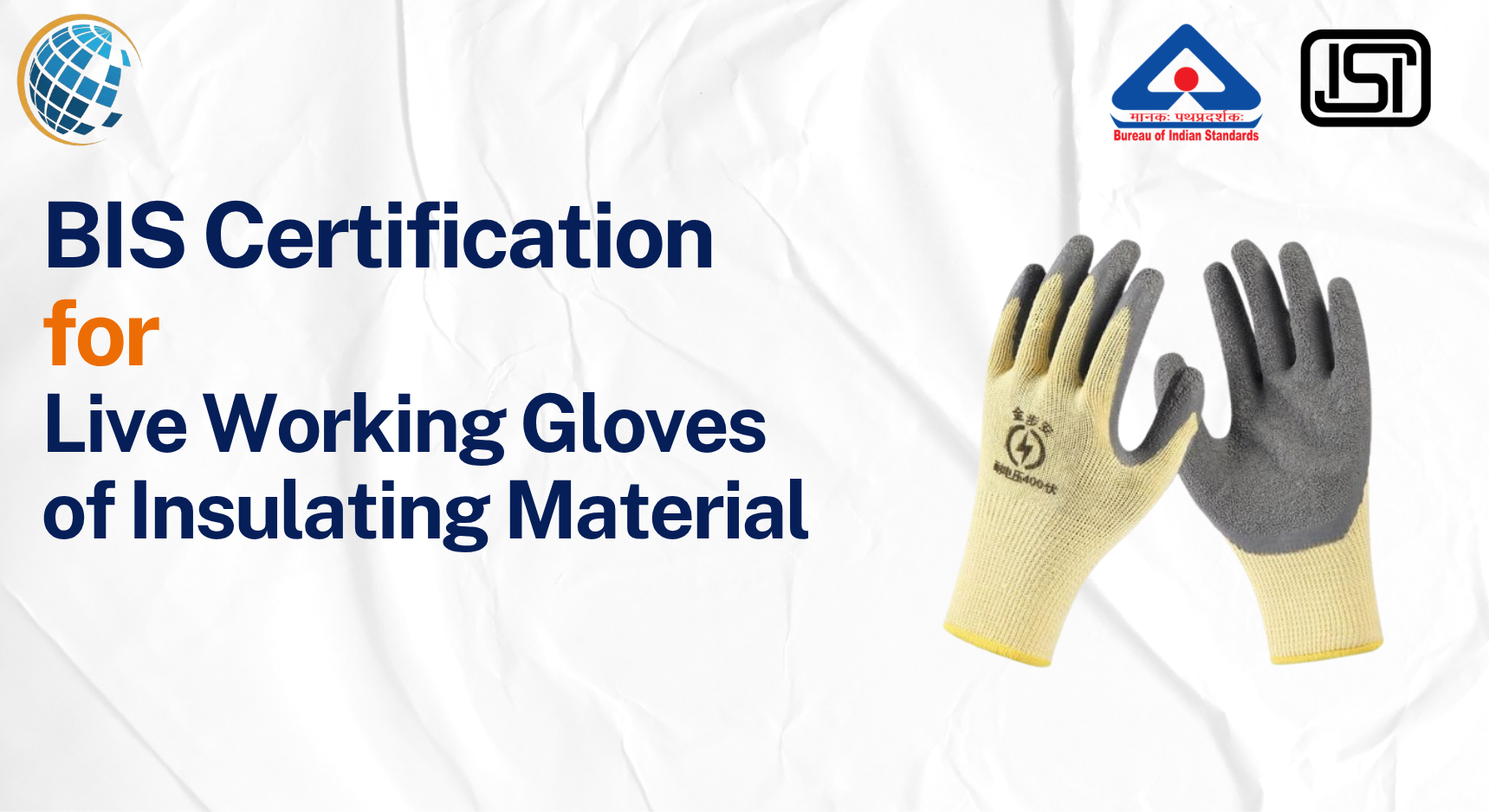
BIS Certification for Live Working Gloves of Insulating Material ensures that protective gloves used by electrical workers meet IS 13774: 2021 requirements for dielectric strength, mechanical durability, and user safety. In India, certification is essential to confirm that these gloves can safely withstand live electrical exposure without failure.
Live working gloves of insulating material are not ordinary safety accessories—they are life-saving equipment designed for professionals working on energized electrical systems. From power distribution technicians to industrial maintenance staff, these gloves act as the last line of defense between a worker and potentially fatal electric shock.
In India's expanding infrastructure landscape, where electrical installations are growing rapidly across urban and rural sectors, the demand for reliable personal protective equipment has increased significantly. Workers frequently perform maintenance, repairs, and inspections without shutting down electrical systems, making high-quality insulating gloves absolutely essential.
Unlike general-purpose gloves, these products must maintain electrical resistance while also providing flexibility, grip, and resistance to wear. A minor defect such as a pinhole, material inconsistency, or improper curing can lead to catastrophic failure. This is where regulatory oversight becomes critical.
The BIS Certification for Live Working Gloves of Insulating Material plays a crucial role in ensuring that only properly tested and verified gloves reach the market. It provides a structured framework that evaluates the gloves not just as a product, but as a safety-critical tool used in high-risk environments.
For manufacturers, importers, and suppliers, obtaining a BIS License for Live Working Gloves of Insulating Material is not just about compliance—it is about demonstrating responsibility toward worker safety and ensuring long-term credibility in the market.
Understanding BIS Certificate for Live Working Gloves of Insulating Material - IS 13774: 2021
Live working gloves operate in environments where even a small lapse in insulation can result in serious injury or death. Therefore, certification for such products goes beyond routine quality checks—it involves rigorous validation of electrical resistance, physical integrity, and environmental performance.
The BIS Certification for Live Working Gloves of Insulating Material ensures that gloves are capable of handling specific voltage levels without breakdown. This is particularly important because electrical exposure is not always predictable. Voltage surges, environmental moisture, and prolonged use can all impact performance.
For example, a glove used in a high-voltage substation must maintain its insulating properties even when exposed to humidity or mechanical stress. Certification ensures that the material composition, thickness, and manufacturing process are all optimized to prevent failure under such conditions.
Another critical aspect is consistency. Workers rely on these gloves daily, and any variation between batches can create safety risks. The certification process ensures uniformity in production, so every glove performs as expected.
From a regulatory standpoint, the BIS License for Live Working Gloves of Insulating Material acts as proof that the product has been independently verified against Indian safety benchmarks. It also ensures traceability, allowing authorities to identify the source of any defective products in the market. When you plan the licence route itself, it helps to align product-specific work with how Indian BIS operates overall — Check complete details about documentation, cost, and process etc.
Applicable BIS Standard for Live Working Gloves of Insulating Material - IS 13774: 2021
The applicable standard, IS 13774: 2021, defines the technical requirements for insulating gloves used in live electrical work. This standard is designed to address the unique challenges associated with electrical safety gear.
Scope of the Standard
IS 13774: 2021 covers gloves made from insulating materials such as rubber or polymer compounds, intended for use in live working conditions. It applies to various voltage classes, ensuring suitability for different electrical applications.
Product Categories Covered
The standard classifies gloves based on voltage ratings, allowing users to select appropriate protection levels. This classification ensures that gloves are not misused in environments where higher protection is required.
Safety and Performance Objectives
The primary objective is to ensure that gloves can resist electrical current while maintaining structural integrity. This includes resistance to punctures, tears, and environmental degradation.
Design and Testing Principles
The standard emphasizes:
- Uniform thickness to avoid weak points
- Smooth internal surfaces for comfort
- Adequate elasticity for flexibility
- Resistance to ozone, heat, and chemicals
These design principles ensure that gloves are not only safe but also practical for daily use.
Testing Requirements as per IS 13774: 2021
Safety Tests
- Dielectric strength testing
- Leakage current measurement
Performance Tests
- Flexibility and elongation
- Resistance to mechanical stress
Durability Tests
- Aging tests
- Ozone resistance
Quality Verification Tests
- Visual inspection
- Thickness measurement
All tests must be conducted in BIS recognized laboratories to ensure accuracy and reliability.
Conclusion
The BIS License for Live Working Gloves of Insulating Material is a critical requirement for ensuring electrical safety in high-risk environments. By complying with IS 13774: 2021, manufacturers and suppliers can deliver products that provide reliable protection against electrical hazards. Obtaining a BIS Certificate for Live Working Gloves of Insulating Material not only ensures regulatory compliance but also strengthens market credibility and user trust.
FAQs – BIS License for Live Working Gloves of Insulating Material - IS 13774: 2021
1. What factors influence the bis certificate cost for Live Working Gloves of Insulating Material?
The bis certificate cost for Live Working Gloves of Insulating Material depends on multiple factors such as the number of product variants, required testing parameters, and factory inspection requirements. Gloves designed for higher voltage classes typically require more extensive testing, which can increase costs. Additionally, laboratory fees, application charges, and compliance preparation expenses contribute to the overall cost. Manufacturers should plan for both initial certification expenses and ongoing compliance costs.
2. What are the most critical tests conducted under IS 13774: 2021?
The most critical tests include dielectric strength testing, leakage current measurement, and mechanical durability assessments. These tests ensure that the gloves can withstand electrical exposure without failure while maintaining physical integrity. Additional tests such as ozone resistance and aging tests verify long-term performance. These evaluations are essential because even minor defects can compromise safety in live electrical environments.
3. How does humidity affect the performance of insulating gloves during BIS testing?
Humidity plays a major role in electrical insulation performance. During the BIS Certification for Live Working Gloves of Insulating Material, gloves are evaluated under controlled environmental conditions to assess how moisture impacts dielectric strength. High humidity can reduce insulation resistance and increase leakage current risk. Testing ensures that gloves maintain safe performance even in damp environments like outdoor substations or monsoon conditions, which are common in India.
4. Why is thickness uniformity important in insulating gloves under IS 13774: 2021?
Uniform thickness ensures that there are no weak spots where electrical breakdown could occur. During the BIS certification process for Live Working Gloves of Insulating Material, thickness measurements are taken across multiple points. Even a slight variation can create a vulnerable area under high voltage exposure. Maintaining consistent thickness is crucial for ensuring reliable insulation and preventing localized failures during real-time electrical work.
5. Can recycled materials be used in manufacturing BIS-certified insulating gloves?
While sustainability is encouraged, the use of recycled materials in insulating gloves must meet strict performance criteria. Under BIS Certification for Live Working Gloves of Insulating Material, the material must demonstrate consistent dielectric and mechanical properties. Recycled compounds often introduce variability, which can affect insulation reliability. Manufacturers must prove through testing that such materials meet IS 13774: 2021 requirements before approval is granted.
6. How does BIS certification ensure compatibility with other safety equipment?
Insulating gloves are often used along with sleeves, tools, and protective clothing. The BIS License for Live Working Gloves of Insulating Material ensures that gloves are designed to function effectively with complementary safety gear. Factors such as flexibility, grip, and ergonomic design are evaluated to ensure that workers can safely handle tools without compromising insulation or dexterity during live operations.
7. Are there specific storage requirements for BIS-certified insulating gloves?
Yes, proper storage is essential to maintain the integrity of insulating gloves. Even after obtaining a BIS Certificate for Live Working Gloves of Insulating Material, gloves must be stored away from direct sunlight, ozone sources, and extreme temperatures. Poor storage conditions can degrade the material, reducing its insulating properties. Manufacturers often provide guidelines to ensure that the product remains compliant throughout its shelf life.
8. Can a single BIS license cover multiple glove sizes and designs?
A single BIS Licence for Live Working Gloves of Insulating Material can cover multiple sizes if they share the same material composition and manufacturing process. However, significant design changes, such as different thickness or voltage ratings, may require separate approvals. Manufacturers must clearly define product variants during the application to ensure that all covered products meet the required standards.
9. How are defective gloves traced back to the manufacturer under BIS compliance?
Traceability is a key aspect of BIS compliance. Each glove must carry identification markings such as batch number and manufacturer details. In case of defects, authorities can trace the product back to its origin using these markings. This system ensures accountability and allows manufacturers to identify and correct issues in specific production batches under the BIS License for Live Working Gloves of Insulating Material.
10. What is the impact of improper handling during transportation on BIS-certified gloves?
Transportation conditions can significantly affect the quality of insulating gloves. Exposure to extreme temperatures, compression, or sharp objects during transit can damage the gloves. Even if the product has a valid BIS Certification for Live Working Gloves of Insulating Material, improper handling can compromise its performance. Manufacturers and distributors must ensure proper packaging and logistics to maintain product integrity until it reaches the end user.
Many of our users also read
This compliance advisory was vetted by our Senior Consultant (Enforcement & Vigilance), a former BIS Director (Enforcement). He specializes in post-certification compliance, helping companies navigate surveillance audits and legal adherence to BIS mandates.
Dhruv Aggarwal
Head of Operations at Sun Certifications India
Experience: 10+ years & Handled 1000+ projects
Awarded by many Indian and International organisations








PT Quty Karunia, BIS Licensee in Vietnam
“Sun Certifications India provided excellent BIS Certification services. Their unparalleled service and sincerity gained our trust. One of the best BIS consultants in India!”

Thantawan Industries Ltd, BIS Licensee in Thailand
“Sun Certifications India supported us throughout the BIS certification process. Their responsive customer service and punctuality are exceptional. Highly recommend for hassle-free BIS certification.”

Leaderart Industries, BIS Licensee in Malaysia
“Sun Certifications India helped us acquire BIS Certification, doubling our engagement in India. Their services are fast, genuine, and up-to-date with latest BIS norms.”

Aluminium Bahrain (ALBA), BIS Licensee in Bahrain
“Excellent BIS certification support, highly reliable consultants.”

Bahrain Aluminium Manufacturing Company, BIS Licensee in Bahrain
“Smooth BIS registration process with expert consultants.”

Daiki Aluminium Japan, BIS Licensee in Japan
“Efficient BIS license assistance, great consultants.”

Trimble Navigation, BIS Licensee in USA
“Seamless BIS certification and registration support.”

Remsa Italia, BIS Licensee in Italy
“Helpful BIS consultants, simplified license process.”

Aquazzura, BIS Licensee in Italy
“We got our BIS certificate well within the timelines and at affordable prices, great work team Sun!”

PT Quty, BIS Licensee in Indonesia
“Excellent BIS registration service, highly recommended.”

Danu Vina, BIS Licensee in Vietnam
“Reliable BIS license consultants, fast process.”

Hanh My Production Company, BIS Licensee in Vietnam
“Expert BIS consultants, certification made easy.”

Sedo Vina, BIS Licensee in Vietnam
“Smooth BIS certificate registration, great support.”

Misumi Japan, BIS Licensee in Japan
“Trusted BIS consultants, quick certification process.”

Thantawan Public Industry Company, BIS Licensee in Thailand
“Professional BIS certification service, very efficient.”

Cortizo Aluminios, BIS Licensee in Spain
“Excellent BIS registration and license guidance.”

Midal Cables, BIS Licensee in Bahrain
“Expert BIS consultants, smooth certification process.”
Years Exp.
Our Clients
Success Rate
Countries Served
Our team brings 10e4+ years of experience in CDSCO and BIS compliance.
We reduce approval time by up to 40% with streamlined processes.
100% success rate with 1500+ successful registrations.
Dedicated account manager ensuring personalized service.
Leave your details below and our experts will call you back within 24 hours to discuss your regulatory compliance needs.
By submitting this form, you agree to our Privacy Policy and consent to being contacted.