BIS Certification for Steel Back Flap Hinges – IS 3843:1995
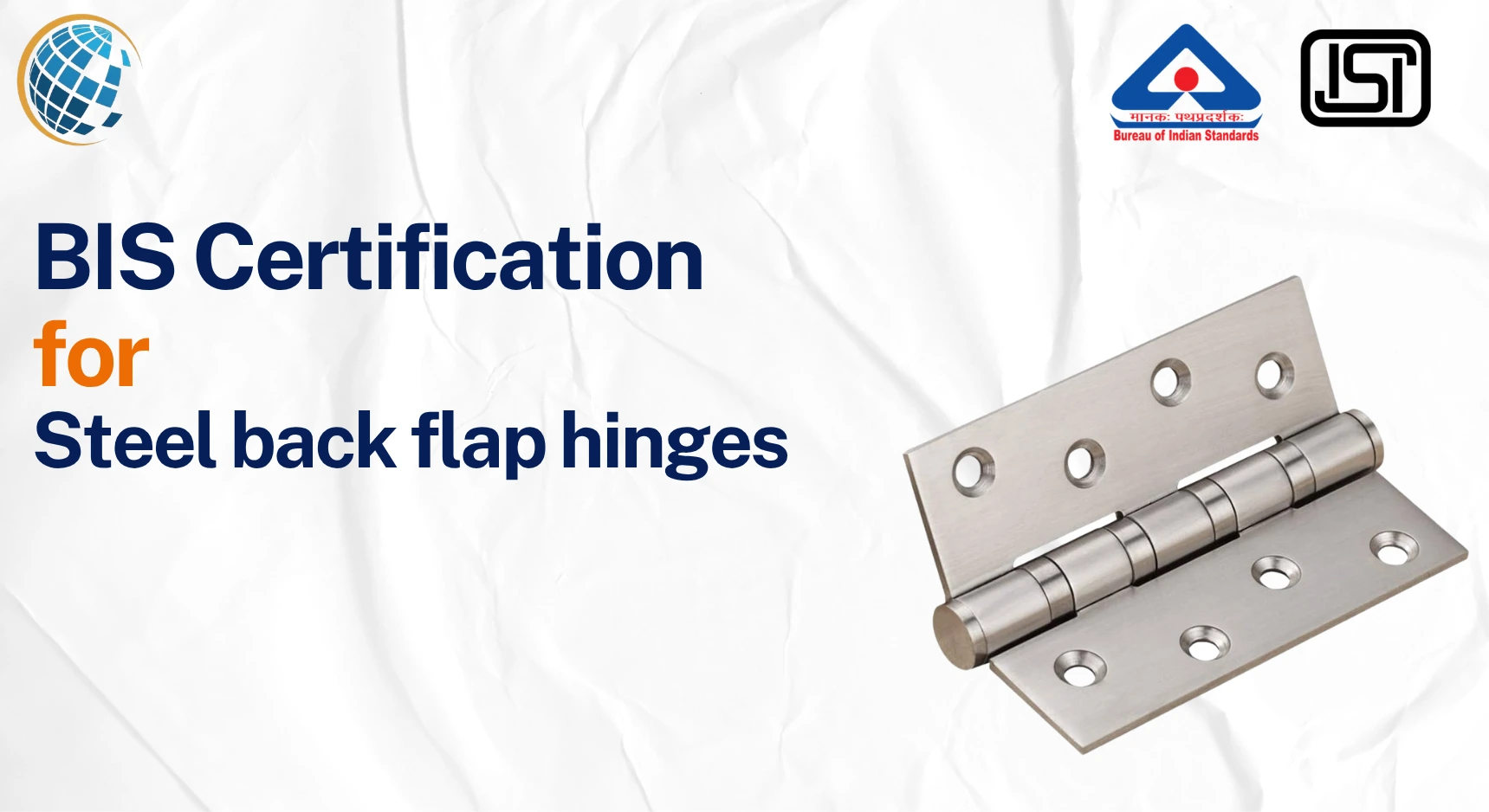
BIS Certification for Steel back flap hinges as per IS 3843:1995 confirms that these hinges meet defined strength, durability, and performance benchmarks. It is required in India to ensure reliable flap movement, structural integrity under repeated use, and consistent quality for furniture, cabinets, and industrial applications.
Steel back flap hinges are widely used in furniture systems where controlled opening and closing of flaps is essential. From kitchen cabinets and bar counters to storage units and foldable desks, these hinges play a key role in enabling smooth movement while supporting the weight of panels. Unlike standard hinges, steel back flap hinges are designed to hold and stabilize horizontal or inclined positions, making them critical for both functionality and safety.
Consider a kitchen overhead cabinet with a flap door. If the hinge lacks proper strength or balance, the flap may suddenly drop or fail to stay open, posing a safety hazard. Similarly, in commercial setups like retail counters, unstable hinges can lead to operational inefficiencies and damage to stored items. These risks highlight the importance of precision manufacturing and consistent quality.
The Indian market has seen significant growth in modular furniture and hardware demand, increasing the need for reliable hinge systems. Variations in steel grade, thickness, and fabrication processes can directly affect performance. Without proper control, substandard hinges may enter the supply chain, leading to failures during use.
This is where BIS Certification for Steel back flap hinges becomes highly relevant. It ensures that products meet specific performance and durability expectations defined under IS 3843:1995. For manufacturers and importers, obtaining a BIS License for Steel back flap hinges is not just about compliance—it is about delivering dependable hardware that performs consistently in real-world applications.
Understanding BIS Certificate for Steel Back Flap Hinges - IS 3843:1995
Steel back flap hinges are subjected to unique mechanical stresses compared to regular door hinges. They must support flap panels in partially open positions, resist bending forces, and maintain alignment over time. This requires a combination of strong materials, accurate design, and precise assembly.
BIS Certification for Steel back flap hinges evaluates these aspects through a structured framework. Instead of focusing only on appearance or dimensions, the certification process examines how the hinge behaves during operation. For example, when a cabinet flap is opened repeatedly, the hinge must retain its structural integrity and not deform under load.
The regulatory purpose behind certification is to ensure uniformity in product performance across the market. Without such oversight, inconsistencies in manufacturing could lead to hinges that fail prematurely, causing inconvenience or even accidents. Imagine a storage unit in a commercial setting where a flap suddenly collapses due to weak hinges—this could damage goods and pose a risk to users.
The BIS License for Steel back flap hinges ensures that manufacturers adhere to defined standards in material selection, fabrication techniques, and quality control. It also establishes accountability, as certified products can be traced back to their source.
For consumers and businesses, this translates into confidence. Certified hinges are more likely to provide smooth operation, stable support, and long-term durability, reducing maintenance costs and enhancing overall user experience.
Applicable BIS Standard for Steel Back Flap Hinges - IS 3843:1995
The relevant standard for this product category is IS 3843:1995, which specifies requirements for steel back flap hinges used in furniture and related applications.
Scope of the Standard
IS 3843:1995 covers steel back flap hinges designed to support and control the movement of flap doors or panels. The standard applies to hinges used in residential furniture, office installations, and industrial storage systems.
Product Categories Covered
The standard includes:
- Hinges for light-duty furniture applications
- Hinges for medium-duty usage in office and commercial setups
- Hinges designed for heavier panels in industrial environments
Each category is evaluated based on load-bearing capacity and intended usage.
Safety and Performance Objectives
The standard aims to ensure that hinges:
- Provide stable support for flap panels
- Prevent dropping or uncontrolled movement
- Maintain alignment during repeated use
- Resist deformation under load
For instance, in a wall-mounted cabinet, the hinge must hold the flap securely in an open position without sagging.
Design and Testing Principles
IS 3843:1995 emphasizes:
- Use of appropriate steel grades for strength
- Accurate fabrication to ensure proper fit
- Resistance to corrosion for long-term performance
- Endurance under repeated operation
These principles ensure that the BIS Certificate for Steel back flap hinges reflects practical usability rather than just theoretical compliance.
Testing Requirements as per IS 3843:1995
Testing plays a central role in BIS Certification for Steel back flap hinges, as it validates the hinge's ability to perform under real-world conditions. All testing must be conducted in laboratories recognized by the Bureau of Indian Standards to ensure credibility.
Safety Tests
Safety testing focuses on preventing sudden or uncontrolled flap movement. Hinges are evaluated to ensure:
- Smooth opening and closing without jerks
- Stable positioning of the flap at different angles
- No sharp edges or defects that may cause injury
For example, a hinge used in a kitchen cabinet must allow the flap to open safely without snapping shut.
Performance Tests
Performance testing examines how efficiently the hinge operates. This includes:
- Load-bearing capacity under different weights
- Consistency in movement over repeated cycles
- Alignment accuracy during operation
A hinge that fails to maintain alignment may cause uneven panel movement, leading to wear and tear.
Durability Tests
Durability is assessed through repeated usage simulations. Hinges are subjected to multiple opening and closing cycles to evaluate:
- Resistance to fatigue
- Retention of structural integrity
- Long-term reliability
This ensures that the hinge can withstand daily usage without failure.
Quality Verification Tests
Additional tests focus on:
- Material composition and strength
- Surface finish and corrosion resistance
- Dimensional accuracy
For instance, hinges used in humid environments must resist rust to maintain functionality.
These testing requirements ensure that the BIS Certification for Steel back flap hinges represents actual performance and reliability.
Conclusion
Steel back flap hinges are essential components in modern furniture systems, where stability, durability, and smooth operation are critical. Their role in supporting flap panels and ensuring controlled movement makes them indispensable in both residential and commercial applications.
Obtaining a BIS Certificate for Steel back flap hinges under IS 3843:1995 ensures that these products meet stringent performance and quality benchmarks. It validates their ability to handle mechanical stress, resist wear, and provide consistent functionality over time.
For manufacturers and importers, BIS Certification for Steel back flap hinges is a strategic investment. It enhances product credibility, ensures regulatory compliance, and improves market acceptance. A BIS License for Steel back flap hinges not only facilitates smoother distribution but also builds long-term trust among customers.
In a market where reliability and safety are paramount, aligning with IS 3843:1995 is essential. It ensures that steel back flap hinges deliver dependable performance, making them a trusted choice for furniture and hardware applications across India.
FAQs – BIS Certification for Steel Back Flap Hinges - IS 3843:1995
1. Why is BIS Certification important for steel back flap hinges used in modular furniture?
Steel back flap hinges in modular furniture must support panels that are frequently opened and closed while maintaining stability. BIS Certification for Steel back flap hinges ensures that these hinges are designed to handle such repetitive usage without deformation or failure. It verifies that the hinge can support the weight of the flap, maintain alignment, and provide smooth operation. Without certification, there is a risk of hinges failing prematurely, which can lead to inconvenience, damage to furniture, and potential safety hazards.
2. How does IS 3843:1995 ensure the strength of steel back flap hinges?
IS 3843:1995 includes specific requirements for material quality, fabrication processes, and testing procedures. The standard ensures that hinges are made from suitable steel grades capable of mechanical stress. It also requires testing for load-bearing capacity and durability. By following these guidelines, manufacturers can produce hinges that maintain their strength and functionality over time, even under continuous use in demanding environments.
3. What factors affect the bis certification cost for Steel back flap hinges?
The bis certification cost for Steel back flap hinges depends on factors such as the number of product variants, testing requirements, and factory inspection expenses. Different hinge sizes or designs may require separate testing, which can influence overall costs. Additionally, application fees, laboratory charges, and compliance-related expenses contribute to the total cost of bis certification for Steel back flap hinges. Proper planning can help optimize these costs while ensuring compliance.
4. Can small manufacturers apply for a BIS License for Steel back flap hinges?
Yes, small manufacturers can apply for a BIS License for Steel back flap hinges. However, they must ensure that their production processes meet the requirements of IS 3843:1995. This includes maintaining quality control systems, providing accurate documentation, and passing product testing. While the process may require investment in infrastructure and compliance, certification helps small manufacturers gain credibility and compete effectively in the market.
5. What are common reasons for rejection during the bis certification process for Steel back flap hinges?
Common reasons for rejection include failure in load-bearing tests, in material quality, and compliance with dimensional specifications. In some cases, improper documentation or readiness during factory audits can also lead to rejection. To avoid these issues, manufacturers should conduct internal testing, ensure proper material selection, and maintain accurate records before applying for certification.
6. How long does it take to complete the BIS Certification process for Steel back flap hinges?
The duration of the bis certification process for Steel back flap hinges depends on factors such as testing timelines, document verification, and factory inspection schedules. Typically, the process can take several weeks to a few months. Delays may occur if there are issues with test results or incomplete documentation. Preparing thoroughly in advance can help expedite the process.
7. What documents are required for bis certification documents for Steel back flap hinges?
The bis certification documents for Steel back flap hinges include manufacturer registration details, factory licenses, product specifications, and quality control procedures. Applicants must also provide technical drawings, test reports, and details of raw materials used. Accurate documentation ensures smooth processing of the BIS License for Steel back flap hinges and reduces the chances of delays or rejection.
8. How does BIS certification improve product acceptance in the Indian market?
BIS Certification for Steel back flap hinges enhances trust among buyers by demonstrating that the product meets recognized standards. Many businesses prefer certified products because they offer consistent performance and reliability. Certification also simplifies procurement processes, especially for large projects where compliance is mandatory. As a result, manufacturers with a BIS License for Steel back flap hinges gain better market access and customer confidence.
9. Are there specific marking requirements after obtaining BIS certification?
Yes, manufacturers must mark their products with the ISI symbol along with relevant details such as the license number and standard reference. This marking helps identify certified products and ensures traceability. Proper labelling is essential for compliance, and failure to follow marking requirements can result in penalties or withdrawal of certification.
10. What role do BIS recognized laboratories play in the certification process?
BIS recognized laboratories are responsible for testing steel back flap hinges according to IS 3843:1995. These laboratories evaluate parameters such as strength, durability, and performance. The test results provide objective evidence of compliance and are used to determine whether the product qualifies for certification. Using accredited laboratories ensures that the evaluation process is reliable and meets regulatory standards.
Quality Control Order (QCO) for Steel Back Flap Hinges
Related Resources
Many of our users also read
This compliance advisory was vetted by our Senior Consultant (Enforcement & Vigilance), a former BIS Director (Enforcement). He specializes in post-certification compliance, helping companies navigate surveillance audits and legal adherence to BIS mandates.
Dhruv Aggarwal
Head of Operations at Sun Certifications India
Experience: 10+ years & Handled 1000+ projects
Awarded by many Indian and International organisations








PT Quty Karunia, BIS Licensee in Vietnam
“Sun Certifications India provided excellent BIS Certification services. Their unparalleled service and sincerity gained our trust. One of the best BIS consultants in India!”

Thantawan Industries Ltd, BIS Licensee in Thailand
“Sun Certifications India supported us throughout the BIS certification process. Their responsive customer service and punctuality are exceptional. Highly recommend for hassle-free BIS certification.”

Leaderart Industries, BIS Licensee in Malaysia
“Sun Certifications India helped us acquire BIS Certification, doubling our engagement in India. Their services are fast, genuine, and up-to-date with latest BIS norms.”

Aluminium Bahrain (ALBA), BIS Licensee in Bahrain
“Excellent BIS certification support, highly reliable consultants.”

Bahrain Aluminium Manufacturing Company, BIS Licensee in Bahrain
“Smooth BIS registration process with expert consultants.”

Daiki Aluminium Japan, BIS Licensee in Japan
“Efficient BIS license assistance, great consultants.”

Trimble Navigation, BIS Licensee in USA
“Seamless BIS certification and registration support.”

Remsa Italia, BIS Licensee in Italy
“Helpful BIS consultants, simplified license process.”

Aquazzura, BIS Licensee in Italy
“We got our BIS certificate well within the timelines and at affordable prices, great work team Sun!”

PT Quty, BIS Licensee in Indonesia
“Excellent BIS registration service, highly recommended.”

Danu Vina, BIS Licensee in Vietnam
“Reliable BIS license consultants, fast process.”

Hanh My Production Company, BIS Licensee in Vietnam
“Expert BIS consultants, certification made easy.”

Sedo Vina, BIS Licensee in Vietnam
“Smooth BIS certificate registration, great support.”

Misumi Japan, BIS Licensee in Japan
“Trusted BIS consultants, quick certification process.”

Thantawan Public Industry Company, BIS Licensee in Thailand
“Professional BIS certification service, very efficient.”

Cortizo Aluminios, BIS Licensee in Spain
“Excellent BIS registration and license guidance.”

Midal Cables, BIS Licensee in Bahrain
“Expert BIS consultants, smooth certification process.”
Years Exp.
Our Clients
Success Rate
Countries Served
Our team brings 10e4+ years of experience in CDSCO and BIS compliance.
We reduce approval time by up to 40% with streamlined processes.
100% success rate with 1500+ successful registrations.
Dedicated account manager ensuring personalized service.
Leave your details below and our experts will call you back within 24 hours to discuss your regulatory compliance needs.
By submitting this form, you agree to our Privacy Policy and consent to being contacted.