BIS Certification for Vaporizers – Complete Guide to IS 302 (Part 1):2024
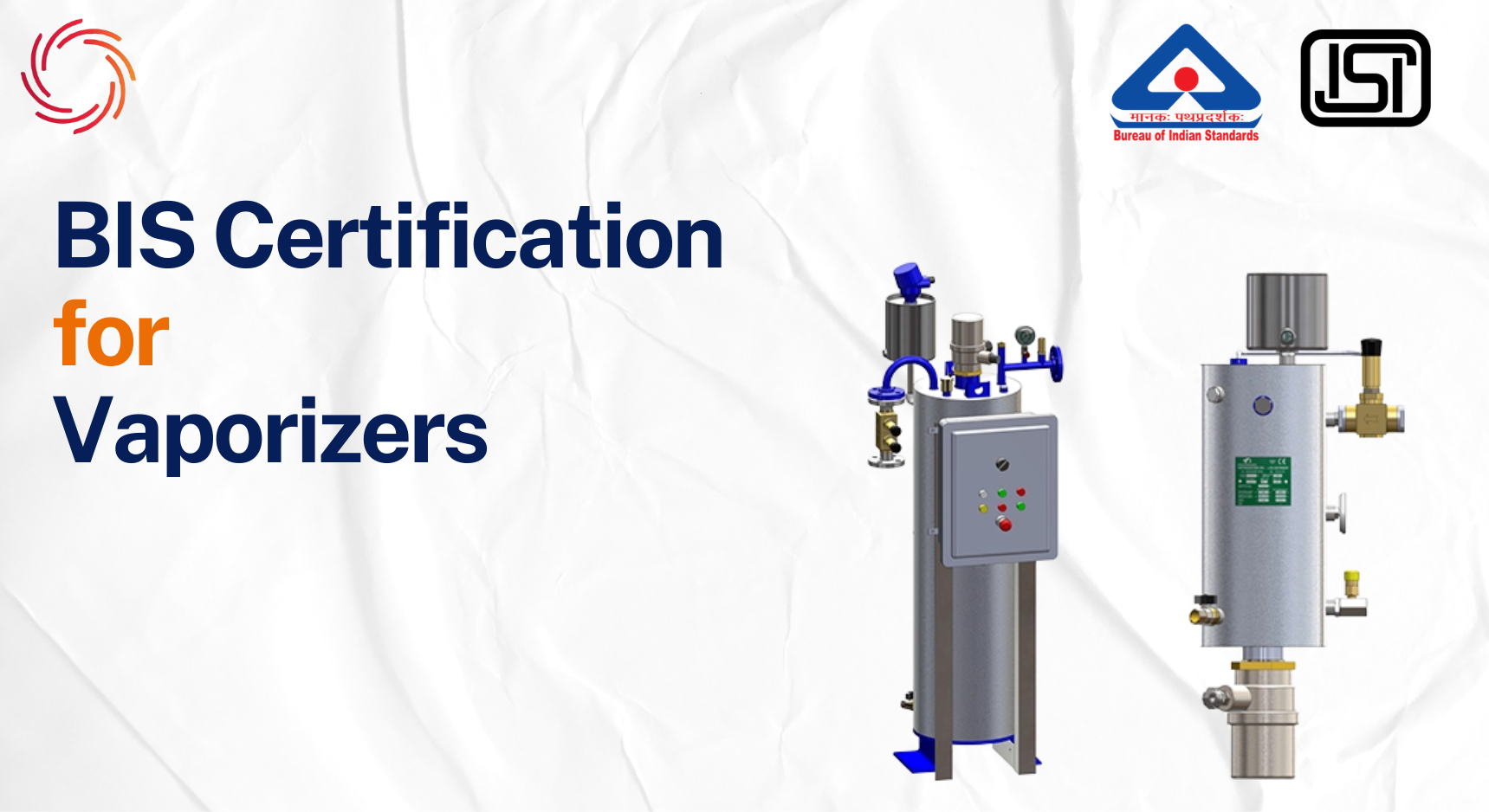
BIS Certification for Vaporizers ensures that these electrical appliances meet safety and performance requirements defined under IS 302 (Part 1):2024. This certification verifies that vaporizers used for heating liquids or producing steam operate safely under electrical conditions, protecting consumers from hazards such as overheating, electric shock, or insulation failure in the Indian market.
Vaporizers are commonly used electrical appliances designed to heat liquids and produce steam or vapor. In households, they are frequently used for respiratory therapy, humidification, aromatherapy, and personal wellness treatments. Hospitals and healthcare facilities also rely on vaporizers for therapeutic purposes such as steam inhalation therapy. Because these devices operate using electrical heating elements and generate hot vapor, they must be designed carefully to prevent risks like electric shock, overheating, leakage, or malfunction.
The increasing popularity of wellness products and personal care appliances has expanded the vaporizer market significantly in India. Consumers today purchase vaporizers for home remedies, spa treatments, and humidification during dry seasons. However, the combination of electricity, heat, and water inside a compact appliance introduces several safety challenges.
To address these concerns, the Indian regulatory system requires that electrical appliances such as vaporizers comply with standardized safety frameworks before they reach consumers. The BIS Certification for Vaporizers confirms that the product design, electrical insulation, heating components, and overall construction meet the technical requirements laid down under IS 302 (Part 1):2024.
For manufacturers, importers, and sellers, obtaining a BIS Certificate for Vaporizers is not just a regulatory step—it is an essential process to demonstrate that their products can safely operate in Indian households and healthcare environments. Without proper compliance, these products may pose risks to users and may not be legally allowed to be sold in the Indian market.
This guide provides a complete understanding of the BIS Certification for Vaporizers, including the applicable standard, certification process, required documentation, testing procedures, and regulatory obligations for businesses involved in manufacturing or importing vaporizers.
Understanding BIS Certification for Vaporizers
Electrical appliances that generate heat and steam must be designed to handle thermal stress, moisture exposure, and electrical load simultaneously. Vaporizers, in particular, include internal heating elements that raise the temperature of water or liquid solutions until vapor is produced. If the device lacks proper insulation, temperature control, or structural protection, it can become dangerous during use.
The BIS Certification for Vaporizers ensures that these appliances meet a defined safety benchmark before they are introduced into the Indian market. The certification process evaluates the electrical safety, design integrity, insulation system, temperature resistance, and structural reliability of vaporizers.
From a regulatory perspective, certification confirms that the vaporizer can safely operate under typical usage conditions found in homes, clinics, and wellness centers. For example, a vaporizer must continue functioning safely even when exposed to fluctuating voltage levels, prolonged heating cycles, or repeated usage.
A BIS License for Vaporizers also verifies that manufacturers maintain consistent production quality. During certification, the factory's quality control system is reviewed to ensure that each unit manufactured matches the tested sample.
This process serves several important purposes:
- Preventing electrical accidents caused by faulty appliance construction
- Ensuring stable heating performance without overheating
- Verifying insulation and grounding protection
- Confirming that product labeling and safety instructions are accurate
Once the product successfully passes testing and inspection, the manufacturer receives a BIS Licence for Vaporizers, allowing them to mark the product with the ISI symbol. This mark signals to regulators, distributors, and consumers that the appliance meets established safety expectations.
Applicable BIS Standard for Vaporizers
The relevant standard governing the safety of vaporizers is IS 302 (Part 1):2024, which outlines general safety requirements for electrical appliances. This standard addresses appliances that operate using electricity and may expose users to risks associated with electrical current, heating components, and mechanical construction.
Product Categories Covered
The scope includes electrical appliances that:
- Operate using domestic or similar electrical supply
- Contain heating elements or motors
- Generate heat, steam, or vapor during operation
- Are intended for household or similar applications
Vaporizers fall within this scope because they rely on electrical heating elements to convert liquid into vapor.
Safety and Performance Objectives
The primary objectives of IS 302 (Part 1):2024 include:
- Protecting users from electric shock
- Preventing overheating and fire hazards
- Ensuring structural stability
- Maintaining electrical insulation integrity
- Providing safe operation even under abnormal conditions
Design and Testing Principles
The standard evaluates several aspects of product design, including:
- Electrical insulation quality
- Protection against moisture ingress
- Resistance to heat and fire
- Mechanical strength of the device enclosure
- Temperature control mechanisms
These requirements ensure that vaporizers remain safe throughout their operational lifecycle.
Why BIS Certification is Mandatory for Vaporizers
Electrical appliances that generate heat and steam inherently carry safety risks. Vaporizers are no exception. Because they involve both electrical current and heated liquids, multiple hazards may arise if the product is poorly designed or manufactured.
One major concern is electrical insulation failure. Since vaporizers often operate in humid environments, moisture exposure can increase the risk of electrical leakage. Proper insulation is necessary to protect users from electric shock.
Another risk is overheating. Vaporizers use heating elements to produce steam. If the temperature control system fails, the appliance may overheat, leading to device damage or fire hazards.
There is also a concern regarding mechanical integrity. If the vaporizer body or lid is poorly constructed, hot steam may escape unexpectedly, potentially causing burns to users.
The BIS Certificate for Vaporizers ensures that such risks are minimized through standardized safety requirements. Certification confirms that the product has been evaluated using recognized testing methods and meets safety benchmarks.
Additionally, regulatory authorities in India monitor electrical appliances entering the market. Products that do not comply with mandatory safety standards may face enforcement actions, including import restrictions or market withdrawal. For businesses, obtaining a BIS License for Vaporizers is essential to ensure uninterrupted product distribution and regulatory compliance.
Step-by-Step BIS Certification Process for Vaporizers
Applicability & Standard Identification
The first step involves identifying whether the vaporizer falls under the scope of BIS certification requirements. Manufacturers must confirm that their product complies with IS 302 (Part 1):2024.
BIS Online Application Submission
The manufacturer or importer submits the application through the BIS online portal. The application includes company details, product specifications, manufacturing information, and supporting documents.
BIS Certification Cost Structure
The bis certification cost for Vaporizers generally includes several components:
- BIS application fee
- Product testing charges
- Inspection charges
- License fee
- Marking fee
The cost of BIS certification for Vaporizers may vary depending on the number of product variants and testing requirements.
Product Sample Testing as per IS 302 (Part 1):2024
Product samples are tested in BIS recognized laboratories. The testing process verifies compliance with safety requirements specified in the applicable standard.
Factory Inspection & Quality Audit
BIS officials may conduct a factory inspection to evaluate the manufacturer's quality control system, production process, and testing infrastructure.
Grant of BIS License and ISI Mark
If the product successfully meets all requirements, BIS grants the BIS Licence for Vaporizers, allowing the manufacturer to use the ISI mark on the product.
Post-Certification Compliance
Even after receiving the BIS License for Vaporizers, manufacturers must continue complying with BIS guidelines. Periodic inspections and sample testing may be conducted to ensure ongoing quality compliance.
Scope of BIS License as per IS 302 (Part 1):2024
The BIS license issued under this standard covers vaporizers designed for heating liquids to produce steam or vapor for domestic or similar applications. The scope includes appliances intended for:
- Personal steam inhalation
- Humidification
- Therapeutic use
- Aromatherapy applications
Manufacturers producing different models or capacities of vaporizers must ensure that each product variant falls within the scope defined under the standard.
Documents Required for BIS Certification
Obtaining a BIS Certificate for Vaporizers requires submission of several documents.
Manufacturer Documents
- Business registration certificate
- Manufacturing unit details
- Factory license
Legal Documents
- Company incorporation documents
- Authorized signatory details
Technical Documents
- Product specification sheet
- Circuit diagram
- Component list
- Manufacturing process details
BIS Application Documents
- BIS application form
- Test reports from recognized laboratories
- Quality control plan
Proper documentation helps streamline the bis certificate process for Vaporizers.
Testing Requirements as per IS 302 (Part 1):2024
Testing is one of the most critical stages in the bis certification process for Vaporizers. Testing must be conducted in BIS recognized laboratories. Important tests include:
Electrical Safety Tests
These tests verify insulation resistance, grounding protection, and protection against electric shock.
Performance Tests
Performance tests ensure the vaporizer can generate steam safely and consistently under normal operating conditions.
Temperature Rise Tests
These tests confirm that the appliance does not exceed safe temperature limits during operation.
Durability Tests
Durability testing evaluates the appliance's ability to withstand repeated usage without structural damage.
Common Challenges in BIS Certification and How to Avoid Them
Many manufacturers face challenges during the bis certificate process for Vaporizers.
Failed Lab Testing
Products may fail testing due to insulation issues or poor thermal design. Proper design validation before testing can reduce this risk.
Incorrect Documentation
Incomplete or incorrect documentation often delays certification. Preparing documents carefully before submission is essential.
Factory Audit Issues
If the factory lacks proper quality control systems, BIS may raise compliance concerns.
Labeling Errors
Incorrect labeling or missing product markings can also lead to compliance issues.
Benefits of BIS Certification for Manufacturers and Importers
Obtaining a BIS Certification for Vaporizers provides several advantages.
Regulatory Approval
Certification allows legal sale of vaporizers in the Indian market.
Increased Consumer Confidence
Consumers often prefer products carrying the ISI mark because it indicates verified safety.
Better Market Access
Retailers and distributors prefer BIS certified products due to regulatory compliance.
Brand Reputation
Companies that maintain certified product quality gain stronger brand credibility.
Penalties for Non-Compliance
Selling vaporizers without proper certification may lead to regulatory consequences. Possible penalties include:
- Product seizure
- Financial penalties
- Prohibition on product sales
- Legal action
Compliance with BIS License for Vaporizers requirements helps avoid such risks.
Who Needs BIS Certification for Vaporizers?
The requirement for BIS Certification for Vaporizers applies to multiple stakeholders.
- Manufacturers — Indian manufacturers producing vaporizers must obtain a BIS license.
- Importers — Importers bringing vaporizers into India must ensure the product has a valid BIS certification.
- Foreign Manufacturers — Overseas manufacturers exporting vaporizers to India must obtain certification through the BIS foreign manufacturer scheme.
- Private Label Brands — Companies selling vaporizers under their brand name must ensure that the manufacturing unit is BIS certified.
- Online Sellers — E-commerce platforms and distributors must verify product compliance before listing vaporizers for sale.
Conclusion
The growing demand for vaporizers in wellness, healthcare, and household applications makes product safety an essential priority. Since these appliances combine electricity, heating elements, and liquid handling, even minor design flaws can lead to safety risks.
The BIS Certification for Vaporizers ensures that these devices meet safety benchmarks defined under IS 302 (Part 1):2024. Through laboratory testing, factory inspections, and regulatory evaluation, certification confirms that the product can operate safely in real-world usage conditions.
For manufacturers, importers, and brand owners, obtaining a BIS Certificate for Vaporizers is a crucial step for entering and sustaining business in the Indian market. A valid BIS License for Vaporizers not only fulfills regulatory obligations but also strengthens consumer trust and market credibility.
By following the correct bis certification process for Vaporizers, preparing proper documentation, and ensuring product compliance with testing requirements, businesses can successfully obtain their BIS Licence for Vaporizers and confidently introduce safe, reliable products to Indian consumers.
FAQs – BIS Certification for Vaporizers
1. What is BIS Certification for Vaporizers?
It is a regulatory approval confirming that vaporizers meet safety requirements under IS 302 (Part 1):2024.
2. Is BIS certification mandatory for vaporizers?
Yes, electrical appliances such as vaporizers must comply with relevant BIS standards before being sold in India.
3. What is the bis certification process for Vaporizers?
The process includes application submission, product testing, factory inspection, and grant of license.
4. What is the bis certificate cost for Vaporizers?
The cost depends on testing charges, application fees, inspection costs, and marking fees.
5. How long does BIS certification take?
The process typically takes several weeks to a few months depending on testing and documentation readiness.
6. What documents are required for BIS certification?
Documents include business registration, product specifications, manufacturing details, and test reports.
7. Where are vaporizers tested for BIS certification?
Testing is conducted in BIS recognized laboratories.
8. Can foreign manufacturers apply for BIS certification?
Yes, foreign manufacturers exporting vaporizers to India can apply through BIS certification schemes.
9. What is the bis license cost for Vaporizers?
The cost varies depending on product testing requirements and certification fees.
10. Is factory inspection required for BIS certification?
Yes, BIS may conduct factory audits to verify production quality systems.
11. What happens if a product fails BIS testing?
The manufacturer must correct design or safety issues before reapplying for certification.
12. Does BIS certification apply to all vaporizer models?
Each product model or variant must comply with applicable BIS standards.
13. Can BIS certification be renewed?
Yes, BIS licenses require periodic renewal and compliance maintenance.
14. Is BIS certification required for online sales?
Yes, vaporizers sold online must also comply with BIS certification requirements.
15. Can consultants help with BIS certification?
Yes, experienced consultants assist manufacturers with documentation, testing, and application procedures.
Related Resources
Many of our users also read
Our Principal Regulatory Consultant, a former BIS Deputy Director General (Standardization). With over 30 years of service, he specializes in interpreting the Bureau of Indian Standards Act and simplifying complex certification workflows for Indian manufacturers.
Dhruv Aggarwal
Head of Operations at Sun Certifications India
Experience: 10+ years & Handled 1000+ projects
Awarded by many Indian and International organisations








PT Quty Karunia, BIS Licensee in Vietnam
“Sun Certifications India provided excellent BIS Certification services. Their unparalleled service and sincerity gained our trust. One of the best BIS consultants in India!”

Thantawan Industries Ltd, BIS Licensee in Thailand
“Sun Certifications India supported us throughout the BIS certification process. Their responsive customer service and punctuality are exceptional. Highly recommend for hassle-free BIS certification.”

Leaderart Industries, BIS Licensee in Malaysia
“Sun Certifications India helped us acquire BIS Certification, doubling our engagement in India. Their services are fast, genuine, and up-to-date with latest BIS norms.”

Aluminium Bahrain (ALBA), BIS Licensee in Bahrain
“Excellent BIS certification support, highly reliable consultants.”

Bahrain Aluminium Manufacturing Company, BIS Licensee in Bahrain
“Smooth BIS registration process with expert consultants.”

Daiki Aluminium Japan, BIS Licensee in Japan
“Efficient BIS license assistance, great consultants.”

Trimble Navigation, BIS Licensee in USA
“Seamless BIS certification and registration support.”

Remsa Italia, BIS Licensee in Italy
“Helpful BIS consultants, simplified license process.”

Aquazzura, BIS Licensee in Italy
“We got our BIS certificate well within the timelines and at affordable prices, great work team Sun!”

PT Quty, BIS Licensee in Indonesia
“Excellent BIS registration service, highly recommended.”

Danu Vina, BIS Licensee in Vietnam
“Reliable BIS license consultants, fast process.”

Hanh My Production Company, BIS Licensee in Vietnam
“Expert BIS consultants, certification made easy.”

Sedo Vina, BIS Licensee in Vietnam
“Smooth BIS certificate registration, great support.”

Misumi Japan, BIS Licensee in Japan
“Trusted BIS consultants, quick certification process.”

Thantawan Public Industry Company, BIS Licensee in Thailand
“Professional BIS certification service, very efficient.”

Cortizo Aluminios, BIS Licensee in Spain
“Excellent BIS registration and license guidance.”

Midal Cables, BIS Licensee in Bahrain
“Expert BIS consultants, smooth certification process.”
Years Exp.
Our Clients
Success Rate
Countries Served
Our team brings 10e4+ years of experience in CDSCO and BIS compliance.
We reduce approval time by up to 40% with streamlined processes.
100% success rate with 1500+ successful registrations.
Dedicated account manager ensuring personalized service.
Leave your details below and our experts will call you back within 24 hours to discuss your regulatory compliance needs.
By submitting this form, you agree to our Privacy Policy and consent to being contacted.