BIS Certification for Rim Latches – Complete Guide to IS 1019:1974
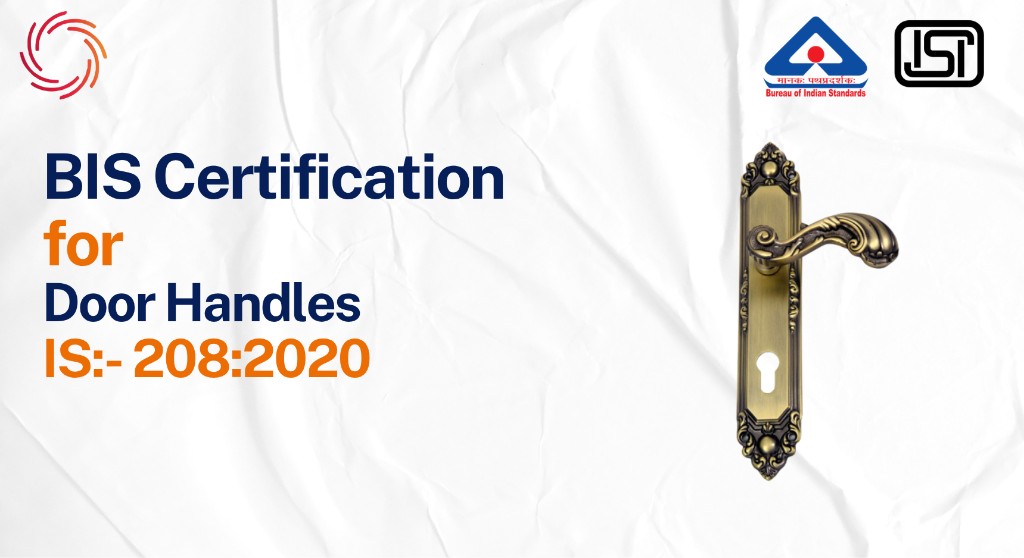
BIS Certification for Rim Latches under IS 1019:1974 confirms that the latch mechanism, body strength, locking performance, finishing quality, and operational durability meet Indian compliance expectations for safe and reliable door hardware. In India, certification is important because poorly manufactured rim latches can compromise door security, create installation failures, and reduce long-term performance in residential, commercial, and institutional buildings.
Rim latches are among the most frequently used architectural hardware products in homes, offices, schools, hospitals, retail stores, and public buildings. Even though they are small mechanical devices, their role in daily security and controlled access is extremely important. A faulty latch can lead to door misalignment, accidental opening, lock malfunction, or security breaches. In high-traffic environments, low-quality rim latches may fail after repeated operation, creating both safety and maintenance concerns.
India's construction and infrastructure sector has expanded rapidly in recent years. With rising demand for residential apartments, commercial complexes, smart buildings, and industrial facilities, the market for door hardware products such as rim latches has also grown significantly. Builders, hardware dealers, government procurement agencies, and institutional buyers increasingly prefer products that comply with recognized Indian standards because these products offer greater reliability and performance consistency.
The quality of a rim latch depends on several manufacturing factors including metal composition, machining precision, dimensional accuracy, spring tension, corrosion resistance, locking alignment, and surface finishing. If any of these parameters are poorly controlled during manufacturing, the latch may jam, loosen, corrode, or break during operation. Such failures become especially problematic in locations where doors are used frequently throughout the day.
This is where the importance of BIS Certification for Rim Latches becomes highly relevant. Certification under IS 1019:1974 establishes that the product has been evaluated against standardized technical requirements intended for secure and durable door hardware applications. The certification process examines both the product and the manufacturing system to ensure consistent quality production.
For manufacturers, the BIS License for Rim Latches helps improve market acceptance and supports participation in institutional supply chains. Importers benefit because certified products are easier to position in the Indian hardware market where buyers increasingly seek compliant construction materials. Retailers and distributors also gain confidence because certified products reduce complaints, returns, and reputation risks.
The BIS Certificate for Rim Latches is therefore not just a regulatory formality. It acts as a technical assurance mechanism that supports product durability, user safety, and long-term operational performance.
Understanding BIS Certification for Rim Latches - IS 1019:1974
Rim latches are mechanical locking accessories mounted on the surface of doors. Unlike concealed locking systems, these latches remain externally accessible and are exposed to regular operational stress. Because of their visible installation and repeated usage, their structural reliability becomes extremely important.
The purpose of BIS Certification for Rim Latches is to evaluate whether the latch assembly can withstand normal and repetitive usage conditions without mechanical failure. The certification framework examines whether the latch body, strike plate, spindle arrangement, locking components, springs, and operating mechanisms perform consistently under expected working conditions.
In residential applications, rim latches are often installed on internal and external doors where secure closing action is required. In commercial settings such as offices and retail establishments, the operational frequency is much higher. Poor-quality latches may develop loose handles, improper alignment, or locking inconsistencies after repeated operation. This can result in reduced security and expensive maintenance issues.
The BIS Certification for Rim Latches also addresses concerns related to:
- Structural integrity of latch components
- Resistance against operational wear
- Consistent locking and unlocking performance
- Dimensional accuracy for proper installation
- Surface finishing durability
- Corrosion resistance in humid environments
The role of IS 1019:1974 becomes particularly important because rim latches are expected to function reliably for extended periods. In coastal areas, for example, inadequate protective coating can lead to rust formation. In high-usage commercial buildings, weak spring assemblies may fail prematurely. In institutional buildings such as schools or hospitals, improper latch operation can create inconvenience and compromise controlled access.
The BIS License for Rim Latches helps ensure that products entering the Indian market meet uniform technical requirements rather than inconsistent manufacturer-specific quality claims. This creates greater standardization across the construction hardware industry.
Another important aspect of certification is manufacturing consistency. Even if a prototype performs well initially, mass production may introduce variations in dimensions, raw materials, or assembly quality. BIS compliance therefore focuses not only on product testing but also on factory quality control systems that maintain production uniformity.
For architects, contractors, builders, and procurement agencies, the BIS Certificate for Rim Latches provides confidence that the supplied hardware meets recognized technical benchmarks suitable for Indian operating conditions.
Applicable BIS Standard for Rim Latches - IS 1019:1974
The applicable Indian Standard for this product category is IS 1019:1974.
This standard establishes technical specifications and quality requirements for rim latches intended for door applications. The standard provides guidance regarding dimensions, materials, workmanship, finish quality, operational requirements, and testing methods for evaluating latch performance.
Scope of IS 1019:1974
IS 1019:1974 generally covers:
- Rim latch assemblies
- Surface-mounted locking systems
- Residential and commercial latch mechanisms
- Door hardware components related to latch operation
- Locking accessories intended for manual operation
The standard is relevant for manufacturers producing rim latches used in wooden, metal, or composite door systems.
Product Categories Covered
The BIS Licence for Rim Latches under IS 1019:1974 may apply to various product configurations including:
- Standard rim latches
- Deadlocking rim latches
- Rim night latches
- Lever-operated latch systems
- Cylinder-based rim latch assemblies
- Surface-mounted security latches
The standard may also address variations in size, operating mechanism, and mounting arrangements depending on intended usage.
Safety and Performance Objectives
The primary purpose of IS 1019:1974 is to ensure that rim latches operate securely and consistently under practical usage conditions. The standard aims to reduce failures caused by poor machining, weak springs, defective locking parts, or inadequate finishing.
Key objectives include:
- Smooth operation during repeated usage
- Reliable door engagement and locking
- Mechanical durability under operational stress
- Proper alignment of latch components
- Resistance against premature wear
- Adequate surface protection against corrosion
For example, in apartment buildings where doors may be opened and closed hundreds of times weekly, the latch must retain operational consistency without loosening or jamming.
Design and Testing Principles
The standard addresses several technical principles including:
- Material suitability for hardware manufacturing
- Dimensional accuracy for installation compatibility
- Surface finishing quality
- Functional reliability of locking components
- Mechanical strength requirements
- Operational endurance testing
IS 1019:1974 therefore acts as a technical framework that helps manufacturers maintain uniform hardware quality across production batches.
Testing Requirements as per IS 1019:1974
Testing is one of the most important stages in the BIS Certification for Rim Latches process.
Safety Tests
Safety-related evaluations examine whether the latch mechanism operates securely without unexpected disengagement or mechanical instability.
Performance Tests
Performance testing checks:
- Locking smoothness
- Latch engagement consistency
- Operational alignment
- Handle functionality
Durability Tests
Repeated operation cycles may be performed to assess long-term durability under practical usage conditions.
Quality Verification Tests
Additional tests may include:
- Dimensional verification
- Coating examination
- Material quality assessment
- Corrosion resistance evaluation
All testing must be conducted in Bureau of Indian Standards recognized laboratories.
Conclusion
Rim latches play a critical role in the security, usability, and operational efficiency of residential and commercial doors. Because these products are subjected to constant handling and repeated locking cycles, maintaining reliable manufacturing quality is essential. IS 1019:1974 establishes structured technical requirements that help ensure durability, functional reliability, and installation compatibility.
The BIS Certification for Rim Latches supports manufacturers, importers, and suppliers in demonstrating compliance with recognized Indian quality expectations. From testing and inspection to production monitoring and marking compliance, the certification framework promotes greater consistency across the door hardware industry.
Obtaining a BIS Certificate for Rim Latches not only improves regulatory acceptance but also strengthens buyer trust, commercial credibility, and long-term market positioning. Businesses seeking sustainable growth in the Indian construction and architectural hardware sector should prioritize BIS Certification for Rim Latches as an important part of their compliance and quality strategy.
FAQs – BIS Certification for Rim Latches - IS 1019:1974
1. Why is BIS Certification important for rim latches used in residential and commercial buildings?
Rim latches experience repeated daily operation, especially in apartments, offices, schools, and retail establishments. Poor-quality products may fail due to weak springs, loose components, or poor finishing. BIS Certification for Rim Latches helps verify that the latch mechanism has been tested for durability, functionality, and operational reliability according to IS 1019:1974 requirements.
2. What is the typical bis certification process for Rim Latches in India?
The bis certification process for Rim Latches generally includes product classification, document preparation, application filing, sample testing in BIS recognized laboratories, factory inspection, and approval review. Manufacturers must also demonstrate production consistency and maintain proper quality control systems before a BIS License for Rim Latches is granted.
3. What factors influence the bis certificate cost for Rim Latches?
The bis certificate cost for Rim Latches depends on product variants, laboratory testing charges, inspection fees, application expenses, and annual compliance costs. Products with multiple designs or sizes may require additional evaluations. Manufacturing location and testing complexity can also affect the overall cost of bis certification for Rim Latches.
4. Which documents are commonly required during the BIS application process for rim latches?
The bis certificate documents for Rim Latches generally include factory registration certificates, manufacturing process details, technical drawings, material specifications, calibration records, trademark authorization, quality control documents, and application forms. Proper documentation helps avoid delays during technical scrutiny and inspection stages.
5. Are imported rim latches also required to comply with Indian standards?
Yes, imported rim latches supplied to the Indian market may also require compliance depending on regulatory applicability and procurement conditions. Importers often prefer products supported by BIS Certification for Rim Latches because organized buyers and institutional projects increasingly demand technically compliant hardware products.
6. What types of tests are conducted under IS 1019:1974 for rim latch certification?
Testing may include dimensional verification, operational performance testing, mechanical durability assessment, corrosion resistance evaluation, and functionality checks. BIS recognized laboratories examine whether the latch can maintain smooth operation and secure locking performance after repeated usage cycles.
7. Can small manufacturers apply for a BIS License for Rim Latches?
Yes, small and medium-scale manufacturers can apply for certification provided they maintain suitable manufacturing infrastructure and quality control systems. BIS evaluation focuses more on product compliance consistency than production volume. Even smaller manufacturers can obtain approval if their products satisfy IS 1019:1974 testing and inspection requirements.
8. How long does it usually take to obtain BIS Certification for Rim Latches?
The certification timeline depends on document readiness, laboratory testing schedules, factory inspection availability, and correction requirements if any non-conformities are identified. Manufacturers with organized technical documentation and stable production systems generally complete the process faster than businesses with incomplete compliance preparation.
9. What are the common reasons for failure during rim latch certification testing?
Products often fail due to weak latch mechanisms, poor dimensional accuracy, inadequate surface coating, improper assembly alignment, or insufficient durability performance. Inconsistent raw material quality can also affect testing results. Conducting internal pre-testing before official submission helps reduce rejection risks significantly.
10. How does BIS Certification improve business opportunities for rim latch manufacturers?
The BIS Certificate for Rim Latches improves buyer confidence and supports participation in organized procurement channels. Certified products are often preferred by contractors, builders, institutional buyers, and government procurement agencies. Certification also strengthens long-term brand credibility and reduces market resistance related to quality concerns.
Related Resources
Many of our users also read
This compliance advisory was vetted by our Senior Consultant (Enforcement & Vigilance), a former BIS Director (Enforcement). He specializes in post-certification compliance, helping companies navigate surveillance audits and legal adherence to BIS mandates.
Dhruv Aggarwal
Head of Operations at Sun Certifications India
Experience: 10+ years & Handled 1000+ projects
Awarded by many Indian and International organisations









PT Quty Karunia, BIS Licensee in Vietnam
“Sun Certifications India provided excellent BIS Certification services. Their unparalleled service and sincerity gained our trust. One of the best BIS consultants in India!”

Thantawan Industries Ltd, BIS Licensee in Thailand
“Sun Certifications India supported us throughout the BIS certification process. Their responsive customer service and punctuality are exceptional. Highly recommend for hassle-free BIS certification.”

Leaderart Industries, BIS Licensee in Malaysia
“Sun Certifications India helped us acquire BIS Certification, doubling our engagement in India. Their services are fast, genuine, and up-to-date with latest BIS norms.”

Aluminium Bahrain (ALBA), BIS Licensee in Bahrain
“Excellent BIS certification support, highly reliable consultants.”

Bahrain Aluminium Manufacturing Company, BIS Licensee in Bahrain
“Smooth BIS registration process with expert consultants.”

Daiki Aluminium Japan, BIS Licensee in Japan
“Efficient BIS license assistance, great consultants.”

Trimble Navigation, BIS Licensee in USA
“Seamless BIS certification and registration support.”

Remsa Italia, BIS Licensee in Italy
“Helpful BIS consultants, simplified license process.”

Aquazzura, BIS Licensee in Italy
“We got our BIS certificate well within the timelines and at affordable prices, great work team Sun!”

PT Quty, BIS Licensee in Indonesia
“Excellent BIS registration service, highly recommended.”

Danu Vina, BIS Licensee in Vietnam
“Reliable BIS license consultants, fast process.”

Hanh My Production Company, BIS Licensee in Vietnam
“Expert BIS consultants, certification made easy.”

Sedo Vina, BIS Licensee in Vietnam
“Smooth BIS certificate registration, great support.”

Misumi Japan, BIS Licensee in Japan
“Trusted BIS consultants, quick certification process.”

Thantawan Public Industry Company, BIS Licensee in Thailand
“Professional BIS certification service, very efficient.”

Cortizo Aluminios, BIS Licensee in Spain
“Excellent BIS registration and license guidance.”

Midal Cables, BIS Licensee in Bahrain
“Expert BIS consultants, smooth certification process.”
Years Exp.
Our Clients
Success Rate
Countries Served
Our team brings 10e4+ years of experience in CDSCO and BIS compliance.
We reduce approval time by up to 40% with streamlined processes.
100% success rate with 1500+ successful registrations.
Dedicated account manager ensuring personalized service.
Leave your details below and our experts will call you back within 24 hours to discuss your regulatory compliance needs.
By submitting this form, you agree to our Privacy Policy and consent to being contacted.